
90 Days in Bali: The Complete 2026 Guide for Americans
This post contains affiliate links. If you click through and make a purchase, I may earn a small commission at no extra cost to you. I only recommend products and services I personally use and trust.
Spending 90 days in Bali is one of the most common ways Americans experience long-term living abroad for the first time. Three months is enough time to actually settle in — find a routine, explore beyond the tourist spots, build a social circle, and genuinely understand whether Bali is somewhere you’d want to stay even longer.
But 90 days in Bali comes with real logistics you need to get right before you land: visa limits, the right insurance, banking setup, and realistic budget expectations. This guide covers everything for Americans planning a three-month stay in Bali. For a longer-term relocation, see our full guide to moving to Bali as an American.
📋 WHAT’S IN THIS GUIDE
- Key Takeaways
- Visa Options for 90 Days in Bali
- How Much Does 90 Days in Bali Cost?
- Where to Base Yourself for 90 Days in Bali
- Housing for Three Months in Bali
- Banking and Money for a 90-Day Stay
- Health and Safety for 90 Days in Bali
- What to Expect After Month One
- Pros and Cons of 90 Days in Bali
- Frequently Asked Questions
Key Takeaways
- Americans can’t stay a full 90 days on the free Visa on Arrival — the Digital Nomad Visa (60+60 days) or Social/Cultural Visa is needed for three months
- A 90-day budget ranges from $3,500 to $7,500+ depending on lifestyle
- Three months is the minimum for getting genuine local pricing on housing — rents drop significantly vs. monthly Airbnb rates
- The time zone (UTC+8) becomes more manageable after the first month once you’ve restructured your schedule
- International health insurance is essential for a 90-day stay
Visa Options for 90 Days in Bali
This is the most important logistics question for a 90-day stay. Americans get a free 30-day Visa on Arrival (extendable once to 60 days), which means you need a specific visa strategy to stay the full 90 days legally.
Option 1: Digital Nomad Visa (Recommended for Remote Workers)
Indonesia’s E33G Digital Nomad Visa gives you 60 days extendable to 180. It requires proof of remote employment or self-employment and a minimum income of around $2,000/month. This is the cleanest legal option for remote workers planning 90+ days. Apply online before departure.
Option 2: Extended VOA + Visa Run
Get your free 30-day VOA, extend it to 60 days at immigration (~$35), then do a quick visa run to Singapore, Malaysia, or another neighboring country and re-enter on a fresh 30-day VOA. This gives you 90+ days without the Digital Nomad Visa. It’s technically legal, widely practiced, but involves one round-trip flight cost ($80–$250 typically).
Option 3: Social/Cultural Visa (B211A)
The B211A visa can be obtained via a local Indonesian sponsor (many villa operators or co-living spaces provide this service) and gives 60 days extendable up to 180. Less common for digital nomads than the E33G but still used by long-term visitors.
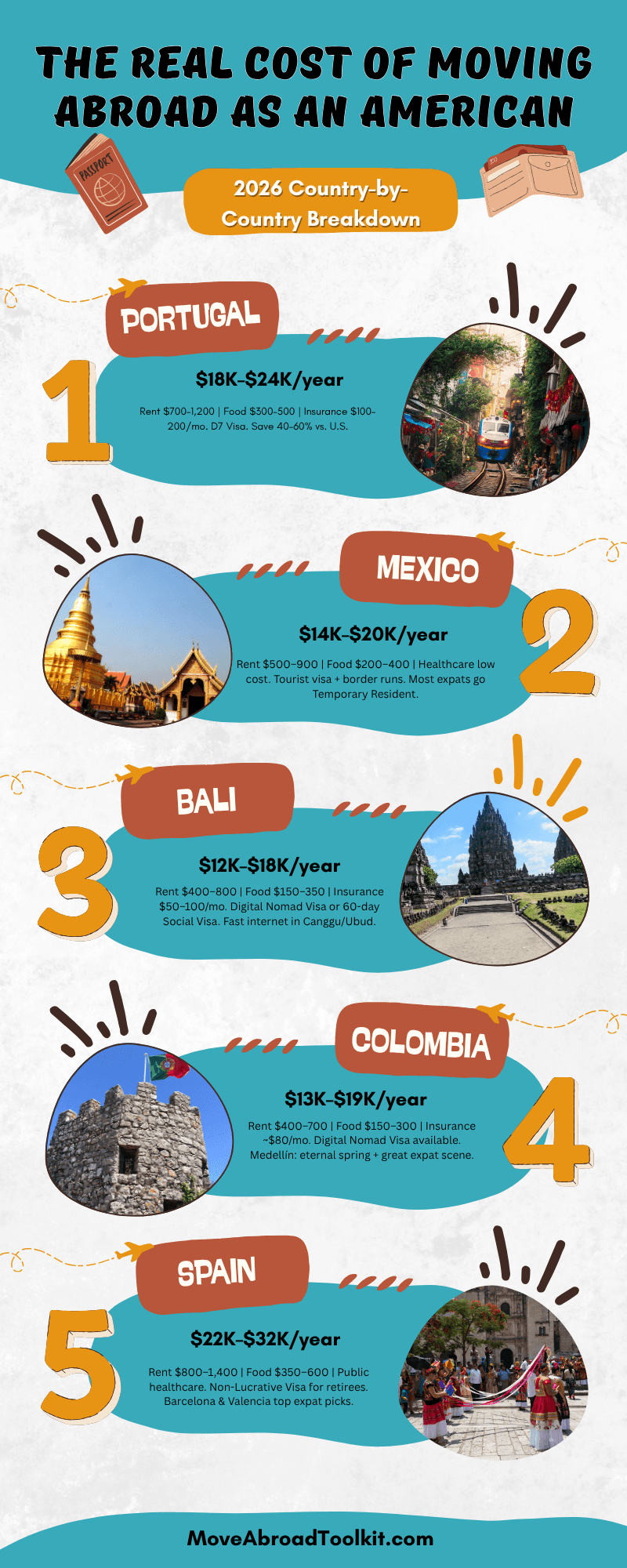
How Much Does 90 Days in Bali Cost?
Three months in Bali gives you access to significantly lower monthly rates on accommodation compared to short-term rentals. Here’s what a 90-day budget looks like:
| Expense | Budget (90 days) | Mid-Range (90 days) | Comfortable (90 days) |
|---|---|---|---|
| Accommodation (3 months) | $1,000–1,500 | $1,800–2,800 | $3,000–5,500 |
| Food and Dining | $450–700 | $900–1,300 | $1,500–2,000 |
| Transportation | $150–200 | $200–300 | $400–700 |
| Coworking (3 months) | $200–280 | $280–400 | $400–550 |
| Utilities, SIM, Misc | $150–250 | $250–350 | $350–500 |
| Health Insurance | $120–180 | $120–180 | $180–300 |
| Visa Costs | $35–250 | $35–250 | $100–300 |
| 90-Day Total | ~$2,100–3,360 | ~$3,600–5,600 | ~$5,900–9,850 |
Most digital nomads staying 90 days in Bali spend $3,500–$5,500 total — roughly $1,200–$1,850/month once you factor in longer-term rental discounts. See our full Cost of Living in Bali breakdown.

Where to Base Yourself for 90 Days in Bali
Three months gives you enough time to split your stay across different areas — and most long-termers do exactly that. A common pattern: one month in Canggu to build your social network and work routine, one month in Ubud to slow down and explore the interior, and a final month back in Canggu or Sanur to wrap up and tie loose ends before departure.
For pure digital nomad infrastructure, Canggu remains the best base. Read our Canggu Digital Nomad Guide for neighborhood-level detail. If staying in one spot for three months, Sanur offers the best value — lower rents, calmer atmosphere, and good enough wifi and coworking access for most remote workers.

Housing for Three Months in Bali
Committing to three months unlocks significantly better pricing than month-to-month Airbnb. For 90-day stays, go direct: Facebook groups like “Bali Long Term Rentals” and “Canggu Community” regularly have private villa listings at $400–$700/month — substantially below what the same property lists for on Airbnb. Showing up in person and negotiating directly with the owner typically drops prices further.
For a fully managed, no-hassle experience, co-living spaces like Outsite Bali or Tribal provide 90-day packages with accommodation, coworking, wifi, and community events included. Expect $800–$1,300/month all-in.
Banking and Money for a 90-Day Stay
For 90 days, getting your banking right matters more than for a short trip. The key setup: bring a Wise or Charles Schwab debit card (both offer fee-free ATM withdrawals internationally). Indonesian ATMs dispense rupiah; max withdrawal per transaction is typically 3,000,000–5,000,000 IDR (~$185–$310). Withdraw larger amounts less frequently to avoid transaction fees stacking up.
Do not rely solely on credit cards — many local markets, warung food stalls, and smaller guesthouses are cash-only. Budget to have $200–$400 in cash on hand at any given time.
Health and Safety for 90 Days in Bali
Three months in Bali means you need proper health coverage, not just travel insurance for a two-week trip. Options: SafetyWing (~$40–60/month, covers emergency medical and evacuation) is the most popular choice among digital nomads. For more comprehensive coverage including routine care, look at international health insurance plans like Cigna Global or GeoBlue.
Health priorities for a 90-day stay: get vaccinated for Hepatitis A/B and Typhoid before departure if you haven’t recently; take dengue prevention seriously (mosquito repellent, especially at dawn and dusk); see a doctor early if you get a stomach bug that doesn’t resolve in 48 hours; and — this can’t be said enough — wear a helmet every single time you’re on a motorbike.
What to Expect After Month One
The first month in Bali is a whirlwind — you’re orienting, overspending, and doing tourist things. By month two, you’ve found your routine, your regular warung, your coworking space of choice. Month three is when Bali stops being a destination and starts feeling like a base. Most people who get to month three either extend significantly or start planning their return.
The time zone adjustment (UTC+8, 11–14 hours ahead of US time zones) is the biggest ongoing challenge for American remote workers. By month two, most people have shifted to an evening-heavy work schedule — US morning meetings become your evening, and your mornings are free. It takes a month to reset your body and clients to this, but it works.
Pros and Cons of 90 Days in Bali
The advantages of three months over one month are significant: you get dramatically lower housing rates, a real social network (not just acquaintances), time to explore the whole island properly, and a genuine sense of whether Bali actually fits your life. The downsides are the same as a shorter stay but compounded — the time zone challenge doesn’t go away, and three months is long enough to notice Bali’s real infrastructure gaps (traffic, inconsistent electricity, limited specialist healthcare).

📌 Save this guide for later! Pin it to your travel or move abroad board so you can find it when you need it.
Click the image above to save directly to Pinterest.
Frequently Asked Questions
Can Americans stay 90 days in Bali on a tourist visa?
Not on the standard free visa on arrival, which maxes out at 60 days with one extension. For a full 90 days you need the Digital Nomad Visa, the B211A Social Visa, or a visa run mid-stay to reset your 30-day VOA.
How much does 90 days in Bali cost?
Most digital nomads spend $3,500–$5,500 for a 90-day stay, roughly $1,200–$1,850/month once you factor in longer-term rental discounts. Budget travelers can get under $3,000 total; comfortable living runs $6,000–$9,000.
What’s the best way to find housing for 3 months in Bali?
Facebook groups (Bali Long Term Rentals, Canggu Community) for direct owner deals, or show up in person and negotiate villa rates directly. Expect to pay $400–$800/month for a good private villa when booking direct for 3 months.
Is Bali good for remote work for 3 months?
Very. The coworking infrastructure is excellent, the expat community is large and easy to plug into, and the cost savings vs. US living are significant. The time zone (UTC+8) is the main operational challenge — it takes about a month to fully adapt your schedule.
Ready to plan your 90 days in Bali? Check our expat resources for vetted tools and our start here page for a full planning framework.
For official visa information and entry requirements, consult the Indonesian Directorate General of Immigration before traveling.
I funded my own move abroad by selling my house, my car (to CarMax), and my belongings on Facebook Marketplace and at garage sales. That firsthand experience shapes how I write about moving abroad — I am not just summarizing data, I am telling you what the numbers actually mean for someone making a real move.
Currency exchange fees eat into every international transfer. Use Wise instead of your bank for real exchange rates and low fees. Most expats save $50 to $100 per month on transfers alone.
For health coverage while abroad, SafetyWing Nomad Insurance starts at $45.08 per month for Americans under 40. It covers you in most countries and is built for long-term travelers and expats.
If you need a VPN for US streaming or public wifi security, NordVPN works well from abroad.
US tax filing does not stop when you move abroad. You still owe US taxes on worldwide income. Taxes for Expats specializes in expat tax returns and can save you from expensive mistakes.
If you are serious about the move, grab the Move Abroad Toolkit to plan your budget, timeline, and logistics in one place.
Thinking about moving abroad? Book a Move Abroad Planning Call for personalized guidance on your relocation.
Continue Planning Your Move
Everything you need is in one place.
Free Download
Remote Income Starter Kit
30 curated remote job boards, an application tracker & freelance rate calculator. Fund your move before you leave.