Is Bali Still Worth It for Digital Nomads in 2026? An Honest Answer
This post contains affiliate links. If you click through and make a purchase, I may earn a small commission at no extra cost to you. I only recommend products and services I personally use and trust.
📋 WHAT’S IN THIS GUIDE
- The Dream vs The Reality of Bali in 2026
- What Has Changed in Bali (Costs, Crowds, Visa Rules)
- What Is Still Genuinely Great About Bali
- The Visa Situation Explained Honestly
- Cost of Living Reality Check 2026
- Internet and Infrastructure: The Honest Picture
- Who Bali Is Still Perfect For
- Who Should Consider Thailand or Portugal Instead
- Frequently Asked Questions
- The Bottom Line
This guide includes affiliate links. If you book through them, we earn a small commission at no extra cost to you. We only recommend tools we use ourselves.
Why trust this guide? I take digital nomad destination guides seriously because I’ve personally walked the path — I funded my own move abroad by selling my house, my car (to CarMax), and my belongings on Facebook Marketplace and at garage sales. I write from real experience, not a press trip.
Is Bali worth it for digital nomads in 2026? The honest answer is yes, but only for a specific kind of nomad. The island still delivers cheap rent, strong coworking culture, and year-round warmth. It also delivers heavier traffic, higher prices, and visa rules that finally got teeth. After spending months working out of Canggu and Ubud, I can tell you the magic is still real if you go in with clear eyes.
I am Kim, the founder of Move Abroad Toolkit. I have lived and worked across Southeast Asia, including stretches in Bali during 2023 and 2024, and I run our Bali content alongside reporting from Lisbon, Madrid, and Mexico City. This guide pulls from my notes, current rental data, and what nomads on the ground are saying right now.

The Dream vs The Reality of Bali in 2026
The Bali Instagram dream sells you sunrise yoga, a $400 villa, and a beachfront laptop life.
The 2026 reality is more layered. You can still find the yoga and the villa. You will also sit in 45 minutes of scooter traffic to reach a cafe that used to take 10. The cheapest decent monthly rentals in Canggu now start at $700 to $900, not $400. Beach clubs in Berawa charge $15 for a cocktail that cost $7 in 2022.
None of this means Bali is ruined.
It means the gap between the brochure and the day-to-day has widened. If you arrive expecting the 2018 version of Bali, you will feel disappointed in week two. If you arrive expecting a humid, crowded, deeply functional digital nomad hub with great food and warm people, you will love it. The mindset you bring matters more than any cafe recommendation.
What Has Changed in Bali (Costs, Crowds, Visa Rules)
Three things have shifted hard since the post-pandemic boom.
Costs have climbed across rent, food, and transport. A monthly Canggu villa with a pool that ran $600 in 2021 now lists at $1,100 to $1,400 on long-term contracts. Cafe brunch went from $5 to $9. Even local warung meals now sit closer to $3 than $1.50. None of this is European pricing, but the slope is clearly up.
Crowds are heavier than ever in the south.
Canggu, Berawa, and Pererenan now feel like one continuous nomad strip. Traffic on the main roads moves at scooter pace from 4pm to 8pm daily. Surf lineups at Old Mans and Echo Beach can hit 80 people on a clean swell. Ubud has gotten busier too, though it still feels calmer than the south coast.
Visa enforcement finally has teeth.
Indonesian immigration started cracking down on visa runs in 2024 and 2025. Working on a tourist visa is now openly flagged as illegal, with deportations and bans being publicized as warnings. The new E33G remote worker KITAS is the legal path, and serious nomads are using it. Showing up on a B211A and hoping for the best is no longer the safe move it once was.
What Is Still Genuinely Great About Bali
Despite the changes, Bali still wins on several fronts that matter for working remote.
The coworking scene is mature and actually social. Spaces like Dojo Bali, Outpost Ubud, BWork, and Tropical Nomad run events most nights of the week. You can meet 10 founders in your first week if you show up. That kind of density is hard to find in Lisbon or Mexico City right now.
Food remains a real strength.
Cafes here cook to a high standard for the price. You get acai bowls, real espresso, vegan menus, and proper smash burgers without crossing the $12 mark. Local Indonesian food at a warung still costs $2 to $4 for a full plate, and most of it is genuinely good. For a nomad cooking less and eating out daily, this matters.
The lifestyle stack is unique.
You can finish a 9am call, surf for an hour, eat a $4 lunch, work at a coworking space until 6pm, then ride 10 minutes to a sunset beach club. This blend of nature, work, and social life is hard to replicate elsewhere at this price. Chiang Mai gets close. Lisbon does not, and Mexico City does not.
The Visa Situation Explained Honestly
Indonesia now offers a real path for remote workers, and you should use it.
The E33G Remote Worker KITAS launched in 2024 and gives you one year of legal residency. You need to prove $60,000 in annual income, hold a valid passport with 18+ months left, and work for a company outside Indonesia. The fee runs around $1,500 to $2,500 through a reputable agent. Income earned abroad is exempt from Indonesian tax under this visa, which is a meaningful benefit.
The B211A visit visa still exists.
It gives you 60 days, extendable twice, for up to 180 days total. It is officially a tourist visa, so technically you cannot work on it. In practice many nomads still do, but immigration has been clear about the legal risk. If you plan to stay six months or more, the KITAS is the smarter call. For a one or two month sample trip, B211A is fine.
Visa runs are not the workaround they used to be.
Flying to Singapore or Kuala Lumpur every 60 days is more expensive now and draws scrutiny on re-entry. Repeat visa runners report being questioned and occasionally refused. The full breakdown of requirements lives in our Bali Digital Nomad Visa guide, which we update each quarter.
Cost of Living Reality Check 2026
Bali is still cheap by Western standards, just not as cheap as the YouTube videos claim.
A solo nomad living comfortably in Canggu in 2026 spends $1,800 to $2,500 a month. That covers a one-bedroom villa with a pool ($800 to $1,200), scooter rental ($70), coworking ($150 to $200), groceries and eating out ($500 to $700), and the rest on coffee, gym, and weekend trips. You can absolutely go lower in Ubud or further inland, and you can easily double this in Berawa.
Couples often spend less per person than solo travelers.
Two people in a $1,200 villa split rent down to $600 each, share scooter costs, and often cook a few meals at home. A couple budget of $3,000 to $3,500 covers a very nice life. Families with kids should plan closer to $4,500 to $6,000 with school fees factored in.
You can read the full numbers in our Cost of Living in Bali for Digital Nomads breakdown. Pay vendors and landlords using Wise rather than US debit cards, which often hit you with 3 to 5 percent in conversion fees.

Internet and Infrastructure: The Honest Picture
Internet is good in the south, decent in Ubud, and patchy elsewhere.
Most coworking spaces in Canggu and Berawa hit 100 to 300 Mbps on fiber. Many villas now offer 50 to 100 Mbps included in rent. Power outages happen but rarely last more than 30 minutes, and most coworking spaces run UPS or generators. Use a 4G hotspot from Telkomsel as backup, which costs about $10 a month for unlimited data.
Run a VPN if your work involves logins from US-only services.
Some banks, brokerages, and streaming services flag Indonesian IPs and lock you out. NordVPN works reliably across Bali, including on cafe Wi-Fi where security is otherwise weak. The cost is around $5 a month and the time it saves is worth multiples of that.
Healthcare is functional, not Western standard.
BIMC Hospital and Siloam in Denpasar handle most issues with English-speaking doctors. Costs are 80 percent below US rates, but anything serious means evacuation to Singapore or Bangkok. Travel insurance is non-negotiable here, especially if you ride a scooter. Look at SafetyWing Nomad Insurance for monthly coverage that includes scooter accidents.
Who Bali Is Still Perfect For
Bali in 2026 is still the right call for several profiles.
Solo founders and creators who want a built-in social scene fit perfectly. Coworking culture here means you make friends in your first week without effort. Surfers get year-round waves at every level, from Batu Bolong beginner reform to Uluwatu reef breaks. Yoga and wellness practitioners get the deepest scene in Asia, especially in Ubud. Couples on a first long trip get warm weather, easy logistics, and a flat learning curve.
Long-stay nomads on the new KITAS get a real home base.
One year of legal residency, tax-free foreign income, and a $1,800 monthly cost of living is a hard combo to beat. If you are committed to Asia and tired of border runs, Bali offers a more stable platform than Thailand right now.
Short-term sample stays of one to two months also work great. Book a furnished villa through Airbnb monthly stays for the discount, then decide if you want to commit. Many people fly in for a month and end up staying six.
Who Should Consider Thailand or Portugal Instead
Bali is not the right call for every nomad, and being honest about that saves you money and frustration.
If you want a true city with metro, museums, and cafe culture, Lisbon or Mexico City beats Bali. Bali is a string of villages, not a city. If you need ICU-level healthcare on tap, Bangkok and Lisbon win clearly. If you hate humidity, Bali sits at 75 to 90 percent year round and the only escape is staying inside with AC.
Chiang Mai is the closest direct competitor.
It runs 25 to 30 percent cheaper than Canggu, has a similar coworking density, and offers cooler weather six months of the year. The trade-off is no surf, less beach culture, and a smaller party scene. For pure cost and focus, Chiang Mai often wins. For lifestyle balance, Bali still does. Compare numbers in our Chiang Mai cost of living guide.
Portugal works better if you want EU residency, no visa runs, and four real seasons. Look at our Moving to Portugal pillar for a side-by-side view.

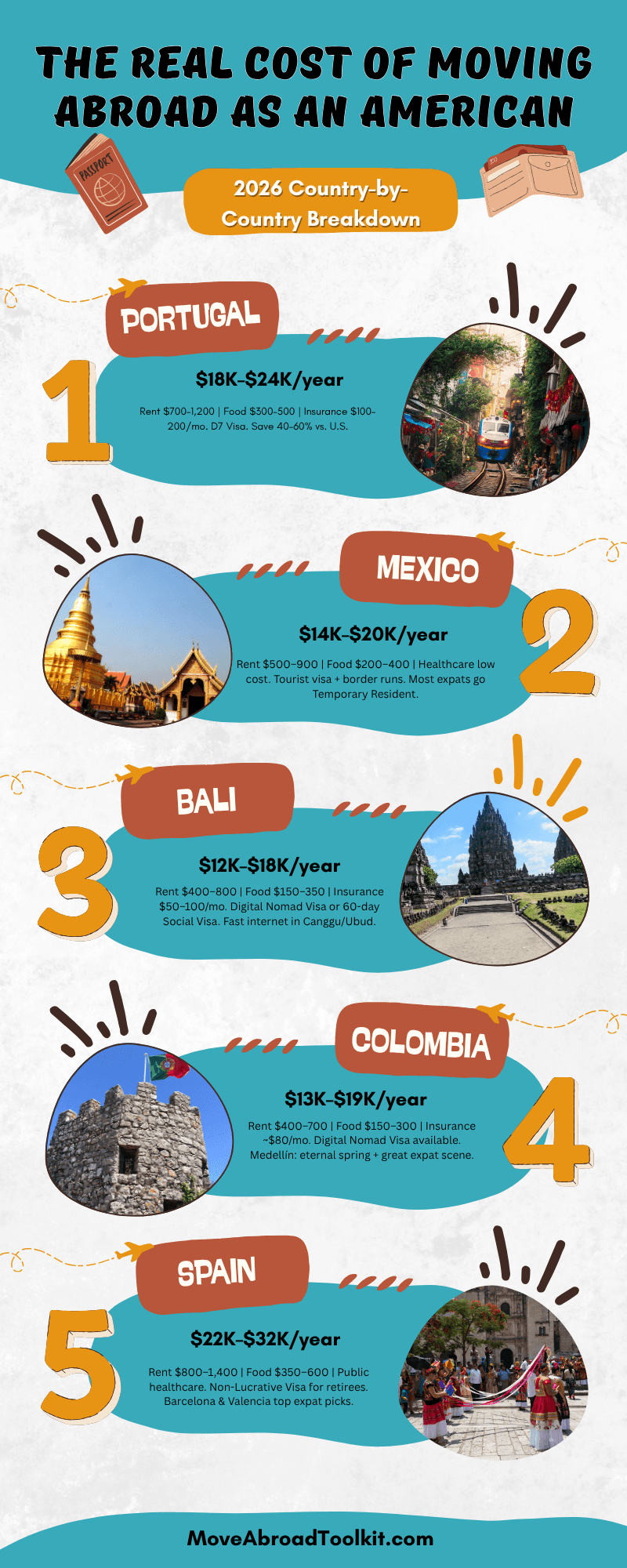
📌 Save this guide for later! Pin it to your travel or move abroad board so you can find it when you need it.
Click the image above to save directly to Pinterest.
Essential Expat Tools
These are the tools I personally use and recommend for anyone making the move abroad:
- Wise — Send and receive money internationally with real exchange rates. I use Wise for paying rent and converting USD. Get Wise here.
- SafetyWing — Affordable travel medical insurance for nomads and expats, month-to-month. Get SafetyWing here.
- NordVPN — Essential for US streaming access, secure banking on public WiFi, and data protection abroad. Get NordVPN here.
- Taxes for Expats — CPA-prepared US tax returns for Americans living abroad. Avoid costly mistakes with an expert who knows expat tax rules. File with Taxes for Expats.
- MATK Toolkit — My free resource hub: checklists, visa guides, cost comparisons for Americans moving abroad. Get the free Toolkit.
Frequently Asked Questions
Is Bali still affordable for digital nomads in 2026?
Yes, but the gap to Western prices has narrowed. A comfortable solo budget is $1,800 to $2,500 a month in Canggu, or $1,400 to $1,800 in Ubud. That is roughly half of what Lisbon costs and 70 percent of Mexico City.
Do I really need the E33G KITAS visa?
If you plan to stay six months or more, yes. Indonesian immigration is now actively enforcing rules against working on tourist visas. The KITAS gives you legal status, a tax exemption on foreign income, and one year of stability for around $1,500 to $2,500 in fees.
Is the internet in Bali reliable for video calls?
In Canggu, Berawa, and Ubud coworking spaces the answer is yes. You will see 100 to 300 Mbps fiber with stable uptime. In rural villas or beach areas like Bingin, expect bursts of slowness, so keep a Telkomsel hotspot as backup.
Is Bali safe for solo female nomads?
Generally yes, with normal travel awareness. Petty theft from scooters and unattended bags is the most common issue. The bigger physical risk is scooter accidents, which is why insurance and a real helmet are essential. Read more in our Is Bali Safe for Digital Nomads guide.
The Bottom Line
Is Bali worth it for digital nomads in 2026? Yes, with conditions.
Go for the lifestyle stack of surf, food, weather, and community at a price you cannot match in Europe. Get the E33G KITAS if you stay six months or more. Budget $1,800 to $2,500 a month solo and avoid Berawa if you want quiet. Bring health insurance, a backup hotspot, and a flexible attitude about traffic.
Skip Bali if you need a true city, hate humidity, or want pristine beaches every day. Chiang Mai or Lisbon will fit you better.
Ready to go deeper? Start with our Start Here guide to plan your move step by step, browse the Resources page for vetted tools, or grab the full Move Abroad Toolkit to get every checklist, template, and visa breakdown in one place.
Thinking about moving abroad? Book a Move Abroad Planning Call for personalized guidance on your relocation.
Continue Planning Your Move
Everything you need is in one place.
Free Download
Remote Income Starter Kit
30 curated remote job boards, an application tracker & freelance rate calculator. Fund your move before you leave.