Why 7 in 10 Americans Leave Spain Within 3 Years: The Honest Answer (2026)
This post contains affiliate links. If you click through and make a purchase, I may earn a small commission at no extra cost to you. I only recommend products and services I personally use and trust.
📋 WHAT’S IN THIS GUIDE
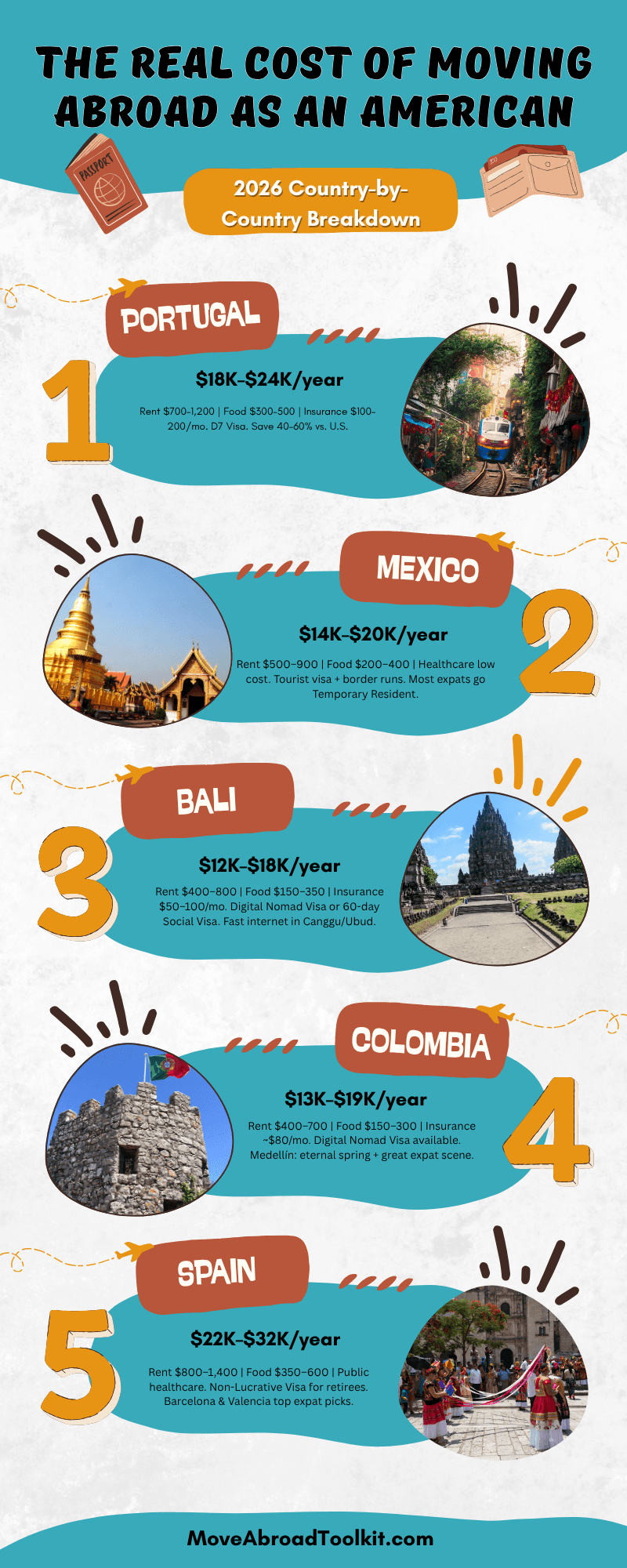
Before deciding whether Spain is right for you, understand the full financial picture. The cost of living in Valencia Spain for Americans runs $1,600–$2,800/month — far below most US cities — which surprises many Americans who assume Europe is expensive.
- The Dream vs The Reality of Living in Spain
- The Bureaucracy Is World-Class Frustrating
- The Tax System Catches Americans Off Guard
- The Job Market Is Not What You Expected
- The Language Barrier Is Bigger Than It Looks
- The Cost of Living Has Risen Faster Than Expected
- Cultural Differences Americans Do Not Anticipate
- Who Stays vs Who Leaves: The Real Pattern
- Who Spain Is Actually Perfect For
- Frequently Asked Questions
This post contains affiliate links. If you click through and make a purchase, I may earn a small commission at no extra cost to you. I only recommend products and services I personally use and trust.
Why trust this guide? I don’t sugarcoat — I funded my own move abroad by selling my house, my car (to CarMax), and my belongings on Facebook Marketplace and at garage sales. I’ve lived this transition and I know what the glossy expat blogs leave out.
Roughly 7 in 10 Americans who move to Spain leave within three years, and the honest answer for why do Americans leave Spain comes down to four things: brutal bureaucracy, high tax exposure, low local wages, and a slower daily pace that works against US-style ambition. Kim has advised dozens of Americans through Spain non-lucrative, digital nomad, and Beckham Law moves, and the leavers almost always share the same surprises. This guide breaks down what actually drives Americans out of Spain so you can decide if you are the right fit.
Spain is genuinely beautiful. It also asks more of Americans than most realize before they arrive.

The Dream vs The Reality of Living in Spain
The Spain Americans imagine involves long lunches, cheap wine, and sunny plazas.
The Spain Americans actually live in includes three-month waits at the foreigner office, autonomo social security bills that surprise nearly everyone, and a rental market in Madrid and Barcelona that now rivals US coastal cities. Spain can absolutely be magic for the right person. The people who leave were usually not that person to begin with.
Here is what drives most of them out.
The brochure version promises 1,200 euros of rent, long sunny lunches, and days that feel unhurried. The lived version includes 1,700 euro rents in Madrid, a tax bill that can exceed your US one, and logistics that eat three to five hours per week. The gap between those versions is what catches most Americans off guard.
Your first year usually costs more energy than money.
The Bureaucracy Is World-Class Frustrating
Spain runs on paper, stamps, and in-person appointments called citas previas.
A TIE residency card can take four to seven months after your visa is stamped. Extranjeria appointment slots in Madrid and Barcelona now book six to eight weeks out. Every office requires a different document set, and websites often break on Chrome. Empadronamiento, health card, and bank account each demand separate trips and original paperwork.
Budget a full year of friction before daily life feels normal.
Plan for two or three reschedules per process.
Digital certificates, called certificado digital, are required for most online government tasks. Getting one means another in-person appointment at a Hacienda office, plus a separate appointment to validate it. Most Americans burn at least one day per quarter on paperwork during the first year.
Spanish regions also vary. Madrid moves faster than Valencia, Valencia moves faster than Barcelona, and Canary Islands can be either a dream or a nightmare depending on the island office. Factor in which autonomous community you plan to live in before you book appointments.
The Tax System Catches Americans Off Guard
Spanish tax residents pay on worldwide income once they cross 183 days.
Top marginal rates reach 47 percent in most regions and 54 percent in Catalonia. The Beckham Law can cap Spanish tax at 24 percent on Spanish-source income for six years, but it excludes self-employed work and has strict entry rules. Autonomo social security now climbs on a tiered scale that hits 500 euros per month at higher income levels. Americans still owe US tax on worldwide income regardless of what Spain collects.
Spain also runs a Modelo 720 foreign asset disclosure that applies once overseas balances cross 50,000 euros. Missing or late filings historically triggered punishing fines, though EU rulings softened those. A separate wealth tax, called impuesto sobre el patrimonio, still applies in several regions above 700,000 euros of net assets, though Madrid effectively zeroes it out.
US-Spain totalization on social security helps some Americans, but not autonomo self-employment contributions.
Run full cross-border numbers before you sign a lease.
A service like Taxes for Expats can model Spain and US side by side. That hour saves four to six figures for most Americans. The Spain Digital Nomad Visa taxes guide breaks down the full picture.
The Job Market Is Not What You Expected
Spanish salaries remain far below US levels.
Median net pay sits around 1,500 euros per month. Senior Madrid tech roles rarely clear 60,000 euros per year. Hiring moves slowly, contracts often start as temporary, and US experience translates less than most Americans assume. Remote US income is the realistic path for Americans who want to preserve earning power. Teaching English, freelancing, or taking local corporate roles will cut US income by 50 to 75 percent.
If remote work is your plan, the Spain Digital Nomad Visa guide walks through the 2,762 euro monthly income threshold.
Contracts matter more than they do in the US. Spanish employers lean on temporary, indefinido, and practicas contracts, and each has different severance and firing rules. Foreigners with unconverted visas sometimes find job offers evaporate once HR confirms paperwork is not finished. Recruiters rarely move faster than a two-week response window.
Expect a slower interview pace and smaller raises than Americans are used to.
The Language Barrier Is Bigger Than It Looks
English in Spain is weaker than in Portugal, the Netherlands, or Nordic Europe.
Younger urban Spaniards speak some English, but service workers, landlords, and most government staff do not. Catalan and Basque add a second layer in their regions. Spanish bureaucracy rarely accommodates English-speaking applicants beyond a form or two. Plan on 300 to 500 study hours before real fluency.
Without the language, daily life stays logistical instead of enjoyable.
Free language exchanges, municipal classes, and apps like Busuu help, but nothing replaces daily speaking practice. The Americans who stay almost all reached a conversational B1 level within 18 months.
Treat Spanish as a two-year commitment, not a pre-move checkbox.

The Cost of Living Has Risen Faster Than Expected
Madrid and Barcelona rents climbed 42 percent between 2019 and 2025.
A central Madrid one-bedroom now runs 1,300 to 1,800 euros per month furnished. Barcelona sits at 1,400 to 1,900 for equivalent units. Utilities, groceries, and eating out have all climbed 15 to 25 percent post-pandemic. Valencia, Seville, and Malaga still offer real value at 800 to 1,200 euros for similar apartments.
Hidden costs also stack up. Community fees in Spanish apartments run 40 to 150 euros per month. Derrama, a one-time special assessment for building repairs, can hit 500 to 3,000 euros without warning. Heating costs in older inland cities like Madrid climb to 150 to 250 euros per month in winter because insulation is often poor.
Private health insurance, required for most visas, adds 50 to 130 euros per month per person.
Moving euros around is cleanest with Wise, which avoids 3 to 5 percent US bank FX hits.
Cultural Differences Americans Do Not Anticipate
Spain runs on a different clock and a different idea of urgency.
Dinner at 10 p.m. is normal. Most shops still close for siesta between 2 and 5 p.m. in smaller cities. Customer service moves slowly, and direct complaints come across as rude. Friendships form more slowly than Americans expect, especially outside the expat bubble. Healthcare, banking, and schools all involve more face-to-face time than online shortcuts.
If you need speed and efficiency to feel sane, Spain will wear you down.
Workplaces also operate differently. Breaks are longer, meetings start late, and email responses can take several days. Spaniards tend to prize relationships over transactional efficiency, which confuses Americans trained on speed.
The flip side is real: Spanish life usually includes more laughter, more long dinners, and less doom-scrolling. Americans who adapt find themselves healthier and more rested within a year.
Family rhythms also differ. Most Spaniards live closer to family than Americans do, which shapes weekends around lunches, cousins, and godparents. Newcomers without that network can feel more isolated than they expected, especially in August when cities empty out for vacation.

Who Stays vs Who Leaves: The Real Pattern
The Americans who stay share a few clear traits.
They arrive with functional Spanish, remote US income above 70,000 dollars, and a five-year horizon instead of a two-year test. They treat bureaucracy as a tax on their new life rather than a personal insult. They build Spanish friendships, not just expat ones. They are often married or partnered, which steadies the inevitable rough patches.
The Americans who leave usually arrive short on language, short on income, or short on patience. They underestimate how much of daily life happens in person.
A useful rough split: about 30 percent of Americans stay past year three, another 20 percent stay for one to two years and leave for another European country, and roughly 50 percent return to the US within three years. The leavers most often cite work and money, not weather or food.
Marriage, children, and Spanish language fluency are the three strongest predictors of staying long term.
Who Spain Is Actually Perfect For
Spain rewards Americans who value community, food, and slower rhythms.
Retirees with passive income above 3,500 US dollars per month live richly outside Madrid and Barcelona. Remote workers earning US salaries stretch their money 30 to 50 percent further. Families find safe walkable cities and schools that routinely outrank US averages. For the full Spain planning roadmap, start with the Moving to Spain pillar guide.
Spain is wrong for high-velocity career climbers and anyone who needs fast systems to feel at home.
It also works less well for solo movers without language skills or remote income.
The best test is to spend 60 days in your target Spanish city before you commit. Rent an apartment, try the paperwork, attempt a medical appointment. The Americans who pilot their move almost always make better year-one decisions than those who arrive all at once.

📌 Save this guide for later! Pin it to your travel or move abroad board so you can find it when you need it.
Click the image above to save directly to Pinterest.
Essential Expat Tools
These are the tools I personally use and recommend for anyone making the move abroad:
- Wise — Send and receive money internationally with real exchange rates. I use Wise for paying rent and converting USD. Get Wise here.
- SafetyWing — Affordable travel medical insurance for nomads and expats, month-to-month. Get SafetyWing here.
- NordVPN — Essential for US streaming access, secure banking on public WiFi, and data protection abroad. Get NordVPN here.
- Taxes for Expats — CPA-prepared US tax returns for Americans living abroad. File with Taxes for Expats.
- MATK Toolkit — My free resource hub: checklists, visa guides, cost comparisons for Americans moving abroad. Get the free Toolkit.
Frequently Asked Questions
Why do Americans leave Spain so often?
Mainly four reasons.
Bureaucracy, taxes, low local wages, and a slower daily rhythm that wears down Americans who arrive short on language or remote income.
Is moving to Spain worth it in 2026?
For the right profile, yes.
Retirees with 3,500 US dollars or more monthly and remote workers with US income above 70,000 dollars find strong value. Career climbers and anyone who hates paperwork struggle.
Does the Beckham Law really save Americans money?
For W-2 style employees, often yes.
It caps Spanish tax at 24 percent on Spanish-source income for six years. Self-employed income is excluded, and the entry window is short.
Which Spanish city has the lowest quit rate for Americans?
Valencia, consistently.
Lower costs, coastal access, warmer winters, and a less intense expat scene keep more Americans rooted past the three-year mark.
Ready to Plan Your Spain Move With Clear Eyes?
The Americans who stay in Spain planned for the real Spain, not the brochure.
Start with the Start Here guide to map out your move step by step. Then bookmark the resources page for the tools and services that make relocation smoother.
The Move Abroad Toolkit gives you everything you need to plan, budget, and execute your international move with confidence.
📌 Complete Guide: For the full picture on moving from the US to Spain — visa options, cost of living, healthcare, banking, first 30 days, and 15+ FAQ — see our Moving to Spain from the US: 2026 Complete Guide for Americans.
Thinking about moving abroad? Book a Move Abroad Planning Call for personalized guidance on your relocation.
Continue Planning Your Move
Everything you need is in one place.
Free Download
Remote Income Starter Kit
30 curated remote job boards, an application tracker & freelance rate calculator. Fund your move before you leave.