Moving to Croatia as an American: What to Know
This post contains affiliate links. If you click through and make a purchase, I may earn a small commission at no extra cost to you. I only recommend products and services I personally use and trust.

📌 Save this guide for later! Pin it to your travel or move abroad board so you can find it when you need it.
Click the image above to save directly to Pinterest.
📌 Save this guide for later! Pin it to your travel or move abroad board so you can find it when you need it.
Hover over any image in this post to pin it directly to Pinterest.
If you are moving to Croatia as an American because you want a slower pace, a remote-work base, or a fresh start in Europe, you are asking the right questions. The big things to sort out early are your visa path, your budget, and whether your day-to-day life will actually fit the way you want to live.
I funded my own move abroad by selling my house, my car (to CarMax), and my belongings on Facebook Marketplace and at garage sales. That experience is why I take Croatia seriously as a destination for Americans who actually plan to make the move — not just dream about it. The numbers here are real, the challenges are real, and the rewards are genuinely worth it if you go in prepared.
Croatia sits in a genuinely useful middle ground for anyone moving to croatia as an american. It is cheaper than Western Europe, has real infrastructure for remote workers, and offers a pace of life that is hard to find in most American cities. It is not the easiest country to navigate legally, but if you plan ahead it is very doable.
Before you get too far into planning, take the “Should You Move Abroad?” Quiz or download the free Country Comparison Sheet on MoveAbroadToolkit.com for personalized help. You can also read how to move abroad as an American for the full step-by-step plan.
📋 WHAT’S IN THIS GUIDE
- Visa Options for moving to Croatia as an American — The DTV Is a Real Shift
- Entry Rules You Need to Know Before You Book
- The Cost of Living Is Lower Than You Think
- The Best Cities — Each One Fits a Different Lifestyle
- Finding Housing Is Straightforward If You Move Fast
- Healthcare Is Affordable and Modern
- You Can Work Remotely Without a Work Permit
- The Downsides Are Real But Manageable
- Blending In as an American in Croatia
- Frequently Asked Questions
Visa Options for Moving to Croatia as an American Have Changed — The DTV Is a Real Shift
When you are moving to Croatia as an American, the visa situation starts with Croatia becoming an EU member state in 2013 and joining the Schengen Area in January 2023. That second step changed the legal landscape for American expats. You now fall under the standard Schengen ruleset for short stays — up to 90 days in any 180-day period without a visa. That is a useful scouting window, but it is not a residency solution.
If you want to stay long-term, Croatia introduced a Digital Nomad Visa (Temporary Stay for Digital Nomads) that is one of the more practical in Europe. It lets non-EU remote workers live legally in Croatia for up to one year, with a straightforward renewal path that gives you up to two consecutive years total.
The Digital Nomad Visa is not a work visa in the traditional sense. You cannot use it to take local employment — this is a key distinction when moving to croatia as an american. But when moving to croatia as an american, if you already work remotely for a non-Croatian employer or run your own location-independent business, the Digital Nomad Visa is essentially a permit that says Croatia is fine with you living there. That is a significant distinction.
Here is what the application requires:
- Proof of remote employment or self-employment — a contract, invoices, or an employer letter confirming your remote arrangement
- Minimum income threshold — roughly 2,539 EUR per month as of 2026, verified with 3–6 months of bank statements
- Valid health insurance — coverage for the full duration of your stay, not just travel emergency coverage
- Criminal background check — from the FBI or your state, with an apostille stamp
- Proof of accommodation — a signed lease agreement or confirmed address in Croatia
- Valid passport — at least 6 months validity beyond your planned stay end date
- Completed application form — submitted to the Croatian embassy or consulate in the U.S. before you travel
You apply from the United States before you arrive — this is not a visa you convert to in-country. Processing times run 2–6 weeks at most embassies, so apply at least 6–8 weeks before your intended travel date. The visa is issued as a D-type national visa, then converted to a temporary stay permit once you are in Croatia and register your address. The official application process is managed through the Croatian Ministry of Foreign Affairs.
Beyond the nomad visa, Americans can also pursue temporary residence for family reunification, property ownership, employment, or study. If you accumulate 5 years of continuous legal residence, permanent residence becomes available. Croatian citizenship can follow after 8 years. The long-term path exists; it just requires consistent paperwork, a real estate or employment anchor, and patience with a bureaucracy that moves slowly.
Use the visa decision tree on MoveAbroadToolkit to figure out which permit fits your specific situation before you start gathering documents.
Entry Rules You Need to Know Before You Book
As of 2026, Americans enter Croatia visa-free for up to 90 days in any 180-day rolling period. Croatia joined Schengen in January 2023, which means those 90 days now count against your total Schengen allowance — not just your Croatia-specific time. A common mistake when moving to croatia as an american: if you spent 30 days in Italy and 20 days in Spain earlier in the year, you only have 40 days of visa-free time left when you fly into Zagreb.
Track your Schengen days carefully if you travel through other EU countries — an essential step when moving to croatia as an american. The Schengen calculator on the EU’s official website is the most accurate tool for this. Overstaying — even by accident — creates problems for future visas across the entire Schengen zone, not just Croatia.
The 90-day window is genuinely useful as a scouting trip. It is enough time to visit multiple cities, test a neighborhood for a few weeks, find a landlord you trust, and start the paperwork for a longer-stay permit. Most expats use their first 90-day stay to line up housing, open a bank account, collect their first utility bill as proof of address, and confirm exactly which documents their visa application will need.
A few practical entry notes worth knowing:
- Currency: Croatia adopted the Euro in January 2023. You no longer need to exchange into Croatian kuna — a meaningful simplification for expats moving from other eurozone countries.
- Language at border: English is widely spoken at Croatian airports and land crossings. You will have no trouble at entry.
- Proof of funds: Border officers can technically ask for proof of sufficient funds, though this is rarely enforced for Americans. Having a few months of bank statements accessible on your phone is a sensible precaution.
- Onward travel: Having an onward ticket — showing you plan to leave the Schengen zone before 90 days — is standard good practice, even if rarely checked.

The Cost of Living Is Lower Than You Think
Croatia costs roughly 40–60% less than the average U.S. city, depending on where you live and how you spend. The coastal tourist spots get expensive in summer, but year-round expat life in Zagreb or inland towns is genuinely affordable for those moving to croatia as an american on a mid-range remote income. A single person living comfortably can do it on €1,500–€2,000 per month in most cities.
Here is a realistic monthly budget breakdown:
| Expense | Budget Level | Comfortable Level |
|---|---|---|
| Rent (1BR apartment) | €500–€650 | €800–€1,100 |
| Groceries | €150–€200 | €250–€350 |
| Eating out (2–3×/week) | €80–€120 | €200–€300 |
| Transport (bus/tram) | €30–€50 | €50–€100 |
| Utilities (incl. internet) | €80–€120 | €120–€160 |
| Health insurance | €50–€80 | €100–€150 |
| Entertainment/misc | €100–€150 | €200–€300 |
| Monthly Total | ~€990–€1,370 | ~€1,720–€2,460 |
Groceries at a local market or mid-range supermarket like Konzum or Lidl are noticeably cheaper than in the U.S. A full week of food for one person runs €40–€70 if you cook at home. A sit-down lunch at a local konoba (traditional restaurant) costs €8–€15 with a drink — significantly less than a comparable meal in any American city.
Coastal cities like Split and Dubrovnik run 20–30% higher in summer, when short-term rental demand spikes. If you plan to live in Croatia long-term, signing a year-round lease in the off-season is the single best lever for controlling housing costs. Landlords in October are far more flexible than landlords in June. Many expats who arrive in spring pay a premium they could have avoided entirely by arriving in fall.
Utilities in Croatia are reasonable. Internet is fast and reliable in cities — expect 100–300 Mbps fiber for €20–€35 per month. A NordVPN subscription helps with US streaming access and public wifi security. Electricity and heating vary by season and apartment type, but €50–€100 per month covers most non-winter months. Older stone buildings on the coast can be cold in winter and expensive to heat — factor that in when choosing an apartment.
Use the budget calculator on MoveAbroadToolkit to model your specific numbers based on city and lifestyle. For a full breakdown of monthly costs, see our cost of living in Croatia guide
The Best Cities — Each One Fits a Different Lifestyle
Croatia is a small country — roughly the size of West Virginia — with genuinely distinct cities. The right one depends on whether you prioritize cost, community, coast access, or urban infrastructure. Most American expats end up in one of four or five places.
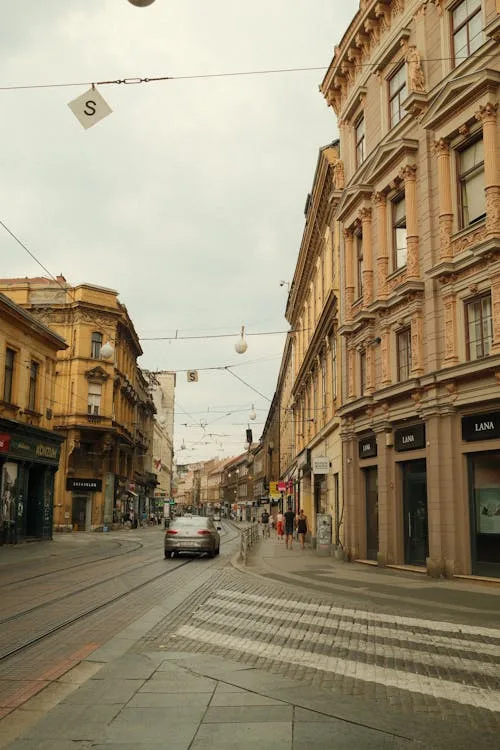
Zagreb is the capital and the most practical base for long-term expats moving to croatia as an american. It has the best public transport network, the largest and most organized expat community, and the most developed coworking scene. Rent is lower than the coast. Winters are cold and grey — something that surprises Americans used to thinking of Croatia as a beach destination — but the city has a real cultural calendar. Museums, live music venues, excellent coffee shops, and a farmers market culture make it genuinely livable year-round.
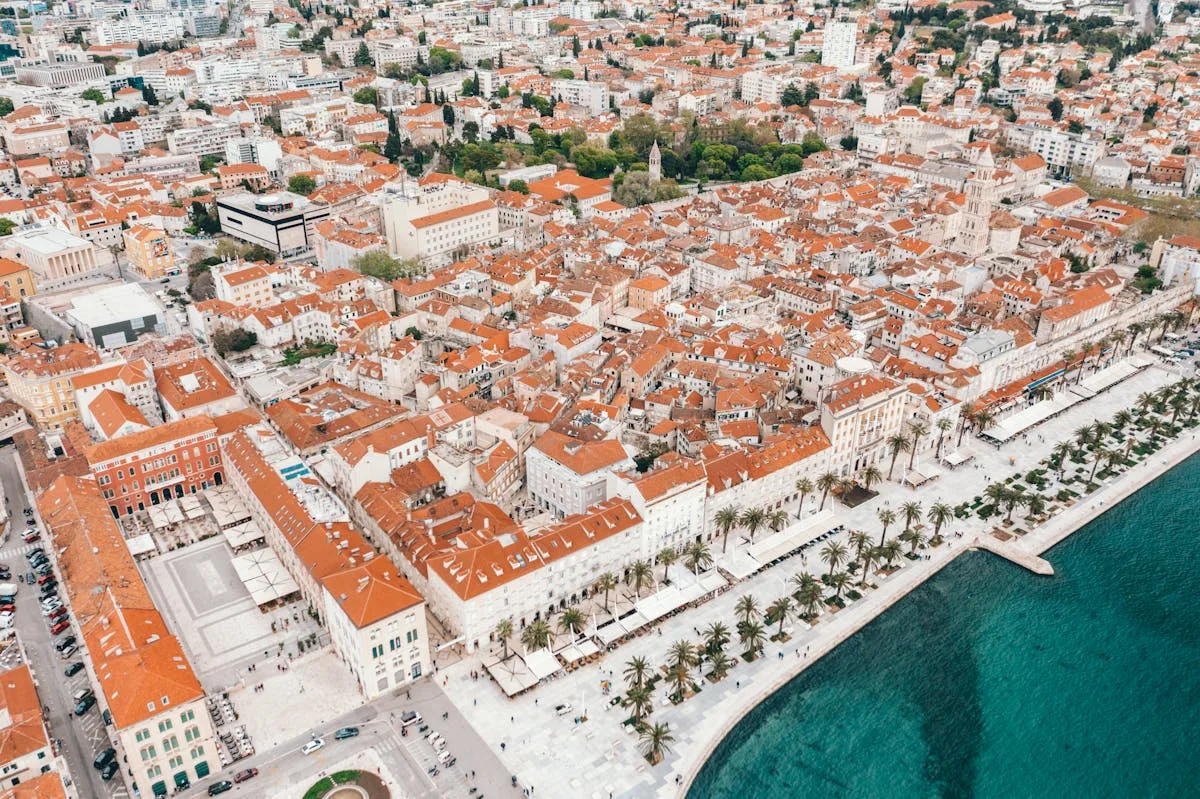
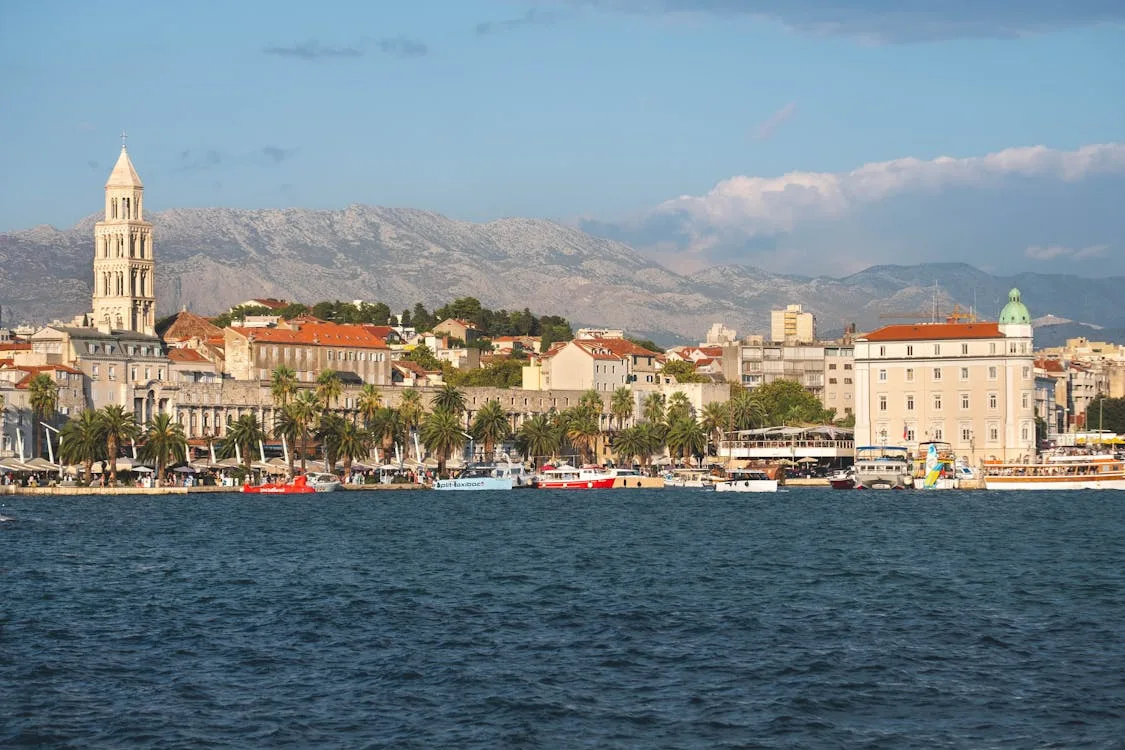
Split is the second city and the coastal expat hub. It sits on the Dalmatian coast with direct ferry access to islands like Hvar, Brač, and Vis. The old town is a UNESCO World Heritage site built inside the walls of a Roman emperor’s palace — genuinely beautiful to walk through every single day. The expat community here has grown significantly over the past five years, and the nomad infrastructure — coworking spaces, international cafés, English-speaking communities — is now solid. Summer gets crowded and expensive; fall and spring are among the best months to be anywhere in Europe.
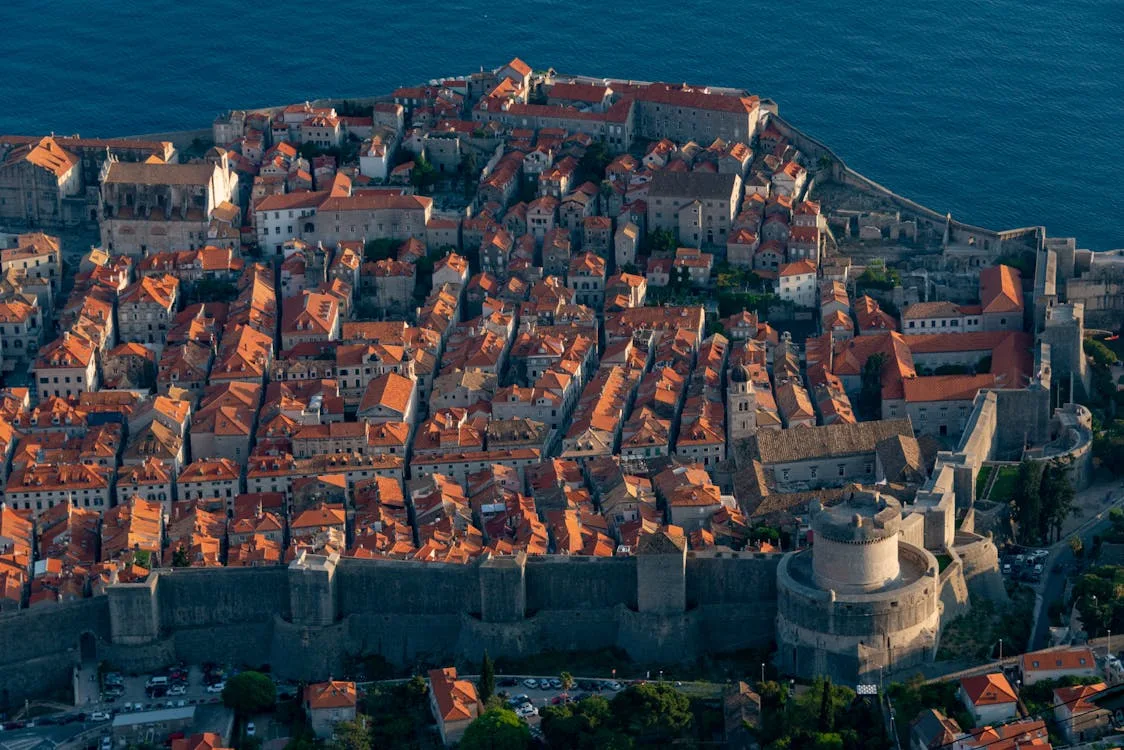
Dubrovnik is the most famous and the most tourist-saturated. It is beautiful, but it is also the most expensive Croatian city and the least practical for year-round living. Grocery stores and services designed for locals are scarce inside the old town. It works best for a short scenic stint, not a multi-year base. If you want coast and beauty without the tourist density, look at Split or Zadar first.
Zadar is the sleeper pick. It is a mid-sized coastal city with a strong local identity, lower prices than Split, direct flights to more than a dozen European cities, and a beautiful old town peninsula that sees far fewer tourists than Dubrovnik. The expat community is smaller but growing. If you want coastal life without the Split premium or the Dubrovnik circus, Zadar is where to look.
Istria in the northwest is its own world. It has a strong Italian cultural influence — the food, the architecture, and even the language feel distinct from the rest of Croatia. Towns like Rovinj, Pula, and Poreč are scenic, slow-paced, and increasingly well-connected for remote workers. Prices are lower than the Dalmatian coast and the lifestyle is genuinely good for people who want something quieter and more rural.
| City | Best For | Avg 1BR Rent | Vibe |
|---|---|---|---|
| Zagreb | Year-round expat life, urban infrastructure | €600–€900 | Capital city energy, affordable |
| Split | Coastal lifestyle, expat community | €700–€1,100 | Scenic, seasonal crowds, connected |
| Dubrovnik | Short stays, scenic tourism | €900–€1,400 | Beautiful but expensive and crowded |
| Zadar | Quiet coast, budget-conscious | €550–€800 | Local, relaxed, underrated |
| Istria | Italian-influenced culture, slow living | €500–€750 | Scenic, food-focused, rural feel |
Finding Housing Is Straightforward If You Move Fast
moving to Croatia as an American means navigating a functioning rental market, where good apartments in desirable areas go quickly — especially in Split and Zagreb between April and August. The best strategy is to arrive during your 90-day scout, find a landlord directly, and sign a lease before the summer rental season locks up the best inventory at peak prices.
Where to search for rentals in Croatia:
- Njuškalo.hr — Croatia’s primary classifieds platform, with the widest selection of long-term rentals
- Idealist.hr — another solid listing site with both furnished and unfurnished options
- Facebook expat groups — “Expats in Zagreb,” “Expats in Split,” and city-specific groups often have off-market listings from landlords who prefer reliable long-term tenants over short-term turnover
- Airbnb (short-term only) — useful for your first 2–4 weeks while you search, but significantly more expensive than a direct rental and not a sustainable long-term solution
What to expect when renting in Croatia:
- Security deposit — typically 1–2 months rent paid upfront, sometimes held informally by the landlord
- Lease terms — most landlords prefer 1-year agreements; month-to-month exists but commands a premium
- Utilities — frequently not included; confirm water, electricity, and heating costs separately before signing
- Furnished rentals — the majority of Croatian rentals come furnished, which is convenient for expats arriving without belongings
- OIB (personal identification number) — you will need this for the lease, which means registering your address with local police within 48–72 hours of arrival
Registering your address — called prijava boravišta — is required by Croatian law and is also the first formal step in establishing your legal presence in the country. Your landlord is legally obligated to assist with this process. If a landlord explicitly asks you to skip registration or suggests it is optional, that is a meaningful red flag before you sign anything.
One more thing: older stone buildings along the coast are beautiful but can be cold and expensive to heat in winter. If you plan to stay year-round, ask specifically about heating before committing. Central heating is common in Zagreb apartments but less reliable in older Dalmatian coastal buildings, where the traditional setup is space heaters or split-system air conditioning used for warmth.
Healthcare Is Affordable and Modern
Healthcare when moving to croatia as an american is handled through Croatia’s public system (HZZO). As a foreign national on a temporary stay visa, you are not automatically enrolled in public healthcare — you need private insurance, which is one of the requirements for the Digital Nomad Visa anyway. Think of it as sorting two birds with one policy.
Private health insurance in Croatia runs €50–€150 per month depending on age, coverage level, and whether you use a Croatian local policy or an international expat plan. International plans commonly used by expats include SafetyWing (budget-friendly, great for digital nomads), Cigna Global (comprehensive), and Allianz Care (mid-range with solid coverage in Europe). A standard GP visit paid out of pocket costs €30–€60. Dental work is similarly affordable compared to U.S. prices — many expats proactively get dental work done in Croatia because it is significantly cheaper than at home.
Croatian hospitals in Zagreb and Split are modern and well-equipped for most needs. English is widely spoken in urban medical facilities and emergency departments. For serious surgery or highly specialized care, some expats choose to travel to nearby Austria, Slovenia, or Germany — but for general medicine, urgent care, and routine procedures, the Croatian system is more than adequate.
Before you leave the U.S., check your existing health insurance policy carefully. Most American plans cover international emergency treatment but not routine care abroad, and some exclude coverage after 30–60 days outside the country. A short-term travel health policy that bridges into a longer international plan is usually the cleanest setup for the first year in Croatia. The resources page on MoveAbroadToolkit has current recommendations for expat health insurance providers.
You Can Work Remotely Without a Work Permit
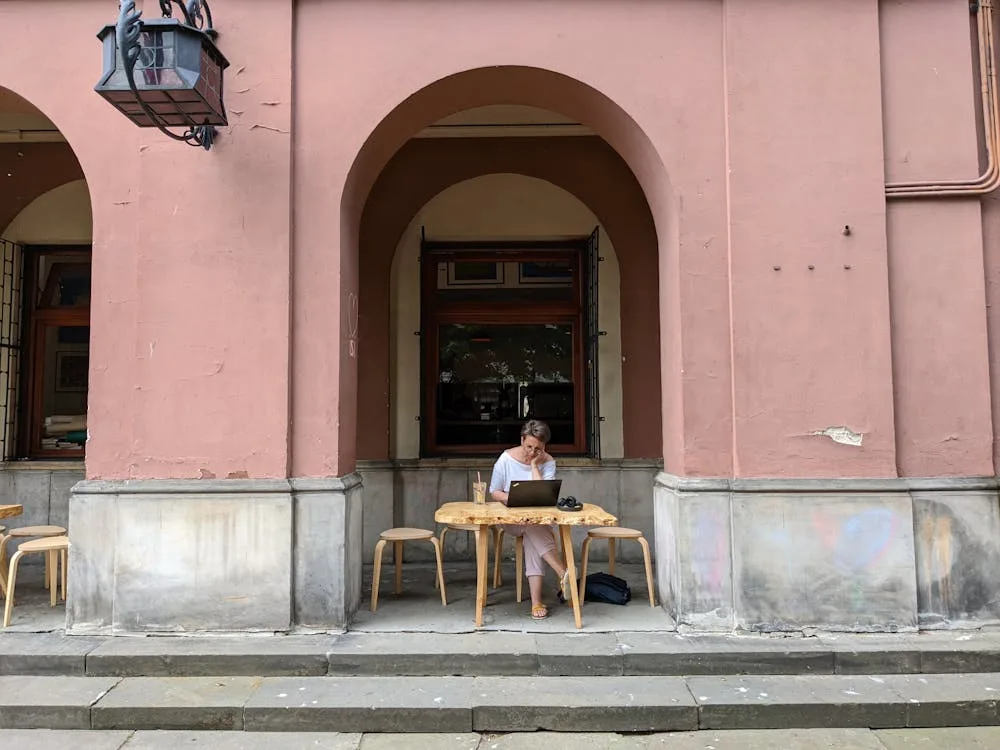
This is one area where moving to Croatia as an American actually makes things easy. If you work for a non-Croatian employer or run your own business with clients outside Croatia, you do not need a Croatian work permit. The Digital Nomad Visa is specifically designed for this arrangement. You continue working your existing remote job or serving your existing remote clients — Croatia takes no issue with the income source as long as it originates outside the country.
What the nomad visa does not allow is local employment — working for a Croatian company, taking on local clients in a way that competes with the Croatian labor market, or registering a Croatian-based business entity that hires local staff. Those activities require a separate work permit and a different residency pathway.
On taxes, Croatia’s nomad visa comes with a significant practical benefit: you are not required to pay Croatian income tax on foreign-sourced income during the visa period. You remain tax-resident in your home country and pay taxes there. This is a meaningful contrast to Portugal, which phased out its favorable non-habitual resident tax program, or some other EU countries that automatically claim tax residency after 183 days. If you are also considering Spain, read our guide on moving to Spain as an American.
That said, U.S. citizens have obligations that follow them everywhere. FBAR filing is required if your Croatian bank account or any foreign account holds more than $10,000 at any point in the year. The Foreign Tax Credit can usually offset any double-taxation risk if your situation changes. Always confirm your specific setup with a tax advisor. Taxes for Expats specializes in US expat returns — the rules shift, and getting it wrong costs more than the filing fee. The remote income starter kit on MoveAbroadToolkit covers the foundational steps.
For your first weeks, grab a travel eSIM via Airalo before you land — it covers Croatia from day one. For banking, open a local Croatian account as soon as possible after arrival. Erste Bank, Privredna Banka Zagreb (PBZ), and Raiffeisen Bank Croatia all offer accounts accessible to foreign residents. Having a local account makes paying rent, utilities, and day-to-day expenses far simpler than routing everything through a U.S. card with foreign transaction fees. Use Wise for international transfers to cut bank fees — it saves most expats $50–$100 per month on conversions.
The Downsides Are Real But Manageable
moving to Croatia as an American is genuinely rewarding — but Croatia has friction points that catch Americans off guard. Going in with clear expectations makes them much easier to handle.
Bureaucracy moves slowly. Government offices have limited and sometimes unpredictable hours. Appointments take time to schedule and longer to complete. A missing document — even a minor one — can delay your application by weeks, not days. Bring extra copies of everything: passport, bank statements, apostilled certificates. Bring more patience than you think you will need. Digital processes are improving but are inconsistent across departments and cities.
Housing in tourist zones gets competitive. In Split and Dubrovnik especially, many landlords prefer short-term summer rentals at premium prices over reliable year-round tenants. Inventory tightens dramatically from May through September. Timing your arrival for fall or winter gives you significantly more leverage. Arriving in October and signing a 12-month lease often locks in prices 20–30% below what you would pay arriving in May.
Local income is not a realistic fallback. If you do not already have a remote job or remote client base, Croatia is harder to make work than it looks. The local job market is competitive, salaries are low by American standards, and hiring a non-EU citizen requires employer sponsorship that most small Croatian businesses are not equipped or motivated to arrange. Croatia works best when you arrive with income already established and running.
Language and social isolation. Croatian is spoken by about 6 million people globally and is not widely useful outside the region. English is common in cities and tourist areas, but daily life in smaller towns involves more language friction than in, say, the Netherlands or Portugal. The expat community in Croatia is real but smaller and less organized than in Lisbon, Tbilisi, or Mexico City. Building a genuine social network takes time and intentional effort. Join local Facebook groups, show up at coworking spaces, attend language exchanges — do not wait for community to find you.
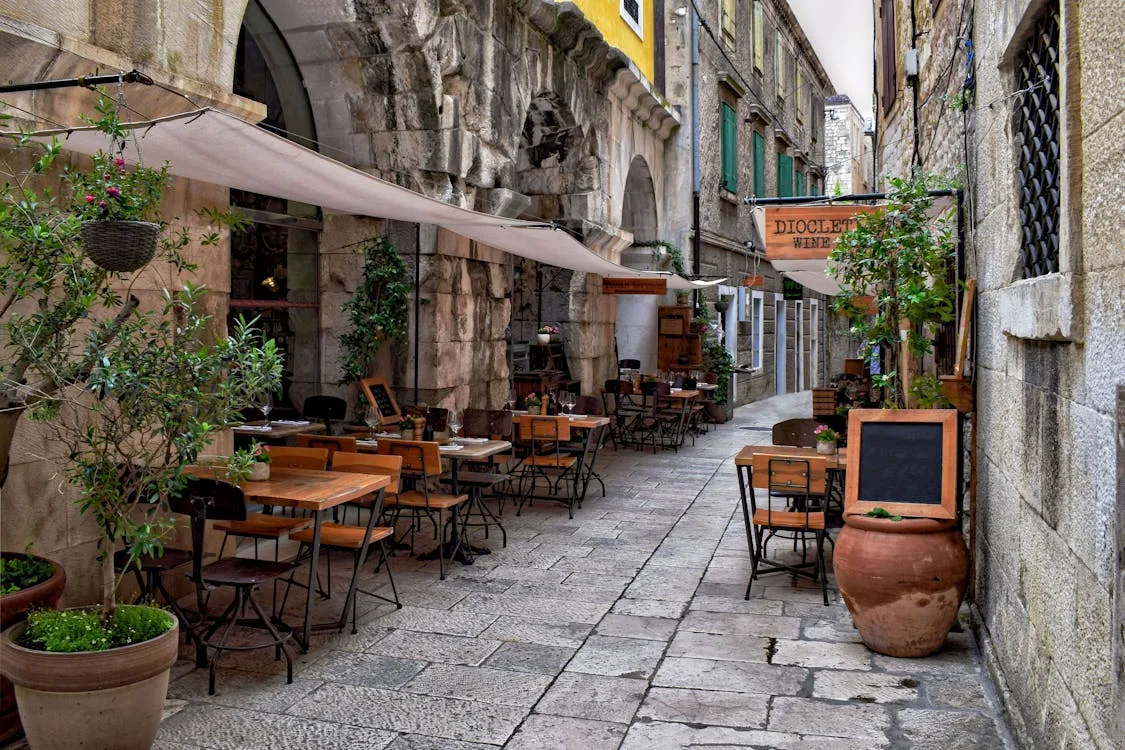
Blending In as an American in Croatia Is Easier Than You Expect
Croatians are generally warm and curious about Americans — moving to croatia as an american is easier socially than many expect, especially outside the major tourist zones. A little formality and consistent effort go a long way. These habits help from day one:
- Use greetings — “Dobar dan” (good day) and “Hvala” (thank you) open doors immediately and signal respect
- Show up on time for appointments, especially with government officials or landlords
- Keep your voice down in public spaces — Croatians tend to be reserved in shared and public environments
- Dress more polished than you normally would for meals at nice restaurants, official visits, and churches
- Be respectful and careful about local history and national identity — Croatia’s independence from Yugoslavia is living memory for millions of people
- Do not rush service interactions — the slower pace is intentional and valued, not inefficient
Learning Croatian is not required for short-term life in Zagreb or Split. English proficiency is high among anyone under 40, and most service interactions in urban areas are navigable in English. But even a basic phrase set — greetings, numbers, common food words — makes daily life noticeably smoother and signals genuine respect for where you are living. If you stay beyond a year, investing in a Croatian language course pays off quickly, both practically and socially.
Coffee culture is central to Croatian social life. The kava ritual — sitting at a café for an hour or more without urgency — is not laziness. It is how relationships are built and maintained. Lean into it. The connections you make over slow coffees with neighbors, landlords, and coworking regulars will matter far more in the long run than anything you read in a moving-abroad forum.
Frequently Asked Questions
What visas and residence permits are most realistic for U.S. citizens who want to live in Croatia long-term?
The Digital Nomad Visa is the clearest path for most Americans. It requires proof of remote income above approximately €2,539 per month, valid health insurance, a clean background check, and proof of accommodation. It gives you one year of legal stay with one renewal — up to two consecutive years total. After the nomad visa period, you would need to transition to a different permit category, most commonly temporary residence tied to property ownership, a Croatian spouse, registered employment, or a Croatian company you own. After 5 years of continuous legal residence, permanent residence becomes available. Croatian citizenship requires 8 years.
What are the current entry rules and how long can U.S. citizens stay without a visa?
For those moving to Croatia as an American, Americans can enter visa-free for up to 90 days in any 180-day rolling period as part of Schengen. Since Croatia joined Schengen in 2023, those days count against your overall Schengen allowance — not just Croatia time. Track your days carefully if you have been in other EU countries. Overstaying the 90-day limit creates problems for future visas across the entire Schengen zone, not just Croatia. Always use an official Schengen day counter before booking travel — this is essential when moving to croatia as an american.
Is day-to-day life in Croatia actually cheaper than in the U.S.?
Yes, moving to Croatia as an American is significantly cheaper in most categories. Rent in Zagreb runs €600–€900 per month for a comfortable one-bedroom apartment. Groceries and eating out cost roughly half of what they would in a mid-sized American city. Healthcare out of pocket is affordable — a GP visit is €30–€60. The main exception is coastal tourist zones in summer, where prices spike sharply and landlords favor short-term rental income over long-term tenants. Year-round life in a non-peak-tourist location is where the savings really compound over time.
Where do expats tend to settle — Split, Zagreb, Dubrovnik, or Istria?
Zagreb attracts expats who want urban infrastructure, lower costs, and year-round livability without the tourist season disruption. Split is the coastal choice — beautiful, well-connected to islands, and with a growing international community, though it gets expensive and crowded in summer. Dubrovnik works best for short scenic stints rather than long-term bases. Zadar and Istria are the underrated picks: quieter, more affordable, and increasingly well-connected for remote workers who want coastal life without the density of Split or the prices of Dubrovnik.
What are the biggest downsides people run into after the honeymoon phase?
The top challenges when moving to Croatia as an American include bureaucracy — slow offices, limited hours, and paperwork that can stall plans by weeks if a document is missing or incorrect. Housing in tourist-heavy areas is a close second, especially for anyone moving to croatia as an american who arrives in summer without a lease already in place. The third issue is social: One challenge with moving to croatia as an american is that Croatia’s expat community is smaller and less organized than in some other popular destinations, so building a real social network takes genuine, sustained effort. None of these are dealbreakers, but all of them reward people who plan ahead and arrive with realistic expectations.
What cultural unspoken rules help Americans blend in from the start?
A few practical habits matter most when moving to croatia as an american. Use greetings even in brief interactions — a simple “Dobar dan” before asking a question changes the tone immediately. Do not rush service experiences or expect American-style efficiency. Keep noise levels down in public spaces. Treat formality with officials and landlords as a form of respect, not an obstacle to navigate around. Croatian social culture values restraint and sincerity over enthusiasm and urgency. Small acts of effort — learning a few phrases, sitting through a full coffee, showing up on time — signal that you are a respectful long-term resident rather than a tourist just passing through.
Explore more destinations that Americans consider alongside croatia as an american: Moving to Bali as an American | Moving to Dubai as an American
Ready to start moving to Croatia as an American and figure out whether it fits your specific situation? Use the free moving to croatia as an american planning call to talk through your options, or download the 90-day Croatia planner to map out your first three months, or explore the full Move Abroad Toolkit for every resource you need.
What visas and residence permits are most realistic for U.S. citizens who want to live in Croatia long-term?
The Digital Nomad Visa is the clearest path for most Americans. It requires proof of remote income above approximately €2,539 per month, valid health insurance, a clean background check, and proof of accommodation. It gives you one year of legal stay with one renewal — up to two consecutive years total. After the nomad visa period, you would need to transition to a different permit category, most commonly temporary residence tied to property ownership, a Croatian spouse, registered employment, or a Croatian company you own. After 5 years of continuous legal residence, permanent residence becomes available. Croatian citizenship requires 8 years.
What are the current entry rules and how long can U.S. citizens stay without a visa?
For those moving to Croatia as an American, Americans can enter visa-free for up to 90 days in any 180-day rolling period as part of Schengen. Since Croatia joined Schengen in 2023, those days count against your overall Schengen allowance — not just Croatia time. Track your days carefully if you have been in other EU countries. Overstaying the 90-day limit creates problems for future visas across the entire Schengen zone, not just Croatia. Always use an official Schengen day counter before booking travel — this is essential when moving to croatia as an american.
Is day-to-day life in Croatia actually cheaper than in the U.S.?
Yes, moving to Croatia as an American is significantly cheaper in most categories. Rent in Zagreb runs €600–€900 per month for a comfortable one-bedroom apartment. Groceries and eating out cost roughly half of what they would in a mid-sized American city. Healthcare out of pocket is affordable — a GP visit is €30–€60. The main exception is coastal tourist zones in summer, where prices spike sharply and landlords favor short-term rental income over long-term tenants. Year-round life in a non-peak-tourist location is where the savings really compound over time.
Where do expats tend to settle — Split, Zagreb, Dubrovnik, or Istria?
Zagreb attracts expats who want urban infrastructure, lower costs, and year-round livability without the tourist season disruption. Split is the coastal choice — beautiful, well-connected to islands, and with a growing international community, though it gets expensive and crowded in summer. Dubrovnik works best for short scenic stints rather than long-term bases. Zadar and Istria are the underrated picks: quieter, more affordable, and increasingly well-connected for remote workers who want coastal life without the density of Split or the prices of Dubrovnik.
What are the biggest downsides people run into after the honeymoon phase?
The top challenges when moving to Croatia as an American include bureaucracy — slow offices, limited hours, and paperwork that can stall plans by weeks if a document is missing or incorrect. Housing in tourist-heavy areas is a close second, especially for anyone moving to croatia as an american who arrives in summer without a lease already in place. The third issue is social: One challenge with moving to croatia as an american is that Croatia’s expat community is smaller and less organized than in some other popular destinations, so building a real social network takes genuine, sustained effort. None of these are dealbreakers, but all of them reward people who plan ahead and arrive with realistic expectations.
What cultural unspoken rules help Americans blend in from the start?
A few practical habits matter most when moving to croatia as an american. Use greetings even in brief interactions — a simple “Dobar dan” before asking a question changes the tone immediately. Do not rush service experiences or expect American-style efficiency. Keep noise levels down in public spaces. Treat formality with officials and landlords as a form of respect, not an obstacle to navigate around. Croatian social culture values restraint and sincerity over enthusiasm and urgency. Small acts of effort — learning a few phrases, sitting through a full coffee, showing up on time — signal that you are a respectful long-term resident rather than a tourist just passing through. Explore more destinations that Americans consider alongside croatia as an american: Moving to Bali as an American | Moving to Dubai as an American Ready to start moving to Croatia as an American and figure out whether it fits your specific situation? Use the free moving to croatia as an american planning call to talk through your options, or download the 90-day moving to croatia as an american planner to map out your first three months step by step.
Thinking about moving abroad? Book a Move Abroad Planning Call for personalized guidance on your relocation.
Continue Planning Your Move
Everything you need is in one place.
Free Download
Remote Income Starter Kit
30 curated remote job boards, an application tracker & freelance rate calculator. Fund your move before you leave.