
Greece Digital Nomad Visa: 7 Requirements Americans Must Know (2026)
This post contains affiliate links. If you click through and make a purchase, I may earn a small commission at no extra cost to you. I only recommend products and services I personally use and trust.
Greece is calling , and if you work remotely, you can actually answer.
I take Greece seriously as a destination for Americans because I’ve personally walked the path most readers are starting on. I funded my own move abroad by selling my house, my car (to CarMax), and my belongings on Facebook Marketplace and at garage sales. So when I write about the Greece Digital Nomad Visa, I’m not theorizing , I’m writing from the perspective of someone who actually did it.
For a complete overview of moving to Greece from the US, see our Greece relocation guide.
The Greece Digital Nomad Visa gives non-EU remote workers the legal right to live and work from one of the most impressive countries on earth. You get up to two years of residency, access to Europe’s history and coastline, and a cost of living that may surprise you. The catch? You need to meet seven specific requirements before Greek authorities will approve your application.
This guide breaks down every requirement, the full application process, what it costs, and what your first 90 days in Greece will actually look like. Whether you’re a freelancer, a contractor, or a full-time remote employee, this is what you need to know.
📋 WHAT’S IN THIS GUIDE
- What the Greece Digital Nomad Visa Actually Is
- The 7 Requirements You Need to Meet
- How Much It Costs and What You Get
- How to Apply: Step-by-Step
- The Cost of Living Is Lower Than You Think
- You Can Work Remotely Without a Work Permit
- Your First 90 Days in Greece: What to Expect
- Frequently Asked Questions
- Ready to Make the Move?
What the Greece Digital Nomad Visa Actually Is
The Greece Digital Nomad Visa is a legal residency permit for remote workers who earn income outside of Greece.
Greece launched the visa in 2021 under Law 4825/2021. It was designed specifically to attract digital nomads and remote workers who want to live in Greece but don’t work for Greek companies. The visa lets you stay in the country legally for up to 12 months. You can then renew it for another 12 months if you still meet the requirements.
This is not a tourist visa. It is not a work visa for Greek employment. It is a residency permit that allows you to live in Greece while working for clients or employers located anywhere outside of Greece.

The 7 Requirements You Need to Meet
Greece does not require a lot of paperwork. But every item on this list is non-negotiable.
Here are the seven requirements Greek authorities will check before approving your greece digital nomad visa application. Make sure you can satisfy each one before you submit.
1. Proof of Income
You must earn at least €3,500 per month from sources outside Greece.
That figure is the official minimum income threshold. If you’re applying with a spouse or partner, add 20% for each additional adult. Add 15% for each dependent child. The income must come from remote work, freelance contracts, or a foreign employer , not from Greek clients or a Greek company.
Acceptable proof includes bank statements showing consistent deposits, employment contracts with salary amounts, or freelance invoices. Aim for at least three to six months of documented income history.
2. Valid Passport
Your passport must be valid for at least one year beyond your intended stay.
If your passport expires in under a year, renew it before you apply. Greek authorities will not accept a passport that expires too soon. Make sure your passport also has at least two blank pages for visa stamps.
3. Valid Health Insurance
You must have health insurance that covers you in Greece for the full duration of your stay.
The policy must include medical treatment, hospitalization, and emergency evacuation. As an American, you cannot use Medicare or standard US employer insurance abroad. You’ll need an international health insurance plan or a travel insurance policy with substantial medical coverage. SafetyWing is a popular option for digital nomads , it covers Greece and most European countries at affordable monthly rates.
4. Proof of Accommodation
You need a documented address in Greece before you can finalize your application.
A signed lease agreement is the standard form of proof of accommodation. Some applicants use a hotel booking or Airbnb confirmation for the initial entry, but you’ll need a longer-term rental agreement to complete your residency registration. Look for apartments in Athens, Thessaloniki, or the islands , prices vary widely by location.
5. No Criminal Record
You must submit a clean criminal background check from your home country.
For Americans, this means requesting an FBI Identity History Summary. Allow six to eight weeks for processing. You can request it online through the FBI’s website. The document must be apostilled , which means it needs an official certification stamp that makes it valid for international use.
6. Proof You Work Remotely for a Non-Greek Employer
You must show that your income comes from outside of Greece.
If you’re an employee, provide an employment letter on company letterhead confirming your remote status and salary. If you’re a freelancer, provide client contracts and recent invoices. The key requirement is that none of your clients or employers can be based in Greece. This keeps you outside the Greek labor system and protects your visa status.
7. Completed Application Form and Consulate Fee
You’ll need to submit the official application form to the Greek consulate in your home country.
Download the D-type national visa application form from the Greek embassy website. Fill it out completely in English. You’ll also pay a consulate fee of €75 at the time of submission. Bring two passport photos, all your supporting documents, and copies of everything. The consulate in your country may have additional requirements, so check the specific requirements for your nearest Greek embassy before you go.

How Much It Costs and What You Get
The Greece Digital Nomad Visa is one of the most affordable EU residency options for Americans.
The upfront costs are straightforward. You pay €75 for the consulate visa fee. Once you arrive in Greece and register with the local migration office, there’s an additional residency permit fee of around €150. Factor in document preparation costs , apostilles, translations, and notarizations , which typically add another $100 to $300 depending on your state. Total out-of-pocket costs before arriving usually fall between $400 and $600.
In exchange, you get up to 12 months of legal residency in Greece. You can travel freely within the Schengen area for up to 90 days out of any 180-day period. You can renew the permit for another 12 months. You’re allowed to open a Greek bank account and establish a local address. Wise is worth setting up before you go , it makes it easy to receive income in multiple currencies and convert funds at real exchange rates without expensive international wire fees.
How to Apply: Step-by-Step
The application happens in two stages , before you leave the US and after you arrive in Greece.
Stage 1: Apply at the Greek Consulate in the US
Start by gathering all your documents. You need your valid passport, proof of income for the past three to six months, your health insurance certificate, a signed lease or accommodation booking in Greece, your FBI background check with apostille, a completed D-type visa application form, two passport photos, and the €75 consulate fee. Book an appointment with your nearest Greek consulate , do not walk in. Processing time is typically two to four weeks. You’ll receive a D-type visa stamp in your passport, which lets you enter Greece legally.
Stage 2: Register in Greece Within 30 Days of Arrival
Once you land in Greece, you have 30 days to register with the local Migration Service office. Bring all the same documents you submitted to the consulate, plus a signed Greek lease agreement. You’ll pay the residency permit fee of approximately €150 and submit biometric data. Your residence permit card is typically issued within 30 to 60 days. Until then, your D-visa stamp and registration receipt serve as proof of legal status.
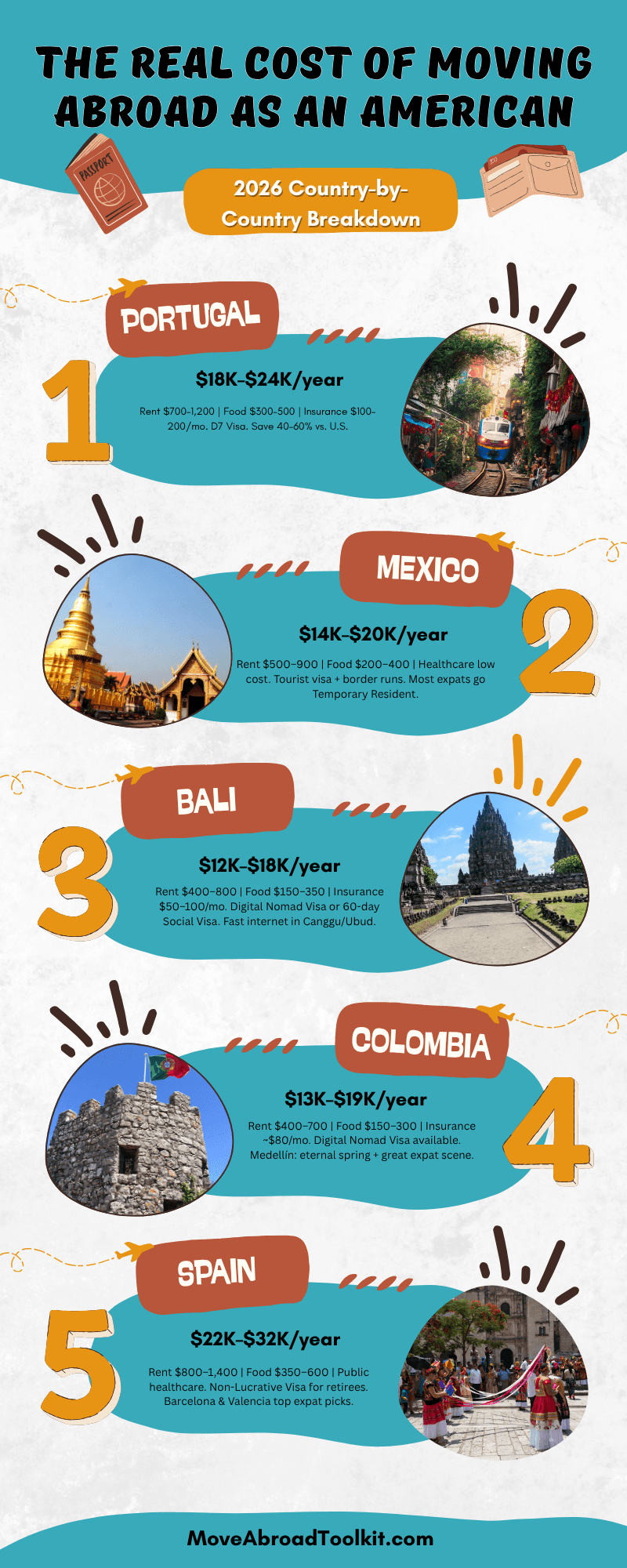
The Cost of Living Is Lower Than You Think
Greece is significantly more affordable than most Western European countries.
In Athens, a furnished one-bedroom apartment in a central neighborhood runs between €600 and €900 per month. Outside the city, and on many islands during the off-season, you can find rentals for €400 to €600. Groceries cost about 30% less than comparable items in the US. A sit-down meal at a local restaurant averages €10 to €15. A monthly public transit pass in Athens is around €30.
For remote workers earning in dollars, your income goes much further in Greece than it does at home. A solo digital nomad can live comfortably in Athens for €1,500 to €2,000 per month , covering rent, food, transport, and entertainment. Add health insurance and you’re still well under €2,500. SafetyWing Nomad Insurance plans start around $45 per month, which makes the numbers even more manageable.
You Can Work Remotely Without a Work Permit
The Greece Digital Nomad Visa specifically allows remote work without requiring a Greek work permit.
This is a significant advantage over standard long-stay visas. You are not entering the Greek labor market. You’re living in Greece while earning income from foreign clients or an employer based elsewhere. That distinction is exactly what the visa was built for. As long as your income comes from outside Greece, you’re operating within the rules.
One practical consideration: make sure your home country employer’s remote work policy allows international remote work. Some US employers restrict remote work to specific states or countries. Get written confirmation before you commit. As for your internet connection, Greece has reliable broadband in cities and decent connectivity on the more popular islands. NordVPN is a smart addition , it lets you access US-based services, protects your data on public Wi-Fi, and keeps your banking apps working correctly when Greek IP addresses trigger location-based security blocks.
Tax obligations are worth understanding too. As a US citizen, you’re required to file US taxes no matter where you live. You won’t owe Greek income tax on foreign-sourced income during your first two years. But you may still owe US self-employment taxes or federal income taxes depending on your income level and whether you qualify for the Foreign Earned Income Exclusion. Taxes for Expats specializes in exactly this situation , they work with American expats and digital nomads to make sure you’re compliant without overpaying.

Your First 90 Days in Greece: What to Expect
The first three months are your adjustment window , and Greece makes it relatively easy.
I’ve navigated the European residency process firsthand, and Greece consistently comes up as one of the more foreigner-friendly countries for Americans making the move. The bureaucracy is real, but it’s manageable when you show up with organized documents. Your first priority after landing is registering with the Migration Service office within 30 days. Don’t let that deadline slip , it’s what converts your consulate visa into your local residence permit.
After registration, you’ll want to open a Greek bank account. Most major Greek banks require your residence permit card or a tax registration number (AFM). Getting your AFM is easy , you can get it at the local tax authority (AADE) office with your passport and residence documentation. The AFM lets you open a bank account, sign a lease officially, and set up utilities in your name.
The Greek SIM card situation is simple. Local providers like Cosmote, Vodafone Greece, and Wind offer prepaid plans with strong data packages for €10 to €20 per month. A local number and data plan makes daily life , navigating transit, finding addresses, ordering food , much smoother than relying on international roaming. By day 60, most digital nomads feel settled and are spending more time exploring than dealing with logistics.
Frequently Asked Questions
Can I bring my family on the Greece Digital Nomad Visa?
Yes. Spouses and dependent children can be included in your application as family members. You’ll need to show an additional 20% income for each accompanying adult and 15% for each dependent child. Each family member will need their own documentation, including passports and health insurance coverage. Your household income threshold goes up, but the core application process stays the same.
Can I renew the Greece Digital Nomad Visa?
Yes. The visa is valid for 12 months and can be renewed for another 12 months as long as you still meet all the requirements. To renew, you’ll submit updated proof of income, a valid health insurance policy, and your current accommodation documentation to the Greek Migration Service. Apply for renewal at least two months before your current permit expires to avoid a gap in status.
Does the Greece Digital Nomad Visa affect my US taxes?
You’re still required to file US taxes as a citizen, no matter where you live. However, you may qualify for the Foreign Earned Income Exclusion (FEIE) if you meet the physical presence test , spending at least 330 days outside the US in a 12-month period. The FEIE can exclude up to $126,500 (2024 limit) of foreign earned income from US federal income tax. Taxes for Expats can help you determine your eligibility and file correctly.
Is Greece in the Schengen Area?
Yes, Greece is a full Schengen member. As a Greece Digital Nomad Visa holder, you can travel to other Schengen countries for up to 90 days in any 180-day period without additional visas. This makes Greece an excellent base for exploring Europe. Just track your Schengen day count carefully , exceeding the 90-day limit in other Schengen countries can create complications even if your Greek residency permit is valid.
How long does the Greece Digital Nomad Visa application take?
Expect two to four weeks for the consulate to process your initial D-visa application. Once you arrive in Greece and register, your residence permit card typically arrives within 30 to 60 days. The longest part of the process is usually gathering your documents , especially the FBI background check, which can take six to eight weeks. Start collecting documents at least two to three months before your intended move date.
Ready to Make the Move?
Greece gives you sunshine, history, affordable living, and a legal framework that welcomes remote workers.
If you meet the income threshold and can gather your documents, the Greece Digital Nomad Visa is one of the most accessible EU residency options available to Americans right now. The €3,500 monthly income requirement is clear, the application process is manageable, and the lifestyle payoff is significant.
If you want to compare options before committing, check out the Spain Digital Nomad Visa and the Croatia Digital Nomad Visa , both are strong EU alternatives with different income thresholds and lifestyle tradeoffs. For a non-EU European option, the Portugal D7 Visa is also worth reading. If you’re still deciding which country makes the most sense for your situation, the Best Countries for Americans to Move Abroad post breaks it down by cost, visa accessibility, and lifestyle fit. And if you want to compare all the visa options at once, the Digital Nomad Visas for Americans guide covers the full landscape.
For more on cost of living, healthcare, taxes, and the operational steps, see our complete guide to moving to Greece.
When you’re ready to start planning for real, the Start Here page walks you through the full move process from the beginning. The Resources page has the tools and services that make the practical side easier. When you’re ready to take the next step, the MATK Toolkit has everything you need to plan and execute your move abroad.

📌 Save this guide for later! Pin it to your travel or move abroad board so you can find it when you need it.
Click the image above to save directly to Pinterest.
Thinking about moving abroad? Book a Move Abroad Planning Call for personalized guidance on your relocation.
Continue Planning Your Move
Everything you need is in one place.
Free Download
Remote Income Starter Kit
30 curated remote job boards, an application tracker & freelance rate calculator. Fund your move before you leave.