
Can You Live in Bali on $1,000 a Month? 7 Real Numbers (2026)
This post contains affiliate links. If you click through and make a purchase, I may earn a small commission at no extra cost to you. I only recommend products and services I personally use and trust.
Yes, you can live in Bali on $1,000 a month. I spent time living in Canggu and Ubud and watched dozens of nomads do it on that budget.
Some links below are affiliate links. We may earn a small commission if you purchase through them at no extra cost to you. All product recommendations are based on personal research and would be made regardless of compensation.
But there’s a big difference between surviving on $1,000 and actually living well. The cost of living in Bali on $1,000 a month is real. But it requires smart choices about where you live, eat, and spend.
Here are the real numbers, broken down by category so you can see exactly where your money goes.
📋 WHAT’S IN THIS GUIDE
- The Real Breakdown: Rent, Food, Transport, Healthcare, Entertainment
- What $1,000 Actually Gets You Day to Day in Bali
- Where to Live in Bali on a $1,000 Budget
- Hidden Costs Americans Don’t Expect in Bali
- Is $1,000 a Month in Bali Actually Realistic?
- Frequently Asked Questions
- Ready to Make Your Move to Bali?
The Real Breakdown: Rent, Food, Transport, Healthcare, Entertainment
The cost of living in Bali on $1000 a month breaks down into five core categories. Each one has a range, and where you land depends on your neighborhood and habits.
Rent: $200 to $450/month
Rent is your biggest expense and your biggest lever.
A private room in a shared villa in Canggu runs $200 to $350 per month. A studio or one-bedroom bungalow in Ubud or Sanur runs $250 to $450. You won’t find a private villa in premium Canggu for that price. But clean, air-conditioned rooms run $250 to $350 away from the main tourist strips.
Book monthly, not weekly. Monthly rates are 30 to 50 percent lower than short-term rates on the same property.
Food: $150 to $250/month
This is where Bali genuinely shines.
A full meal at a warung (local Indonesian restaurant) costs 25,000 to 40,000 IDR, which is about $1.50 to $2.50. Eat local twice a day and you’re spending $90 to $150 a month on food. If you mix local warungs with Western cafes a few times a week, you’re in the $150 to $250 range. Coffee at a coworking space or cafe runs 30,000 to 60,000 IDR ($2 to $4).
Grocery stores like Pepito and Bintang carry imported goods at higher prices. Stick to local markets and warungs to keep food costs down.

Transport: $60 to $120/month
You have two real options in Bali: scooter or Gojek/Grab (the local rideshare apps).
Renting a scooter costs about $60 to $80 per month. This covers local trips but doesn’t include petrol, which adds another $15 to $20. Rely entirely on Gojek and you’ll spend $60 to $100 a month, depending on how often you go out. Most people on a $1,000 budget rent a scooter and use Gojek for rainy days or late nights.
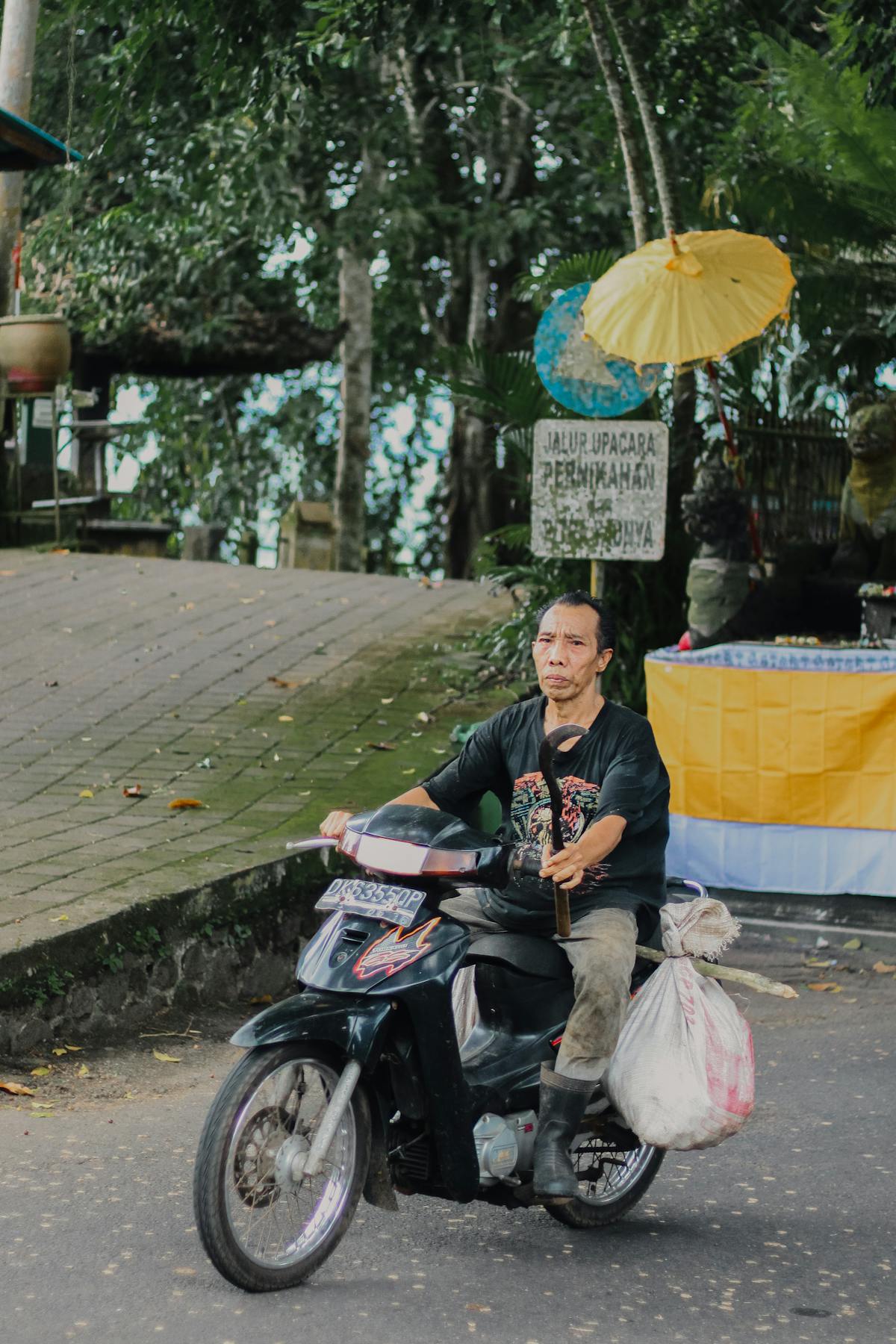
Healthcare: $40 to $80/month
SafetyWing Nomad Insurance runs about $45 to $56 per month for most Americans under 39. This covers basic emergency care and hospitalization. It won’t cover routine checkups, dental, or pre-existing conditions.
For routine care, a doctor visit at a local clinic in Bali costs $10 to $30. Pharmacies are well-stocked and affordable. Budget $40 to $80 per month for insurance plus any out-of-pocket costs.
You can get SafetyWing Nomad Insurance starting from $45/month and have full emergency coverage while you’re in Bali.
Entertainment: $50 to $100/month
Bali is easy to enjoy cheaply.
A yoga class costs $5 to $12. A surf lesson runs $15 to $25. Entry to most temples costs $1 to $3. The beach is free. Most of what makes Bali special is free. Still, budget $50 to $100 per month for activities, nights out, and tourist experiences.
What $1,000 Actually Gets You Day to Day in Bali
At $1,000 a month, here’s what a realistic daily life looks like in Bali.
You wake up in a clean, private air-conditioned room. Breakfast is a $1.50 nasi goreng from the warung next door. You ride your scooter to a coworking space or wifi cafe. You work the morning over $3 coffee. Lunch is another warung meal. In the afternoon, you take a $5 yoga class, explore a rice terrace, or hit the beach. Dinner is $2 to $4 at a local spot. Most evenings cost you nothing.
That’s not a stripped-down budget life. That’s a genuinely good life by most standards.
Here’s what a tight but realistic monthly budget looks like:
| Category | Monthly Cost (USD) |
|---|---|
| Rent (shared villa / studio) | $280 |
| Food (mostly local warungs) | $180 |
| Transport (scooter + Gojek) | $80 |
| Health insurance (SafetyWing) | $50 |
| Coworking / wifi (cafe money) | $60 |
| Entertainment / activities | $70 |
| Phone + SIM card | $15 |
| Miscellaneous / buffer | $65 |
| Total | $800 to $1,000 |
The numbers above assume you eat local, rent a scooter, and have no big visa costs that month.
Where to Live in Bali on a $1,000 Budget
Not every area of Bali fits a $1,000 monthly budget the same way.
Ubud: The Easiest Budget Option
Ubud is quieter and more affordable than Canggu. Rooms are cheaper, food is cheaper, and there’s less pressure to go out and spend money. The tradeoff is that Ubud is inland with no beach access and a smaller digital nomad community.
If your work is fully remote and you want to stretch $1,000 comfortably, Ubud is the best option. You can rent a clean bungalow with a rice paddy view for $250 to $350 per month.

Canggu: Tight But Doable
Canggu is the most popular nomad hub in Bali and also the most expensive area for the target demographic. You can make $1,000 work here. But you’ll need a shared villa or a quieter street away from Batu Bolong and Echo Beach.
The upside of Canggu is the coworking scene, the community, and the beach access. If having those things matters to your work or social life, Canggu is worth the slightly higher costs. Read the full Canggu Digital Nomad Guide for a complete breakdown.
Sanur and Sidemen: Overlooked Value
Sanur is calmer and more affordable than both Canggu and Seminyak. It has a beach, cafes, and an expat community. Fewer digital nomads means prices stay lower. Sidemen sits east of Ubud with cheap accommodation. It has one of the best rice terrace views on the island.
For anyone on a strict $1,000 budget, Sanur and Sidemen are serious options worth exploring.
Hidden Costs Americans Don’t Expect in Bali
These are the costs that blow Bali budgets for first-timers.
Visa Runs and Extensions
Your tourist visa (VOA) gives you 30 days and costs around $35. You can extend it once for another 30 days at around $35 to $50. After that, you need to leave and re-enter, or have a longer-term visa. Visa runs to Singapore or Malaysia cost $150 to $300 depending on flights.
The Bali Digital Nomad Visa is a better long-term option for stays over 60 days. Factor visa costs into your monthly average. You can confirm current entry rules at the US Embassy Jakarta.
Currency Conversion Losses
Using a US bank debit card at Bali ATMs means foreign transaction fees plus a poor exchange rate. A $1,000 budget can lose $30 to $60 a month just in conversion costs.
Open a Wise account before you go. Wise converts at the mid-market rate and charges minimal fees. On a $1,000 budget, this easily saves you $30 to $50 per month compared to a standard US bank card.
Aircon Costs
Many Bali villa rentals charge separately for aircon usage. A room that says $250 per month may add $40 to $80 in electricity fees if you run aircon regularly.
Always ask what’s included before you commit to a rental.
Motorbike Accidents and Medical Costs
Motorbike accidents are the most common serious incident for expats in Bali. Road conditions are uneven, traffic is chaotic, and many roads flood during rainy season. A minor accident can cost $100 to $500 out of pocket if you don’t have insurance.
Make sure your health coverage includes motorbike accidents. Standard SafetyWing does not cover motorbike accidents unless you have the correct license and helmet. Check your policy details carefully. See the full international health insurance guide for Americans to compare your options.
Is $1,000 a Month in Bali Actually Realistic? (Honest Answer)
Yes. But here’s the full picture.
$1,000 works if you eat local, live outside premium nomad areas, rent a scooter, and keep entertainment low. Many people do this sustainably for months or years.
$1,000 will feel tight in central Canggu. It tightens further if you eat Western daily, surf often, or face monthly visa run costs.
The sweet spot for a comfortable life in Bali is $1,200 to $1,500 per month. That budget gets a private room, mixed local and Western food, and room for activities without tracking every purchase.
Before booking flights, read the detailed Cost of Living in Bali guide. It breaks down costs by neighborhood and budget level. Still sorting the visa? The Moving to Bali as an American guide covers what you need before your first trip.
Frequently Asked Questions
Is $1,000 a month enough to live in Bali comfortably?
Yes, $1,000 is enough if you live in Ubud or quiet Canggu. Eat at warungs, rent a scooter, and carry basic insurance. You won’t have money to splurge, but you’ll have a private room, good food, and a full life. Most people find $1,200 to $1,500 gives more breathing room.
What is the minimum budget to live in Bali?
The minimum realistic budget for a solo adult living in Bali is around $700 to $800 per month. This covers a shared room, local food, basic transport, and minimal entertainment. Below $700, you’re compromising on accommodation quality or health coverage in ways most people find unsustainable long-term.
How far does $1,000 go in Bali compared to the US?
In most US cities, $1,000 doesn’t cover rent alone. In Bali, $1,000 covers rent, food, transport, health insurance, and entertainment with money left over. US dollar purchasing power in Bali runs 3 to 5 times a mid-size US city. It’s far higher than NYC or SF.
Do I need a specific visa to live in Bali on a budget?
For stays up to 60 days, enter on a Visa on Arrival (VOA) for $35, extendable once. For longer stays, look at the B211A social visa, the digital nomad visa, or a KITAS permit. Each has different costs and requirements. The visa costs need to be factored into your monthly budget average. Read the full Indonesia Digital Nomad Visa guide for full details.
Ready to plan your move to Bali? The Move Abroad Toolkit has every resource you need to get there, including visa guides, cost breakdowns, and step-by-step checklists. Browse all resources here.

📌 Save this guide for later! Pin it to your travel or move abroad board so you can find it when you need it.
Click the image above to save directly to Pinterest.
Ready to Make Your Move to Bali?
Bali on $1,000 a month is not a fantasy. It’s a real way to live that thousands of Americans are doing right now.
The key is going in with accurate numbers, the right neighborhood, and the right financial setup. Use Wise for currency, get SafetyWing before you land, and book your first month on Airbnb Monthly to test neighborhoods.
When you’re ready to take the next step, start with the full Moving to Bali as an American guide. It covers visas, neighborhoods, safety, healthcare, and your complete 90-day action plan.
I funded my own move abroad by selling my house, my car (to CarMax), and my belongings on Facebook Marketplace and at garage sales. That firsthand experience shapes how I write about moving abroad, I am not just summarizing data, I am telling you what the numbers actually mean for someone making a real move.
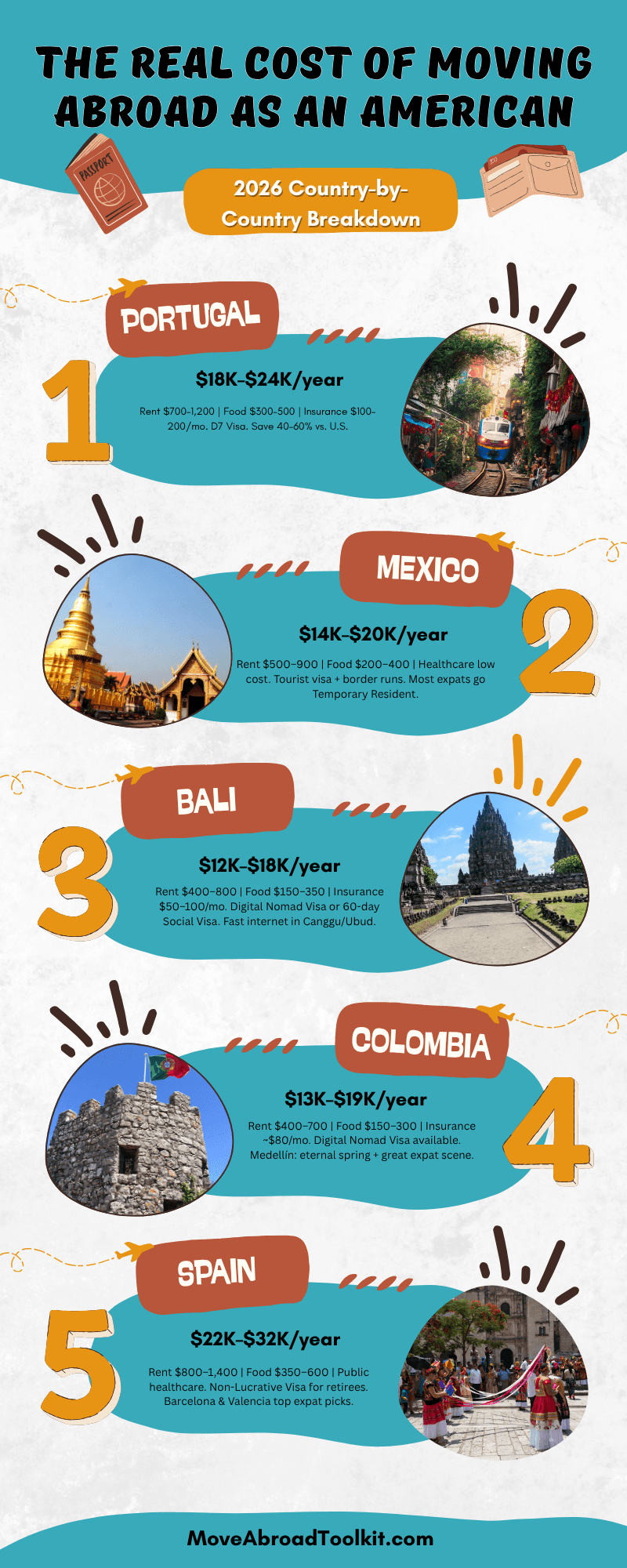
Currency exchange fees eat into every international transfer. Use Wise instead of your bank for real exchange rates and low fees. Most expats save $50 to $100 per month on transfers alone.
For health coverage while abroad, SafetyWing Nomad Insurance starts at $45.08 per month for Americans under 40. It covers you in most countries and is built for long-term travelers and expats.
If you need a VPN for US streaming or public wifi security, NordVPN works well from abroad.
US tax filing does not stop when you move abroad. You still owe US taxes on worldwide income. Taxes for Expats specializes in expat tax returns and can save you from expensive mistakes.
If you are serious about the move, grab the Move Abroad Toolkit to plan your budget, timeline, and logistics in one place.
Thinking about moving abroad? Book a Move Abroad Planning Call for personalized guidance on your relocation.
Continue Planning Your Move
Everything you need is in one place.
Free Download
Remote Income Starter Kit
30 curated remote job boards, an application tracker & freelance rate calculator. Fund your move before you leave.