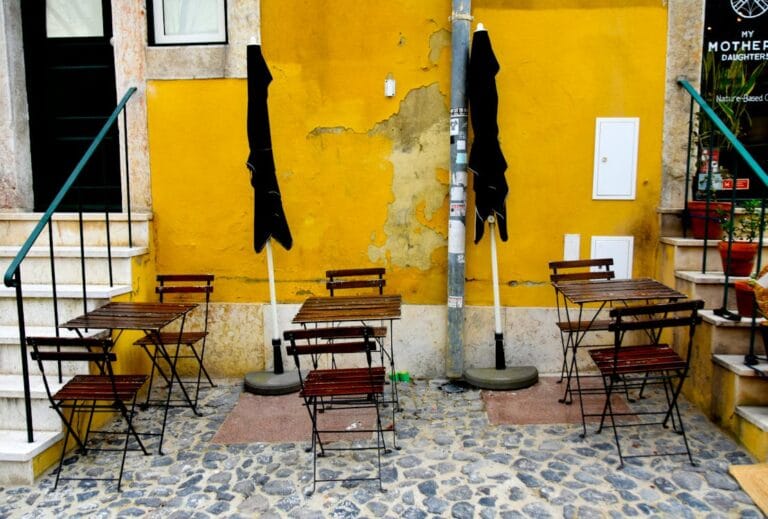
Moving to Portugal as an American: 9 Expat Insider Tips (2026)
Some links on this site are affiliate links, which means the site may earn a commission at no extra cost to you. Services are included because they fit the move abroad process, not because of the commission.
📋 WHAT’S IN THIS GUIDE
- Is Portugal the Right Move for You?
- Portugal Visa Options for Americans
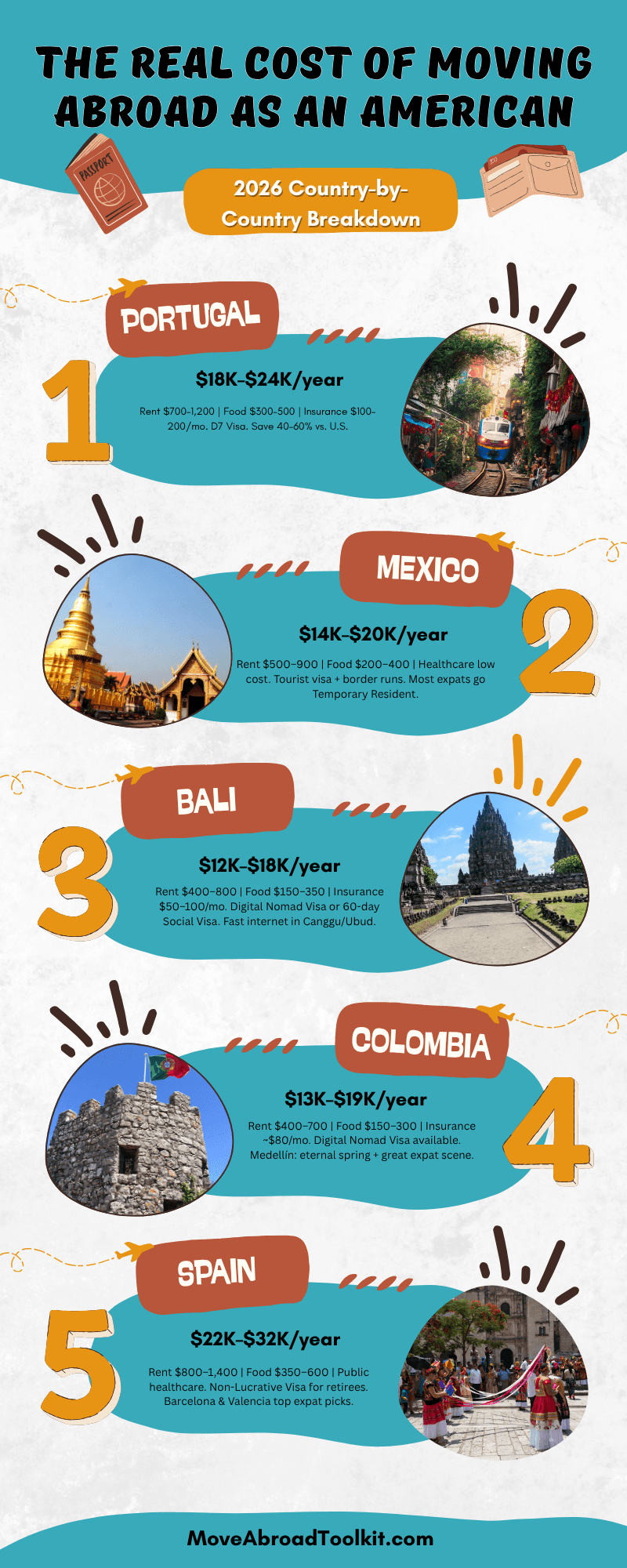
- Cost of Living in Portugal
- NHR Closure and the IFICI Regime
- Best Cities to Live in Portugal
- How to Apply for the D7 Visa
- Banking in Portugal as an American
- Healthcare in Portugal
- Your 30/60/90-Day Portugal Launch Plan
- Frequently Asked Questions
If you’re thinking about moving to Portugal as an American, you’re not alone. Portugal has become the #1 destination for Americans moving abroad, and for good reason. A straightforward passive income visa (D7), path to EU citizenship in 5 years, a narrower IFICI tax incentive for qualifying skilled roles (the old NHR regime closed to new applicants on 1 January 2024), and a cost of living that’s 40% lower than major US cities. This is your complete guide to making the move.
Is Portugal the Right Move for You?
When moving to Portugal as an American, it works best for those who have remote income, passive income (dividends, rental income, savings), or who are retired with pension/Social Security. If you need to find work locally, Portugal is significantly harder, the local job market pays in euros at Portuguese rates.


📌 Save this guide for later! Pin it to your travel or move abroad board so you can find it when you need it.
Click the image above to save directly to Pinterest.
📌 Save this guide for later! Pin it to your travel or move abroad board so you can find it when you need it.
Hover over any image in this post to pin it directly to Pinterest.
Portugal Visa Options for Americans
D7 Passive Income Visa
Best for: Remote workers, freelancers, retirees, anyone with passive income. Minimum income: ~€760/month (the Portuguese minimum wage). Duration: 1-year renewable, leading to permanent residency and citizenship eligibility after 5 years. Cost: €150-€300 in application fees. Processing: 2-4 months through a Portuguese consulate.
Digital Nomad Visa (D8)
Best for: Remote workers employed by foreign companies or freelancers with foreign clients. Minimum income: ~€3,040/month (4x Portuguese minimum wage). Duration: 1-year renewable. Similar path to residency as the D7. Read our D8 visa application walkthrough for the full step-by-step.
Golden Visa
Portugal’s Golden Visa requires a qualifying investment (investment funds starting at €500,000, or other qualifying options). It provides immediate residency with minimal stay requirements (7 days/year). Path to citizenship in 5 years. Note: direct real estate investment no longer qualifies in most of Portugal.
Cost of Living in Portugal When Moving to Portugal as an American
Your monthly cost in Portugal depends heavily on where you live. Lisbon and Porto are the most expensive, but still 30-40% cheaper than comparable US cities.
For a full cost breakdown, see our honest numbers on the cost of living in Lisbon.
| City | Monthly Budget (Comfortable) | 1BR Rent |
|---|---|---|
| Lisbon | $2,200-$2,800 | €1,200-€1,800 |
| Porto | $1,800-$2,400 | €900-€1,400 |
| Algarve | $2,000-$2,600 | €1,000-€1,600 |
| Interior cities (Évora, Coimbra) | $1,200-$1,800 | €600-€900 |
NHR Closure and the IFICI Regime
Portugal’s Non-Habitual Residency (NHR) tax regime closed to new applicants on 1 January 2024 and was replaced by IFICI (Incentivo Fiscal à Investigação Científica e Inovação), a much narrower incentive aimed at research and innovation roles. IFICI applies a 20% flat rate to qualifying Portuguese employment or self-employment income for 10 years, but only for people working in qualifying highly skilled positions, so Americans moving on a D7 passive income visa or retiring on passive income generally will not qualify. Consult a Portuguese tax attorney for your specific situation, because US citizens face additional complexity due to the US global taxation requirement. Tax planning is one of the most important steps when moving to Portugal as an American.
Best Cities to Live in Portugal as an American
Lisbon
Portugal’s capital is the most international and the most expensive. Strong expat community, world-class food scene, easy connections to the rest of Europe. Best neighborhoods: Príncipe Real, Bairro Alto, Parque das Nações. Cons: increasingly crowded, rents have risen significantly since 2020.
Porto
Porto is where most expats land after getting tired of Lisbon prices. Smaller, grittier, more authentically Portuguese. Strong startup and remote work scene. Best neighborhoods: Foz do Douro, Bonfim, Cedofeita. Monthly cost 15-20% less than Lisbon.
Algarve
The south coast is where retirees and beach lovers settle. Lagos, Tavira, and Faro are popular expat bases. More seasonal than Lisbon/Porto, but warm, beautiful, and increasingly international.
How to Apply for the D7 Visa: Step by Step
- Gather documents: Proof of income (bank statements, 3-6 months), accommodation proof (rental contract or Airbnb), criminal background check (apostilled from FBI or state), health insurance valid in Portugal, passport valid 3+ months beyond visa duration.
- Book a VFS appointment at your nearest Portuguese consulate. In the US: Washington DC, New York, Boston, San Francisco, Newark.
- Submit application with all documents. Pay the visa fee (~€90).
- Wait for processing: 2-4 months is typical. You can stay in Portugal on a tourist visa while waiting if you’ve already moved.
- Receive D7 visa: Valid for 4 months, allowing you to enter Portugal and apply for your residence permit (Autorização de Residência) at SEF/AIMA.
- Get your residence permit: Valid for 2 years, renewable. This is your actual long-term document.
Banking in Portugal as an American
Open a Portuguese bank account before or shortly after arriving. Popular options: Millennium BCP (expat-friendly), Novo Banco, Montepio. Many Americans also use Wise or Revolut for international transfers and to avoid ATM fees. Note: FATCA reporting requirements mean some Portuguese banks are hesitant to open accounts for Americans, be upfront and patient.
Healthcare in Portugal When Moving to Portugal as an American
Portugal has a public healthcare system (SNS) that residents can access. As a D7 visa holder and resident, you’re eligible to register with a local health center. Quality varies by location, Lisbon and Porto have strong public hospitals. Many expats also get private health insurance, or start with SafetyWing Nomad Insurance while settling in (€50-€120/month) for faster access and English-speaking doctors.
Moving to Portugal: Your 30, 60, and 90-Day Timeline
Most Americans who successfully move to Portugal don’t pack a bag and book a flight, they work a timeline. Portugal’s visa process has hard lead times (the FBI background check alone takes 6-8 weeks, and VFS consulate appointments fill up months in advance), so winging it is not an option. Here’s the exact sequence that works.
90 Days Before Your Move to Portugal
Three months out is when the bureaucratic clock starts. Portugal’s D7 visa requires documents that take time to gather and authenticate, if you wait until 60 days out, you will miss your consulate window. This is also the phase to test your decision before it becomes irrevocable.
- Book a scouting trip, minimum 2 weeks, ideally in Lisbon, Porto, or the Algarve. Rent an Airbnb in a neighborhood you’re considering, not a tourist hotel. Cost of living and daily life feel very different from the visitor experience.
- Start your FBI background check, this must be apostilled for Portugal and takes 6-8 weeks. Order through the FBI’s IdentityHistory Summary Check. Don’t skip this or assume a state background check substitutes.
- Book your VFS Global consulate appointment, these fill months in advance in major US cities. Check VFS Global for your nearest Portuguese consulate and book the earliest slot that works with your document timeline.
- Open a US account with zero foreign transaction fees, Charles Schwab’s investor checking account reimburses all ATM fees worldwide and has no foreign transaction fee. Open this now so it’s active and funded before you leave.
- Get health insurance that satisfies D7 visa requirements, Portugal requires proof of health coverage valid in Portugal for your visa application. SafetyWing, Cigna Global, and IMG Global all work. Check that your plan covers Portugal specifically.
- Decide: ship belongings or start fresh, international shipping to Portugal is expensive ($3,000-$8,000+ for a container). Many Americans sell everything and buy again in Portugal, where furniture and household goods are affordable.
60 Days Before Your Move to Portugal
By now your background check should be in progress and your consulate appointment should be booked. The 60-day phase is about assembling your full visa application package and locking down your landing logistics. Portugal doesn’t require you to have a Portuguese address before your visa is approved, but you need to show proof of sufficient income and intent.
- Gather and apostille all required documents, D7 visa requirements include: passport (valid 6+ months beyond intended stay), FBI background check (apostilled), proof of income (bank statements showing 3-6 months of regular income, pension letters, dividend records), proof of accommodation in Portugal, and health insurance certificate.
- Book short-term accommodation in Portugal, you need a Portuguese address for your visa. Most applicants book 3-6 months of furnished accommodation in advance via Uniplaces, Idealista, or direct landlord contact. Lisbon and Porto rent faster than you expect.
- File change of address with IRS and Social Security, if you receive Social Security or file US taxes (all Americans abroad must), update your address now. Set up a US mail forwarding service (Traveling Mailbox, PostScan Mail) to manage US mail while abroad.
- Notify US banks and credit cards, inform your banks of your move and confirm your cards will work internationally. Request a pin for any credit cards you’ll use at European chip-and-pin terminals.
- Sort your tax situation, all US citizens must file US taxes no matter where they live. Portugal’s NHR tax regime closed to new applicants on 1 January 2024 and was replaced by IFICI, a much narrower incentive aimed at research and innovation roles, so do not plan around NHR tax savings. Consider using Taxes for Expats, which specializes in US expat returns, and you get a $25 discount when you sign up through this link. Consult a tax professional now, not after you arrive.
- Decide what to do with US housing, give notice on your lease, arrange storage for items you’re shipping later, or list your property if selling. Don’t pay rent in two countries longer than necessary.
30 Days Before Your Move to Portugal
Your visa application should be submitted or in final review. The 30-day phase is logistics and handoffs, you’re wrapping up your American life while building the operational foundation for your Portuguese one. Small things skipped here become expensive problems when you’re 5,000 miles away.
- Submit your D7 visa application at your consulate appointment, bring originals and copies of everything. Processing takes 2-8 weeks. If approved, your visa is valid for 4 months to enter Portugal, after which you apply for your residence permit (Autorização de Residência) at AIMA in Portugal.
- Transfer funds to Wise or set up an international wire, you’ll need euros on arrival. Load a Wise account or set up international wire capability with your US bank. Wise’s exchange rates are significantly better than bank rates for recurring transfers.
- Get a NIF (Portuguese tax number) if possible before you leave, a NIF (Número de Identificação Fiscal) is required to open a bank account, sign a lease, and do almost anything in Portugal. You can get one from a Portuguese consulate in the US or hire a fiscal representative to get it before you arrive.
- Book your flights, Lisbon (LIS) is the main hub; Porto (OPO) is the alternative. TAP Air Portugal flies direct from several US cities. Book refundable fares if your visa is still pending.
- Set up your phone plan for Portugal, either unlock your US phone and plan to buy a Portuguese SIM on arrival (NOS, MEO, and Vodafone are the main carriers), or get a travel eSIM for the first week via Airalo while you sort a local plan. A NordVPN subscription helps with accessing US services and securing public wifi connections.
- Digitize all important documents, passport, visa, insurance, lease agreement, bank statements. Store in Google Drive and a secure password manager. Carry physical copies in a travel document organizer on arrival day.
Still comparing countries? Take the free country match quiz to see which countries fit your budget, language comfort and lifestyle, then compare your top options side by side.
After You Arrive: Your First 30 Days in Portugal
The first month in Portugal is both exciting and bureaucratically intense. Portugal is famously slow with paperwork, AIMA (the immigration authority) has long wait times and in-person queues. Getting ahead of the administrative to-do list in week one saves weeks of frustration later.
- Register at your local câmara (city hall), Atestado de Residência confirms your address and is required for many subsequent steps. Bring your lease, passport, and NIF.
- Book your AIMA appointment immediately, your D7 visa is valid for 4 months to enter; once in Portugal, you must apply for your Autorização de Residência at AIMA. Appointments book out, schedule yours the first week you arrive.
- Open a Portuguese bank account, Millennium BCP and Novo Banco are the most expat-friendly. Many branches in Lisbon and Porto have English-speaking staff. Bring your NIF, passport, proof of address, and proof of income. Note: some banks are hesitant with American clients due to FATCA reporting requirements, be patient and try multiple branches if needed.
- Register with a local health center (Centro de Saúde), as a D7 visa holder becoming a resident, you’re entitled to register with the public health system (SNS). Do this early; your health center is also where you’ll be assigned a family doctor.
- Get a Portuguese SIM card, NOS, MEO, and Vodafone all offer prepaid and monthly plans. A local number is needed for almost every Portuguese website login and service verification.
- Explore your neighborhood deliberately, find your nearest mercado, pharmacy, café, and transport stop. Portugal rewards those who settle into a rhythm rather than tourist-hopping. The slower pace is the point.
For official visa requirements and application details, visit the Portuguese immigration authority (AIMA) at aima.gov.pt.
Move Abroad Toolkit | Related guides: Digital Nomad Visas for Americans | How to Budget for Moving Abroad | What to Pack When Moving Abroad
D7 Passive Income Visa
Best for: Remote workers, freelancers, retirees, anyone with passive income. Minimum income: ~€760/month (the Portuguese minimum wage). Duration: 1-year renewable, leading to permanent residency and citizenship eligibility after 5 years. Cost: €150-€300 in application fees. Processing: 2-4 months through a Portuguese consulate.
Digital Nomad Visa (D8)
Best for: Remote workers employed by foreign companies or freelancers with foreign clients. Minimum income: ~€3,040/month (4x Portuguese minimum wage). Duration: 1-year renewable. Similar path to residency as the D7.
Golden Visa
Portugal’s Golden Visa requires a qualifying investment (investment funds starting at €500,000, or other qualifying options). It provides immediate residency with minimal stay requirements (7 days/year). Path to citizenship in 5 years. Note: direct real estate investment no longer qualifies in most of Portugal.
Lisbon
Portugal’s capital is the most international and the most expensive. Strong expat community, world-class food scene, easy connections to the rest of Europe. Best neighborhoods: Príncipe Real, Bairro Alto, Parque das Nações. Cons: increasingly crowded, rents have risen significantly since 2020.
Porto
Porto is where most expats land after getting tired of Lisbon prices. Smaller, grittier, more authentically Portuguese. Strong startup and remote work scene. Best neighborhoods: Foz do Douro, Bonfim, Cedofeita. Monthly cost 15-20% less than Lisbon.
Algarve
The south coast is where retirees and beach lovers settle. Lagos, Tavira, and Faro are popular expat bases. More seasonal than Lisbon/Porto, but warm, beautiful, and increasingly international.
Thinking about moving abroad? Book a Move Abroad Planning Call for personalized guidance on your relocation.
Continue Planning Your Move
Everything you need is in one place.
Free Quiz
Find Your Best Country Match
Answer a few quick questions about your budget, language comfort, lifestyle and visa needs, and see which countries fit you best.