What to Pack When Moving Abroad: Region-by-Region Guide (2026)
Some links on this site are affiliate links, which means the site may earn a commission at no extra cost to you. Services are included because they fit the move abroad process, not because of the commission.
Wondering what to pack when moving abroad? You’re going to overpack. Everyone does. Knowing what to pack when moving abroad can make or break your first few months.
The goal isn’t to pack perfectly, it’s to underpack intentionally, bring what you can’t replace. Understanding what to pack when moving abroad means prioritizing the irreplaceable, and buy what you can get cheaper there. A carry-on and one personal item is the expat gold standard. Even if you check a bag, you’ll spend the first month wishing you hadn’t brought half of it.
I’ve done extended stays in Paris and South Africa, and the packing lessons are different when you’re not on a two-week vacation. You’re setting up a life. That changes what matters.
My rule: If you haven’t used it in the last 30 days in the US, don’t bring it abroad. Your lifestyle will change faster than you think.
This guide breaks down what to pack when moving abroad by region, because packing for Portugal is not packing for Thailand, and packing for Cape Town is not packing for Medellín. Climate, plugs, health prep, and documents all vary. Here’s what actually matters.
📋 In This Guide
- What to Pack When Moving Abroad: By Region
- Europe: Portugal, Spain, France, Italy, Germany, Greece, Croatia
- Latin America: Mexico, Colombia, Costa Rica, Panama, Ecuador, Peru
- Southeast Asia: Thailand, Vietnam, Indonesia (Bali), Malaysia
- Africa: South Africa, Morocco, Kenya
- What NOT to pack (universal)
- Your 90-day departure timeline
What to Pack When Moving Abroad: By Region
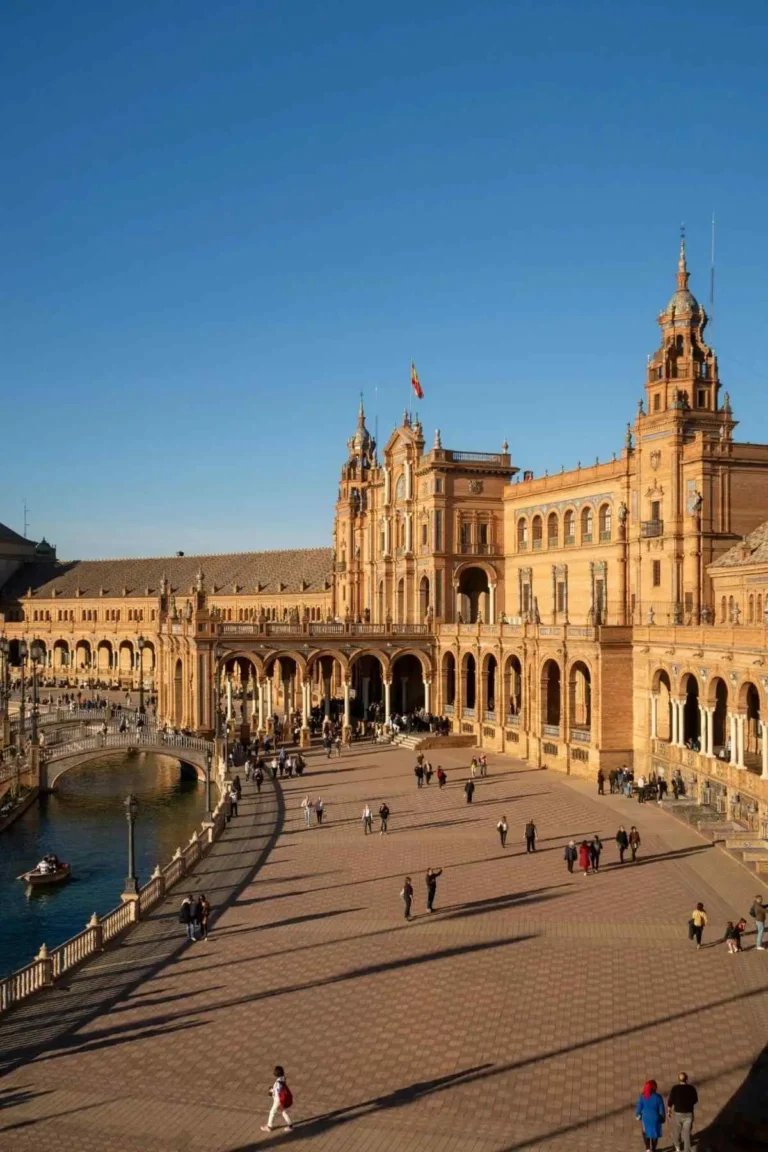
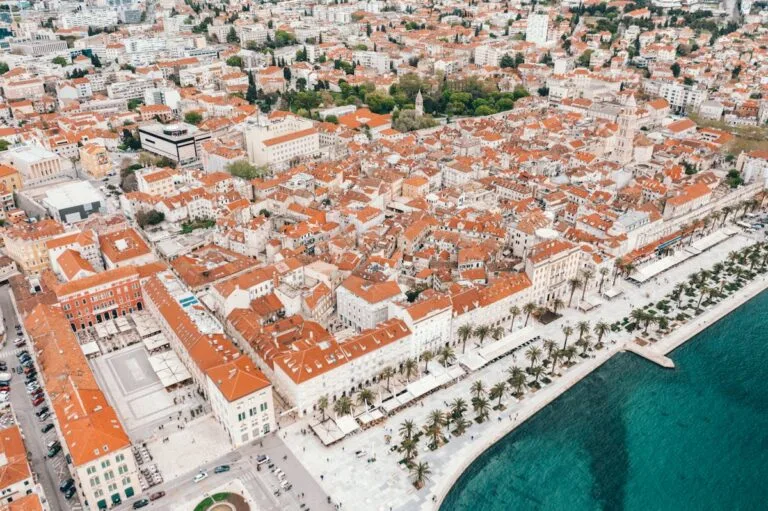
Europe: Portugal, Spain, France, Italy, Germany, Greece, Croatia
Climate reality
Western Europe is milder than most Americans expect, winters hover between 40-55°F in Lisbon and Barcelona, summers hit 75-90°F. Southern Europe (Greece, southern Spain, coastal Italy) gets hot and dry in summer but stays mild in winter. Germany and northern France require a proper coat from November through March.
Pack for all four seasons if you’re staying long-term. Layers are your best friend.
Clothing that works
Europeans dress more intentionally than Americans. The “athleisure everywhere” look that works in Austin doesn’t land the same in Milan or Paris. You don’t need a formal wardrobe, but you do need pieces that work across contexts.
- 3-5 neutral tops, black, white, navy. European style is understated.
- 2 pairs dark jeans or chinos, socially acceptable everywhere in Europe.
- 1 pair quality walking shoes, you’ll walk 6-10 miles a day. Allbirds, On Running, or similar. Invest here.
- 1 smart blazer or structured jacket, Europeans dress up more than Americans realize.
- Lightweight rain jacket, not a heavy parka. A packable shell handles most weather.
- Scarf, Europeans wear these year-round. Also useful for churches that require covered shoulders.
Kim’s European tip: Pack one black dress or pair of dark chinos plus a blazer, and you can go anywhere, beach town lunch to Michelin restaurant dinner. Europeans respect the effort to dress up; Americans typically underdress.
Tech and remote work setup
- Universal power adapter, Europe uses Type C/E/F plugs. Get a Europlug adapter before you go.
- Noise-canceling headphones, essential for cafés and open coworking.
- Airalo eSIM, get an EU-wide eSIM before landing. Works across all Schengen countries.
- VPN subscription, NordVPN or equivalent for US streaming services and café WiFi security.
- Portable charger (20,000mAh), long travel days between cities.
Documents and finance
- Passport + 2 color copies, keep digital copies in an encrypted cloud folder.
- Visa documents (originals), never in checked luggage. Always on your person.
- Charles Schwab debit card, 0% ATM fees worldwide.
- Wise card, for local EUR transactions without conversion fees.
- International driver’s license, get from AAA for $20 if you’re renting a car.
Need the full visa document checklist for your destination? Download the 2026 Visa Checklists PDF, it covers Portugal, Spain, Mexico, Colombia, Thailand, and more.
Latin America: Mexico, Colombia, Costa Rica, Panama, Ecuador, Peru
Climate reality
Latin America is not one climate. Mexico City and Bogotá sit at altitude (7,000-8,600 ft) and are surprisingly cool year-round, 55-70°F. The coasts (Cartagena, Puerto Vallarta, Mérida) are hot and humid, 85-95°F year-round. Andean cities like Cusco and Quito are cool with intense UV.
Pack versatile layers and serious UV protection regardless of destination. Knowing what to pack when moving abroad to Latin America starts with understanding altitude.
Clothing that works
- Lightweight, breathable fabrics only, linen, moisture-wicking synthetic, lightweight cotton.
- 5-7 t-shirts or lightweight tops, neutral colors hide dust and sweat better.
- Light cardigan or hoodie, for AC, altitude, evening breezes. Bogotá gets cold at night.
- Rain poncho (packable), rainy seasons are real. A packable poncho weighs nothing.
- Sun hat with brim, UV is intense, especially at altitude.
Health and safety prep
This is where Latin America packing differs most from Europe:
- Altitude sickness meds (Diamox), if you’re going to Bogotá, Cusco, Quito, or Mexico City. Consult your doctor.
- Electrolyte packets, Liquid IV or LMNT. Sweat plus unfamiliar food equals dehydration faster than you think.
- Imodium and digestive support, first 2 weeks stomach adjustment is real.
- DEET-based insect repellent, 30% DEET for mosquito areas.
- Money belt for travel days, wear under clothing on buses and in airports.
Finance note
In Mexico and Colombia, US dollars are often accepted in tourist areas. Always have some local currency for markets, street food, and transport. ATMs in city centers are safe, rural ATMs less so. Withdraw at banks during business hours when possible.
Southeast Asia: Thailand, Vietnam, Indonesia (Bali), Malaysia
Climate reality
Hot and humid year-round, 85-95°F average. Two seasons: dry (Nov-Apr) and wet (May-Oct, with daily afternoon downpours). AC is everywhere indoors, so bring a light layer for restaurants and coworking spaces.
Pack minimal, pack light. You will sweat. Everything dries overnight.
Clothing that works
- 5-7 moisture-wicking tops, merino wool or synthetic. Not cotton, it stays wet too long.
- 2-3 lightweight linen pants, temples require covered knees and shoulders.
- Temple scarf or sarong, many temples provide them, but bring your own. Also works as a beach cover-up.
- Flip flops, beaches, guesthouses, showers. Primary footwear most days.
Tech considerations
- Silica gel packets, protect electronics from humidity. Seriously.
- Waterproof laptop bag or dry bag, for monsoon season. Worth it.
- Universal adapter, Thailand/Vietnam use Type A/B/C; Indonesia uses Type C/F. Bring a universal.
Health and tropical prep
- Hepatitis A + B vaccines, get before leaving the US if not already done.
- Typhoid vaccine, recommended for Southeast Asia.
- Mosquito repellent (30% DEET), bring from the US; better formulas available locally too.
- Oral rehydration salts, heat plus humidity plus adjustment equals dehydration.
- Small personal pharmacy kit, antihistamine, antifungal cream (humidity), pain relief.
Bali tip: Rent a scooter ($80-$100/month) within your first week. It changes everything, you’ll go where you want, when you want. Take a 30-minute lesson first if you’ve never ridden one. Grab (the Uber of Southeast Asia) works in cities if you prefer.
Africa: South Africa, Morocco, Kenya
Climate reality
Africa is not one climate. Cape Town is Mediterranean, like California, with hot dry summers (75-85°F) and cool wet winters (50-60°F). Morocco’s north is Mediterranean, while Marrakech hits 100°F in summer. Nairobi sits at altitude and stays comfortable year-round (65-75°F), it’s nicknamed “city of eternal spring.”
Pack for your specific city, not a generic “Africa” stereotype.
Clothing that works
- Layered system, mornings are cold, afternoons are warm. True in both Cape Town and Nairobi.
- 1 warm fleece or light down jacket, Cape Town winters get cold; Nairobi evenings are cool.
- Modest clothing for Morocco, women should cover shoulders and knees in medinas. Men should wear long pants in respectful contexts.
- Rain jacket for Cape Town, Cape Town winters are wet. Pack a proper waterproof shell.
Tech and power reality
- Universal power adapter, South Africa uses Type M (large 3-prong); Morocco/Kenya use Type C/E. Bring universal.
- Portable power bank, load-shedding (scheduled power cuts) is a reality in South Africa.
- Laptop surge protector, SA load-shedding can cause power spikes when electricity is restored.
- Offline maps, Maps.me or Google offline. Rural areas have poor data coverage.
My dollar in Cape Town versus my dollar in France felt like two different incomes. The lifestyle-to-cost ratio in South Africa is exceptional, but the load-shedding situation is real and will affect your daily life. Going in without a plan for backup power is going in unprepared.
Health prep
- Malaria prophylaxis, Nairobi city is low risk, but game reserves require it. Consult your doctor.
- Yellow fever vaccine + card, required for Kenya. Check requirements for Morocco and SA.
- Travel insurance with medical evacuation, essential for Africa. Medevac coverage minimum $250,000.
What NOT to pack (universal)
These apply everywhere:
- More than 2 books, heavy. Get a Kindle.
- Formal business suits, almost never needed outside finance interviews.
- Multiple pairs of jeans, heavy, slow to dry. Bring one.
- Paper documents you can digitize, scan everything to encrypted cloud storage.
- “Just in case” items, if you haven’t used it in 30 days, you won’t miss it.
Your 90-day departure timeline
Packing is just one piece. The bigger challenge is sequencing everything else, selling your stuff and your house, closing accounts, getting documents in order, booking your landing accommodation.
I’ve mapped out the full 90-day pre-departure timeline in the 90-Day Relocation Planner, it follows the M.O.V.E. Method™ framework and breaks down exactly what to do at 90, 60, and 30 days out.
Ready to figure out your destination?
If you’re still deciding where to move, the Country Finder Quiz matches you to destinations based on your priorities, cost of living, visa accessibility, language, climate, and remote work infrastructure.
And if you want the full system, country comparison data, visa checklists, budget calculator, packing guides, and relocation planner all in one place, that’s the Move Abroad Toolkit.
That’s the complete breakdown of what to pack when moving abroad by region. Start with what you need. The rest is noise.
How many bags should I bring when moving abroad?
Most experienced expats recommend starting with just 1-2 checked bags and a carry-on. Overpacking is one of the most common mistakes. You can buy most essentials locally at your destination, often at lower prices. Start lean and ship or buy things as you discover you need them.
What technology items should I pack when moving abroad?
Essential tech includes an unlocked smartphone, a laptop, universal power adapters, a portable Wi-Fi device or local SIM card plan, a VPN subscription, and portable chargers. A noise-canceling headset is valuable for remote work calls. Check voltage requirements for your destination before packing electronics.
Should I ship belongings or sell everything before moving abroad?
For most destinations, it is more cost-effective to sell or store items and buy new things locally. International shipping can cost $3,000-8,000+ for a container. Consider shipping only irreplaceable items, important documents, and specialty items not available at your destination.
What documents should I bring when moving abroad?
Essential documents include: your passport (with at least 6 months validity), visa approval documents, birth certificate, marriage certificate (if applicable), medical records and prescription details, international driving permit, insurance documents, bank statements, and digital copies of everything stored securely in the cloud.
What clothing should I pack for moving abroad?
Pack versatile, climate-appropriate basics that can be mixed and matched. Research your destination weather patterns. For tropical climates (SE Asia, Latin America), pack lightweight breathable fabrics. For Europe, include layers for varying seasons. Avoid packing culture-specific items before you arrive and learn the local dress norms.
I funded my own move abroad by selling my house, my car (to CarMax), and my belongings on Facebook Marketplace and at garage sales. That firsthand experience shapes how I write about moving abroad, I am not just summarizing data, I am telling you what the numbers actually mean for someone making a real move.
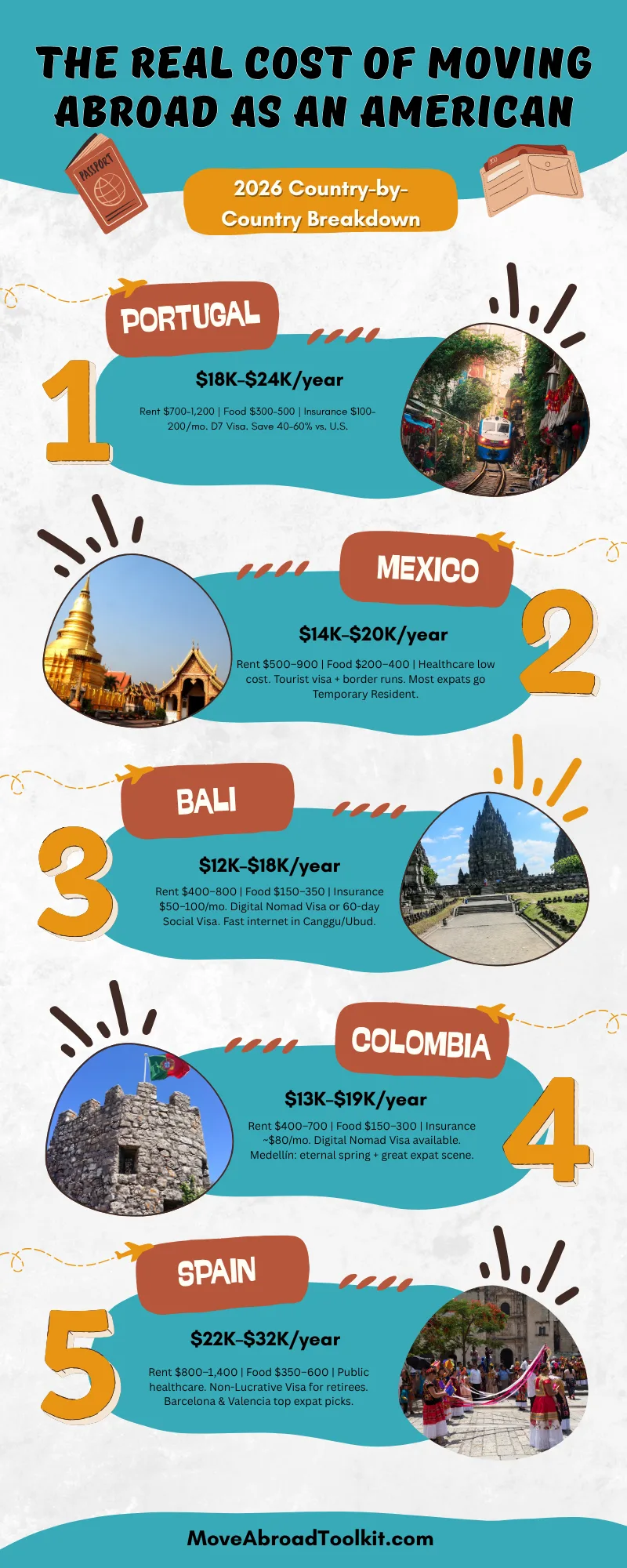
Currency exchange fees eat into every international transfer. Use Wise instead of your bank for real exchange rates and low fees. Most expats save $50 to $100 per month on transfers alone.
For health coverage while abroad, SafetyWing Nomad Insurance starts at $45.08 per month for Americans under 40. It covers you in most countries and is built for long-term travelers and expats.
If you need a VPN for US streaming or public wifi security, NordVPN works well from abroad.
US tax filing does not stop when you move abroad. You still owe US taxes on worldwide income. Taxes for Expats specializes in expat tax returns and can save you from expensive mistakes.
📌 Save this guide for later! Pin it to your travel or move abroad board so you can find it when you need it.
Hover over any image in this post to pin it directly to Pinterest.
Thinking about moving abroad? Book a Move Abroad Planning Call for personalized guidance on your relocation.
Continue Planning Your Move
Everything you need is in one place.
Free Quiz
Find Your Best Country Match
Answer a few quick questions about your budget, language comfort, lifestyle and visa needs, and see which countries fit you best.