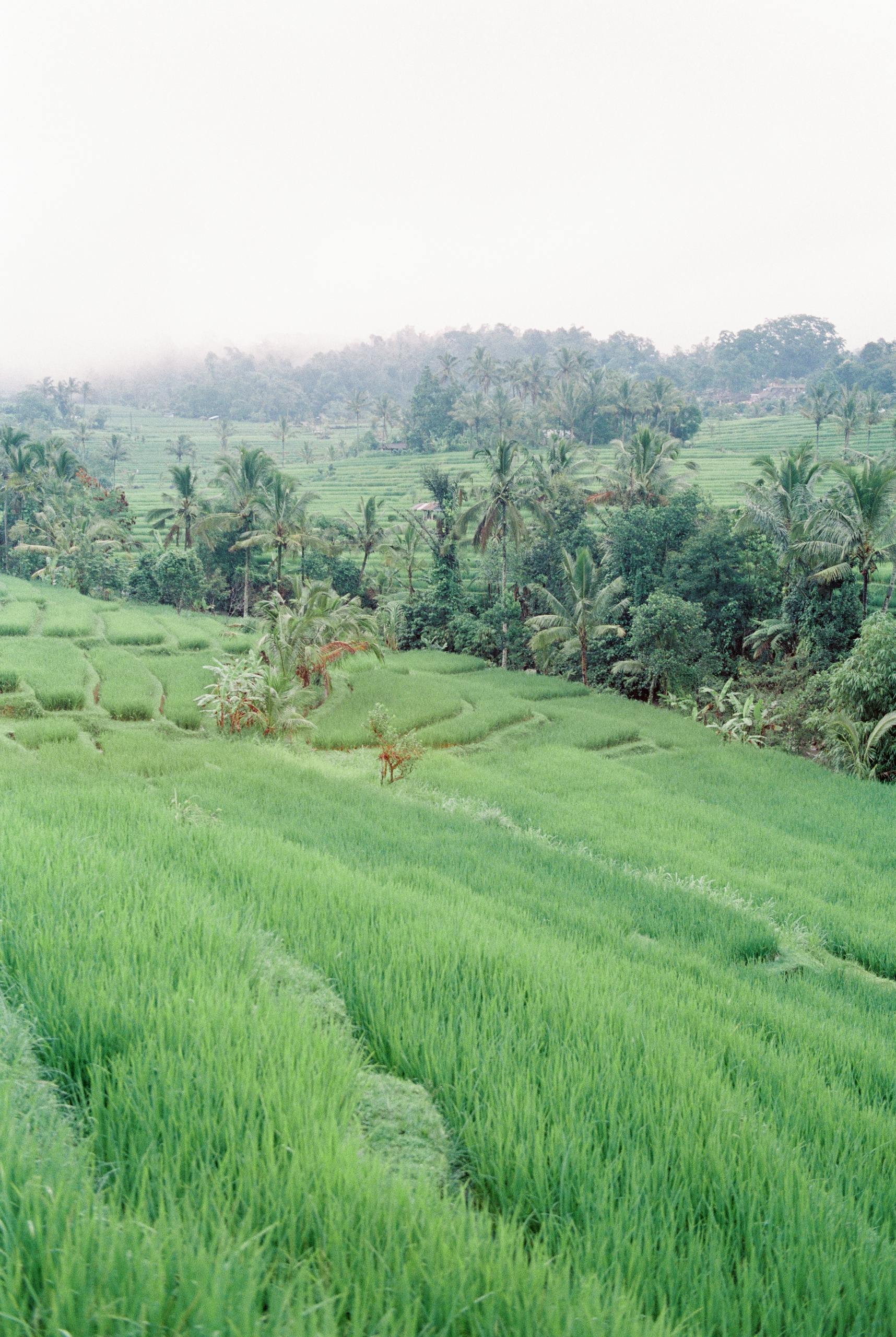
Woman in red dress walking through Bali rice terraces Indonesia
| | |

Moving to Bali as an American: 7 Myths vs. Reality (2026)

This post contains affiliate links. If you click through and make a purchase, I may earn a small commission at no extra cost to you. I only recommend products and services I personally use and trust.

Bali has become one of the most popular destinations for Americans looking to live abroad. If you’re considering moving to Bali as an American, you’re not alone—thousands of expats have made this tropical island their home. The island offers a low cost of living, beautiful scenery, and a welcoming culture that makes it easier to adjust to life far from home.

Moving to Bali as an American requires getting the right visa, finding a place to live, and understanding the local culture and daily expenses. You’ll need to choose between different visa options depending on how long you plan to stay and whether you’ll work or retire. The good news is that relocating to Bali is more accessible than you might think, with clear steps to follow.

This guide covers everything you need to know before making the move. You’ll learn about visa requirements, housing options, healthcare, working opportunities, and what daily life really looks like for American expats in Bali.

Key Takeaways

  • Americans need to secure the correct visa before moving to Bali, with options ranging from tourist visas to long-term permits
  • The cost of living in Bali is significantly lower than in the US, though expenses vary based on lifestyle and location
  • Understanding Balinese culture, finding proper healthcare, and choosing the right area to live are essential for a smooth transition

Visa Requirements and Legal Considerations

Americans moving to Bali need the right visa based on their stay length and purpose. Options range from 30-day tourist visas to multi-year permits for remote workers, retirees, and those seeking long-term residency.

Visa Options for American Citizens

U.S. citizens can enter Bali with a Visa on Arrival (VOA), which grants 30 days of stay and costs around $35. You can extend this once for another 30 days at an immigration office, giving you a total of 60 days.

For stays beyond 60 days, you’ll need a different visa type. The B211A Visit Visa allows up to 180 days with multiple extensions. This works well if you want to explore Bali for several months without committing to a work permit.

Digital nomads should consider the E33G visa, introduced in January 2024. This visa lets you live and work remotely in Bali legally. You must be employed by a company registered outside Indonesia and earn at least $60,000 annually.

The application process requires proof of income and employment documentation. This visa provides a legal way to work remotely while enjoying life in Bali.

KITAS and Other Long-Term Stay Permits

KITAS (Kartu Izin Tinggal Terbatas) is a limited stay permit for those planning to live in Bali long-term. This permit typically lasts one year and can be renewed annually for up to five years.

You’ll need sponsorship from an Indonesian entity to obtain a KITAS. This could be an employer, business partner, or Indonesian spouse. The process involves submitting documents like passport copies, passport photos, and sponsorship letters.

Work permits require a KITAS along with additional documentation from your employer. Your sponsor must demonstrate that your skills aren’t readily available in the local workforce. Processing takes several weeks, so start early.

Family members can be added to your KITAS application. You’ll need marriage certificates or birth certificates translated into Indonesian and notarized.

Second Home and Retirement Visas

Indonesia offers a Second Home Visa for foreigners wanting to make Bali their base. This visa grants a five-year or ten-year stay permit. You must deposit funds in an Indonesian bank and provide proof of financial stability.

Requirements include health insurance and a letter of intent explaining your reasons for choosing Indonesia. The application process is more involved than tourist visas but offers stability for retirees.

Retirees aged 55 and older can apply for retirement visas with similar long-term benefits. You’ll need to show sufficient pension income or savings to support yourself without working in Indonesia.

Visa Compliance and Extensions

Immigration rules in Bali change frequently, so staying informed matters. Overstaying your visa results in fines of around $30 per day and potential deportation.

Plan your extension visits to immigration offices before your current visa expires. Bring passport photos, cash for fees, and copies of your passport and entry stamp. Processing times vary but typically take one to three days.

Some expats hire visa agents to handle paperwork and immigration visits. Agents charge fees but save time and reduce errors. Whether you use an agent or go independently, keep copies of all visa documents and track your expiration dates carefully.

📌 Save this guide for later! Pin it to your travel or move abroad board so you can find it when you need it.

Hover over any image in this post to pin it directly to Pinterest.

Cost of Living in Bali

Bali offers Americans a significantly lower cost of living compared to most U.S. cities, with monthly expenses ranging from $1,200 to $3,000 depending on your lifestyle choices. Your spending will vary based on where you live, how often you eat out, and whether you choose local or Western amenities.

Housing and Accommodation Costs

Rent makes up the biggest chunk of your monthly budget in Bali. You can find a basic studio apartment in local neighborhoods for $300 to $500 per month. A one-bedroom villa with a pool in popular expat areas like Canggu or Seminyak runs between $800 and $1,500 monthly.

Long-term rentals offer better deals than short-term stays. Most landlords prefer annual contracts and require a deposit equal to one or two months’ rent.

Location matters a lot for pricing. Ubud and Sanur tend to be more affordable than beachside areas. You’ll pay premium prices in Seminyak and Canggu where most Western expats congregate.

Utilities usually cost an additional $50 to $100 per month. Internet runs about $30 monthly for reliable speeds suitable for remote work.

Daily Expenses and Budgeting

Food costs depend heavily on whether you eat local Indonesian food or stick to Western restaurants. A meal at a warung (local eatery) costs $2 to $4, while Western restaurants charge $10 to $20 per dish.

Transportation is cheap if you rent or buy a scooter. Daily scooter rentals cost $4 to $8, but buying a used one for around $300 saves money long-term. Gas runs about $20 monthly for regular use.

Groceries from local markets are inexpensive. You can spend $150 to $250 monthly shopping at traditional markets. Western supermarkets selling imported products will double or triple that amount.

A coworking space membership costs $50 to $150 per month. Gym memberships range from $30 to $80 depending on the facility.

Currency Exchange and Banking

Indonesia uses the Indonesian Rupiah (IDR). As of 2026, $1 USD equals approximately 17,000 IDR, though rates fluctuate.

You’ll need to exchange currency regularly since many local vendors don’t accept cards. Avoid airport exchange counters that charge higher fees. Local money changers offer better rates, but always count your cash carefully.

Most ATMs charge withdrawal fees of $3 to $5 per transaction. Your U.S. bank may add additional foreign transaction fees. Withdrawing larger amounts less frequently helps minimize these costs.

Opening an Indonesian bank account requires a KITAS (work permit). Many Americans manage with U.S. accounts and withdraw cash as needed.

Impact of Lifestyle Choices

Your monthly budget can swing wildly based on daily decisions. Living like a local keeps costs around $1,200 to $1,500 monthly. This means eating at warungs, using a scooter, and choosing local neighborhoods.

A more Western lifestyle pushes expenses to $2,500 to $3,000 per month. This includes dining at international restaurants, living in expat areas, and buying imported groceries.

Health insurance adds $100 to $300 monthly depending on coverage level. You’ll want comprehensive insurance since quality medical care requires private hospitals.

Entertainment and activities vary widely. Yoga classes cost $10 to $15 per session. Beach clubs charge $30 to $50 for day passes. Weekend trips to other Indonesian islands add several hundred dollars monthly if you travel often.

Where to Live in Bali as an American

Bali offers distinct neighborhoods that cater to different lifestyles, from beach towns filled with surfers and remote workers to mountain villages focused on art and spirituality. Your choice depends on whether you want beach access, cultural immersion, modern conveniences, or a quieter retreat.

Canggu: The Digital Nomad’s Haven

Canggu has become the go-to spot for American expats working remotely. The area is packed with coworking spaces, trendy cafes with reliable Wi-Fi, and beach clubs where you can mix work with play.

The black sand beaches attract surfers of all levels. You’ll find surf schools on almost every corner if you want to learn. The social scene is active, with regular meetups, networking events, and a strong community of foreigners.

What Canggu offers:

  • Modern gyms and yoga studios
  • International restaurants serving everything from Mexican to Italian
  • Scooter-friendly roads connecting different beach areas
  • Weekly markets and pop-up events

Housing ranges from basic studios to luxury villas. You can expect to pay $500-$1,500 per month depending on what you want. Traffic gets heavy during peak season, and the area has become more commercial in recent years.

Ubud: Culture, Nature, and Wellness

Ubud sits in Bali’s central highlands, surrounded by rice terraces and jungle. This area appeals to Americans seeking a slower pace and deeper connection to Balinese culture.

The town is known for wellness retreats, yoga teacher trainings, and healing practices. You’ll find organic cafes, meditation centers, and holistic health practitioners throughout the area. Art galleries and traditional dance performances happen regularly.

The climate is cooler than the coastal regions, which many expats appreciate. You won’t have beach access, but waterfalls and hiking trails are nearby. The community here tends to be more mindful and focused on personal growth.

Ubud highlights:

  • Rice paddy walks and nature trails
  • Traditional markets selling handicrafts
  • Vegetarian and vegan dining options
  • Affordable long-term villa rentals ($400-$1,200/month)

The main drawback is distance from the airport and beaches, which takes about 1-2 hours by car.

Seminyak: Chic and Urban

Seminyak offers the most developed infrastructure in Bali. This beachside area has high-end restaurants, designer boutiques, and international grocery stores where you can find familiar products from home.

The nightlife scene is sophisticated compared to other areas. Beach clubs host sunset parties, and cocktail bars line the main streets. You’ll find more established expats and families here rather than backpackers.

Shopping is convenient, with malls and specialty stores carrying imported goods. Medical facilities are better than in other parts of Bali. The area feels more like a proper city while still maintaining beach access.

Prices are higher across the board. Expect to pay $800-$2,500 for monthly housing. Traffic can be frustrating, especially during tourist season. Despite being more expensive, many Americans choose Seminyak for its comfort and amenities.

Uluwatu and Other Popular Areas

Uluwatu sits on Bali’s southern peninsula with dramatic clifftop views and world-class surf breaks. The area attracts surfers and those wanting a more laid-back vibe than Canggu or Seminyak. Single beach clubs and small warungs dot the coastline.

Other areas worth considering:

LocationBest ForMonthly Rent Range
SanurFamilies, retirees, calm beaches$600-$1,500
Bukit PeninsulaSurfers, quiet living$500-$1,400
PererenanBudget-conscious nomads$400-$1,000

Sanur attracts older expats and families with its protected beach and slower pace. The water is calm for swimming, and the area has a strong established expat community. Pererenan sits between Canggu and Tanah Lot, offering a quieter alternative with lower prices and less development.

Healthcare and Staying Healthy in Bali

Bali’s healthcare system includes both public and private facilities, with quality varying significantly between the two. You’ll need to secure international health insurance before arriving, as local coverage options don’t typically meet expat needs.

Finding Hospitals and Medical Facilities

Private hospitals in Bali offer the best care for expats and accept international insurance. BIMC Hospital in Kuta, Nusa Dua, and Ubud provides 24/7 emergency services with English-speaking staff. Siloam Hospitals in Denpasar and Seminyak also maintain international standards.

Public health centers called Puskesmas serve local communities at low cost but often lack English-speaking staff and advanced equipment. You should stick to private facilities for serious medical issues.

For routine care, international clinics like Toya Medika and Kasih Ibu offer outpatient services. Most expats use these for regular checkups and minor illnesses. Dental care costs much less than in the US, with quality clinics available in Seminyak and Canggu.

Keep contact information for your preferred hospital saved in your phone. Response times for ambulances can be slow, so many expats arrange private transport for emergencies.

Medical Insurance and Coverage

Your US health insurance won’t cover you in Bali. You need international health insurance that includes medical evacuation to Singapore or Australia for serious conditions.

Plans from companies like Cigna Global, Allianz Care, and IMG start around $100-300 per month depending on your age and coverage level. Make sure your policy covers emergency evacuation, which can cost $50,000 or more out of pocket.

Some policies exclude pre-existing conditions or require waiting periods. Read the fine print carefully before committing. Most private hospitals require payment upfront or insurance guarantee letters before treatment.

Indonesian BPJS insurance is available to residents with the right visa status but offers limited coverage at public facilities only.

Common Expat Health Concerns

Bali belly affects most newcomers within their first few months. This stomach bug comes from different bacteria in local food and water. Stick to bottled water, avoid ice in local warungs, and wash fruits and vegetables with filtered water.

Dengue fever poses a real risk during rainy season from November to March. Use mosquito repellent daily, install screens on windows, and eliminate standing water around your home. The dengue vaccine is now available at private clinics in Bali.

Heat exhaustion and dehydration catch many expats off guard. Drink more water than you think you need and take breaks from the sun. Air quality can worsen during dry season, affecting those with respiratory issues.

Schedule regular health screenings since tropical environments expose you to different health risks than the US. Many expats also struggle with mental health due to culture shock and isolation, so build a support network early.

Working and Daily Life in Bali

Working in Bali offers flexibility for remote workers and digital nomads, though understanding visa requirements and local regulations is important. Daily routines blend modern conveniences with traditional Indonesian culture, from coworking spaces in Canggu to local markets where you’ll shop for fresh produce.

Opportunities and Rules for Working in Bali

You cannot legally work for Indonesian companies on a tourist visa. If you plan to work remotely for foreign companies while living in Bali, you’ll need a proper visa like the B211A business visa or the newer digital nomad permit that allows stays up to a year.

Starting a business in Bali requires sponsorship and a KITAS work permit. You’ll need to partner with a local entity or use a sponsorship service to set up legally. The process involves significant paperwork and costs, but many Americans successfully run businesses in hospitality, wellness, and creative industries.

Teaching English, consulting, and freelancing are common paths for Americans in Bali. However, all work activities technically require proper documentation. Immigration enforcement has increased in recent years, so operating without the right visa carries real risks including fines or deportation.

Coworking and Remote Work Scene

Bali has become a hub for remote workers with dozens of coworking spaces across the island. Areas like Canggu, Ubud, and Seminyak offer spaces with reliable internet, air conditioning, and community events. Monthly memberships typically cost $50-150.

Internet speeds vary by location but many cafes and coworking spaces offer 20-50 Mbps connections. Some areas have fiber optic reaching 100+ Mbps. You should test internet reliability before committing to housing, as power outages and slower speeds are common outside main expat areas.

The community aspect is a major draw. Most coworking spaces host networking events, skill shares, and social gatherings. You’ll easily meet other Americans and international professionals working in tech, marketing, design, and content creation.

Daily Essentials and Local Services

Your daily routine will involve shopping at local markets (called pasar), small family-run shops called warungs, and modern supermarkets. Markets offer fresh produce at low prices, while supermarkets stock imported goods at higher costs.

Learning basic Bahasa Indonesia makes daily life much easier. Simple phrases for ordering food, asking prices, and greeting neighbors go a long way. Most people in tourist areas speak some English, but venturing into local neighborhoods requires basic language skills.

Banking, healthcare clinics, delivery apps, and ride-sharing services like Gojek and Grab are widely available. You can order food, groceries, and transportation through apps just like in the US. Many services operate on a cash basis, though digital payments are growing in popularity.

Education and Schools in Bali

Bali offers a wide range of educational options, from internationally accredited schools to local Indonesian institutions. The island has seen significant growth in quality schools due to the increasing number of expat families settling here.

International and Local School Options

International schools in Bali follow various curricula including British, American, International Baccalaureate (IB), and Cambridge systems. You’ll find schools concentrated in areas like Canggu, Sanur, Ubud, and Seminyak. Green School stands out for its focus on sustainability and nature-based learning, while other institutions prioritize traditional academics.

Tuition costs vary significantly. International schools typically charge between $5,000 to $20,000 per year depending on the curriculum and grade level. Some progressive schools skip traditional letter grades and focus instead on creativity, emotional intelligence, and real-world problem solving.

Local Indonesian schools offer a much cheaper option, with the first years of education being free. These schools teach primarily in Bahasa Indonesia and follow the national curriculum. If you choose this route, your children will become fluent in the local language but may need additional support for English language skills.

Choosing the Right School for Your Family

Start by identifying what matters most for your child’s education. Consider whether you want an IB program, a specific national curriculum, or alternative approaches like Montessori or Waldorf methods. Visit multiple schools before making your decision, as campus facilities and teaching styles differ greatly.

Required enrollment documents typically include your child’s passport, previous school records, immunization records, and birth certificate. Some schools have waiting lists, so apply several months before your planned move. Contact schools directly to confirm their specific requirements and available spots for your child’s grade level.

Location matters since Bali’s traffic can make commutes challenging. Choose a school near your housing area to avoid long daily drives.

Balinese Culture and Daily Etiquette

Balinese life revolves around Hindu traditions, community ceremonies, and daily spiritual practices that shape everything from morning routines to social interactions. You’ll notice colorful offerings on doorsteps, temple ceremonies that pause traffic, and a strong emphasis on respectful behavior in sacred spaces.

Understanding Balinese Traditions

Bali practices a unique form of Hinduism that blends ancient beliefs with local customs. The concept of Tri Hita Karana guides daily life, which focuses on maintaining harmony between people, nature, and the spiritual world.

You’ll see this philosophy in action everywhere. Temples play a central role in village life, and most Balinese people participate in regular ceremonies at their local temple. Each village typically has three main temples, and families also maintain shrines at home.

The island follows two calendar systems: the Gregorian calendar and the traditional Balinese calendar called Pawukon. This 210-day cycle determines when ceremonies and festivals occur. Don’t be surprised if shops close unexpectedly for religious observances or if your Balinese neighbors spend hours preparing for temple ceremonies.

Dress modestly when visiting temples. You’ll need a sarong and sash, which most temples provide or rent at the entrance. Women who are menstruating traditionally shouldn’t enter temples, though this varies by temple and personal practice.

Festivals, Religion, and Canang Sari Offerings

Canang sari are the small woven palm-leaf baskets filled with flowers, incense, and rice that you’ll see multiple times daily on doorsteps, sidewalks, and car dashboards. These offerings represent gratitude to the gods and maintaining balance between good and evil forces.

Balinese people typically make these offerings twice a day, in the morning and evening. Step over them carefully rather than on them when walking. The act of creating and placing canang sari matters more than the offering itself.

Major festivals include Galungan and Kuningan, which celebrate the victory of good over evil. During these 10-day periods, you’ll see tall decorated bamboo poles called penjor lining the streets. Nyepi, the Balinese New Year, requires complete silence across the island. No lights, no travel, and no noise for 24 hours. Even the airport closes.

Odalan ceremonies mark temple anniversaries and happen throughout the year. You might receive invitations to family ceremonies like tooth filing rituals or cremations. Attending these events offers meaningful cultural experiences, but always dress appropriately and follow your host’s guidance.

Social Etiquette and Integration Tips

The Balinese community system called banjar organizes neighborhood life and mutual support. If you rent or buy property in a residential area, your landlord might ask you to contribute to banjar activities. This typically involves small monthly fees for community events and infrastructure.

Use your right hand for giving, receiving, or eating. The left hand is considered impolite for social interactions. Point with your thumb instead of your index finger, and avoid touching anyone’s head, which is considered the most sacred part of the body.

Learn basic Indonesian phrases like “terima kasih” (thank you) and “permisi” (excuse me). While many Balinese people speak some English in tourist areas, making an effort with the local language shows respect. Speak softly and avoid raising your voice or showing anger publicly, as this causes embarrassment for everyone involved.

Building relationships takes time. Your Balinese neighbors will likely remain polite but distant at first. Participating in community events, shopping at local warungs, and showing genuine interest in cultural practices helps you integrate naturally. Don’t rush the process or expect immediate close friendships.

Moving to Bali as an American: Settling In Successfully

Your first days in Bali will involve navigating the airport, figuring out transportation, and adjusting to the tropical climate that shapes daily life on the island.

Arriving at Denpasar Airport

Ngurah Rai International Airport in Denpasar is Bali’s main airport and your entry point to the island. You’ll go through immigration where officers will check your visa and passport. Have your documents ready and know which visa you’re entering on.

The airport has currency exchange counters, but rates are better outside the airport. You can also withdraw cash from ATMs in the arrival hall. Most places in Bali accept Indonesian Rupiah, so get some cash before leaving the airport.

After collecting your luggage, you’ll exit to the arrival area where taxi services and ride-sharing apps are available. The official airport taxi counter offers fixed rates to different areas of Bali. You can also use Grab or Gojek apps for cheaper rides, though pickup locations may be less convenient.

Transportation and Getting Around

Most expats rent or buy scooters since they’re the easiest way to navigate Bali‘s roads. You’ll need an international driving permit from the U.S. before arriving. Scooter rentals cost around $50-70 per month for long-term agreements.

If you’re not comfortable riding a scooter, ride-sharing apps like Grab and Gojek work well for daily trips. Private drivers are also affordable for longer journeys or regular commutes. Some expats hire drivers by the day for around $35-50.

Traffic can be heavy in tourist areas like Canggu and Seminyak, especially during peak hours. Roads are narrower than what you’re used to in America, and driving customs are different.

Weather and What to Expect Each Season

Bali has two main seasons: dry season from April to October and wet season from November to March. The dry season brings sunny days with temperatures between 80-90°F, making it the most popular time for visitors and outdoor activities.

The wet season doesn’t mean constant rain. You’ll typically see afternoon showers that last 1-2 hours rather than all-day downpours. Mornings are often clear and sunny even during rainy months.

Humidity stays high year-round at 70-80%, which takes some adjustment if you’re from a drier climate. Pack lightweight, breathable clothing and prepare for warm weather regardless of when you arrive. The temperature doesn’t change much between seasons, so you won’t need heavy clothing.

Frequently Asked Questions

Moving to Bali involves practical questions about visas, money, neighborhoods, work permits, healthcare, and bringing your pets along for the journey.

What visa options are available for staying long-term, and how do you renew or extend them?

The B211A visa is your main option for staying beyond the standard tourist visit. It allows you to stay for 60 days initially and can be extended four times for 30 or 60 days each, giving you up to six months total.

You’ll need to work with a visa agent to handle the extensions. Most expats use this option repeatedly by doing visa runs to neighboring countries like Singapore or Malaysia before returning to restart the process.

The second home visa (KITAS) offers a longer solution if you meet specific financial requirements. You must show proof of funds and commit to staying in Indonesia for extended periods. This visa is renewable annually and requires more paperwork but eliminates the need for frequent visa runs.

A retirement visa works if you’re over 55 years old and can prove monthly income or savings. The social-cultural visa suits people studying, volunteering, or attending cultural programs but requires sponsorship from an Indonesian entity.

How much does it typically cost per month to live comfortably, including rent, utilities, and transportation?

Your monthly budget in Bali ranges from $1,200 to $2,500 depending on your lifestyle choices. A basic but comfortable life costs around $1,200 to $1,500 per month.

Rent takes up the biggest portion of your budget. A one-bedroom villa or apartment in areas like Canggu or Ubud runs $400 to $800 monthly. You can find cheaper options for $300 in less touristy areas, while luxury villas start at $1,500 and go up from there.

Utilities add another $50 to $100 to your monthly costs. Electricity tends to be your biggest utility expense, especially if you run air conditioning frequently. Water and internet are relatively cheap, with high-speed internet costing around $30 per month.

Food costs depend on whether you eat local or Western food. Local warungs serve meals for $2 to $4, while Western restaurants charge $10 to $20 per meal. Most expats spend $200 to $400 monthly on groceries and eating out combined.

Transportation is cheap if you rent a scooter for $50 to $70 per month. Grab rides cost a few dollars for most trips around town. Renting a car costs $300 to $500 monthly if you prefer four wheels.

What are the best areas to live for different lifestyles (beach, quiet, family-friendly, social, coworking)?

Canggu attracts digital nomads and surfers with its beach clubs, coworking spaces, and social scene. You’ll find endless cafes, gyms, and networking events, but traffic can get heavy and prices run higher than other areas.

Seminyak offers upscale living with high-end restaurants, boutiques, and beach access. It’s more polished and expensive than Canggu but still maintains a social atmosphere. This area works well if you want modern amenities and don’t mind spending more.

Ubud suits people seeking culture, nature, and a slower pace. The area is inland with rice terraces, yoga studios, and art galleries instead of beaches. It’s quieter and more spiritual, attracting creatives and wellness-focused expats.

Sanur provides a family-friendly environment with calm beaches, good schools, and less traffic. The pace is relaxed compared to the southern beach towns, and you’ll find more long-term expats and retirees here.

Uluwatu and Bukit Peninsula appeal to surfers and people wanting a quieter beach lifestyle. These areas are more spread out with stunning clifftop views but fewer restaurants and services within walking distance.

Denpasar is where most locals live, offering the cheapest rent and authentic Indonesian culture. You won’t find many tourists here, but you’ll get the most affordable living costs and access to local markets.

Can you legally work remotely or start a business there, and what rules should you know before you arrive?

Working remotely on a tourist or social visa sits in a gray area legally. Indonesia doesn’t actively enforce rules against foreigners working online for companies outside the country, but technically you need a work permit for any income-generating activity.

The KITAS work visa is required if you want to work legally for an Indonesian company or your own business. Your employer or business must sponsor this visa, which involves significant paperwork and costs.

Starting a business requires setting up a PT PMA (foreign-owned company) structure. You’ll need an Indonesian partner or meet minimum investment requirements that change based on your business type. The process takes several months and costs several thousand dollars in setup fees.

Many digital nomads work quietly on visitor visas without issues, but you assume risk doing this. Indonesia has discussed introducing a digital nomad visa but hasn’t implemented one as of early 2026.

You cannot legally freelance for Indonesian clients or teach English without proper work authorization. Immigration occasionally checks on foreigners, so keeping your work activities discreet matters if you’re on a non-work visa.

How does healthcare work for foreigners, and what kind of insurance is worth getting?

Bali has decent private hospitals and clinics that cater to expats, particularly in Denpasar, Sanur, and Canggu. BIMC and Siloam hospitals offer English-speaking doctors and modern facilities for routine care and minor emergencies.

You’ll pay out of pocket at the time of service unless you have insurance that the facility accepts directly. Basic doctor visits cost $30 to $60, while emergency room visits can run several hundred dollars. Serious medical issues often require evacuation to Singapore or Bangkok.

International health insurance is essential and costs $100 to $300 monthly depending on coverage level and your age. Plans should cover medical evacuation since Bali lacks facilities for complex surgeries or intensive care situations.

Safety Wing and Genki are popular budget options for digital nomads, running $40 to $80 monthly. Cigna Global and Allianz offer more comprehensive coverage with higher limits and direct billing at major hospitals.

Don’t rely on travel insurance for long-term stays since most policies only cover trips up to six months. Indonesian BPJS national health insurance is available but involves bureaucracy and only covers basic services at public hospitals.

Dental work costs much less than in the US, with cleanings around $25 and fillings starting at $30. Many expats get dental work done in Bali even without insurance coverage.

What should you know about bringing pets, including requirements, quarantine, and practical tips?

Indonesia requires an import

Moving to Bali as an American: Your 30, 60, and 90-Day Timeline

Bali is one of the most seductive places in the world to live — and also one of the most misunderstood from a visa perspective. The “digital nomad visa” that Bali is famous for (the B211A social/cultural visa) has been inconsistently enforced, and Indonesia’s official Digital Nomad Visa (the E33G) launched in 2023 but has had limited uptake. Most Americans currently live in Bali on a combination of the B211A visa and extensions, or on the new 5-year Second Home Visa. Here’s the timeline that gets you there legally and sustainably.

90 Days Before Your Move to Bali

Three months out is when you research your visa path and do your scouting trip — not in that order. Americans get 30-day free visa-on-arrival in Indonesia (extendable to 60 days), which makes a scouting stay easy. But if you’re planning to stay longer, understanding the visa landscape before you book a one-way flight is essential — Bali’s visa situation evolves faster than almost any other expat destination.

  • Do a 4–6 week scouting trip first — Seminyak, Canggu, Ubud, Sanur, and Uluwatu all have completely different rhythms. Canggu is the digital nomad hub (coworking cafes everywhere, active social scene, higher prices). Ubud is quieter, cultural, and in the mountains. Sanur is calmer and family-friendly. Uluwatu draws surfers. Spend real time in your target area before committing to a longer stay.
  • Understand your visa options — the B211A Social/Cultural Visa is applied for at an Indonesian consulate abroad, is valid for 60 days, and can be extended 4 times (up to 180 days total) from within Bali. The 5-Year Second Home Visa requires proof of $130,000 in a bank account or equivalent and grants 5-year multi-entry stay. The E33G Digital Nomad Visa is technically available but requires a complex application and has limited processing infrastructure. Most Americans in Bali use the B211A + extension route.
  • Get health insurance with medical evacuation coverage — this is non-negotiable for Bali. While Bali has good private hospitals for routine care, complex surgeries and intensive care situations require medical evacuation to Singapore or Kuala Lumpur. SafetyWing includes basic evacuation; for more robust coverage, look at Cigna Global or BUPA International. Indonesian BPJS national insurance is available but limited for expats.
  • Open a Schwab and Wise account — Bali is still heavily cash-based, especially outside tourist areas. Schwab reimburses all ATM fees globally; Wise gives you excellent IDR rates for transfers. Indonesian rupiah (IDR) comes in large numbers (1 USD ≈ 16,000 IDR) — don’t be confused when you see a “2,000,000 IDR” villa rental (~$125).
  • Research reputable visa agents in Bali — navigating Indonesian visa extensions is significantly easier with a local visa agent. Agents like Bali Visa Agent, e-Konsul, or your hotel/villa’s recommended agent handle the paperwork and queuing at the immigration office. Expect to pay $50–$150 per extension.

60 Days Before Your Move to Bali

Two months out is when you apply for your B211A visa (if going that route) at your nearest Indonesian consulate and lock down your first accommodation in Bali. The Indonesian consulate application is straightforward but the consulate needs to be in a different country than your citizenship — most Americans apply at the Indonesian consulate in Los Angeles, Houston, New York, or Chicago.

  • Apply for your B211A visa at an Indonesian consulate — required documents typically include: passport (valid 18+ months), application form, sponsor letter (many visa agents provide templates), proof of funds, and return/onward ticket. The B211A is issued for 60 days and costs around $50–$100 in fees. Processing is usually 1–3 business days.
  • Book your first month of accommodation — Airbnb works well for the first month while you search for longer-term villa rentals. Long-term villa rentals in Canggu (1-year contracts) are significantly cheaper than monthly rates — a basic private villa in Canggu runs $500–$1,200/month on a 1-year contract vs. $1,500–$3,000/month short-term. Facebook groups like “Bali Housing & Accommodation” and “Canggu Community” have direct listings.
  • Sort your US administrative obligations — file address changes with the IRS, Social Security (if applicable), and banks. Set up US mail forwarding. Note that Americans living in Bali while earning US-sourced or global remote income must still file US taxes and potentially track Indonesian tax residency (180+ days).
  • Research motorbike riding and driving options — Bali’s roads are not set up for walking; a motorbike (scooter) is how most expats get around. If you ride, practice before you go — Bali traffic is chaotic by Western standards. If you don’t ride, Grab (ride-hailing) is widely available in Canggu, Seminyak, and Ubud. A scooter rental runs $60–$100/month; buying a used one runs $600–$1,500.
  • Get vaccinations if needed — recommended vaccinations for Indonesia include Hepatitis A, Hepatitis B, Typhoid, and potentially Japanese Encephalitis if spending time in rural areas. Rabies pre-exposure is worth discussing with a travel medicine doctor given Bali’s dog population. Schedule with a travel clinic 6–8 weeks before departure.

30 Days Before Your Move to Bali

Final month — your B211A visa should be in your passport, your first accommodation is booked, and you’re wrapping up the US side. Bali is a 20–25 hour journey from most US cities, typically connecting through Tokyo, Seoul, Singapore, or Hong Kong. The arrival day is long — build in recovery time before you need to be functional.

  • Book your flights to Bali (DPS — Ngurah Rai International) — no direct US-to-Bali routes exist; all connections go through an Asian hub. Singapore Airlines via Singapore, Cathay Pacific via Hong Kong, Korean Air via Seoul, and ANA via Tokyo are all well-regarded. Budget 22–28 hours total travel time. Book positioning flights to your connection hub city the day before if possible — missed connections to Bali are a long recovery.
  • Download and fund Grab before you arrive — Grab is Bali’s dominant ride-hailing app and is essential for airport pickup and getting around before you have a scooter situation sorted. Download and link your credit card before landing. Airport taxi touts are aggressive; Grab pick-up is in a designated area and significantly cheaper.
  • Get an eSIM or plan for Indonesian SIM on arrival — Telkomsel and XL Axiata are the main Indonesian carriers with the best Bali coverage. Both sell SIMs at the airport arrival hall. An Airalo eSIM for Indonesia covers the first 24 hours while you sort a physical SIM. Data is very cheap — 50GB for ~$15/month.
  • Fund a Wise account in Indonesian rupiah — Wise’s IDR rates are far better than airport money changers. Authorized money changers in Bali (look for licensed booths, not street vendors) also offer competitive rates, but Wise gives you a benchmark to judge them against. Have $200 USD equivalent in IDR for arrival-day taxis, SIM cards, and food.
  • Digitize all documents — passport, B211A visa, health insurance, accommodation confirmation, and insurance documents with medical evacuation contacts. Carry the evacuation insurance card physically — if you ever need it, the hospital needs to see it immediately.

After You Arrive: Your First 30 Days in Bali

The first month in Bali is genuinely magical for most people — and also comes with a real “Bali belly” adjustment period (stomach issues from different water and food bacteria are common in week one), a motorbike learning curve, and the realization that Bali’s pace rewards patience over efficiency. Build in time to simply exist before you try to set everything up at once.

  • Book your first B211A extension immediately — your B211A is valid for 60 days from entry but can be extended for 30 days at a time, up to 4 extensions (total 180 days). Contact a visa agent within the first week to schedule your extension before the 60-day mark. Don’t wait until the last week — immigration offices in Denpasar can be slow.
  • Get a local SIM card — buy Telkomsel or XL Axiata at the airport or any minimarket (Indomaret, Alfamart are everywhere). You need a local number for Grab, GoJek, food delivery, and banking verifications.
  • Find your coworking space — Bali has some of the world’s best coworking infrastructure for digital nomads. In Canggu: Outpost Bali, Dojo, and b.hub are consistently recommended. In Ubud: Hubud is the legendary original. Day passes run $10–$20; monthly memberships $100–$250. Having a dedicated workspace dramatically improves productivity in Bali’s distraction-rich environment.
  • Sort your motorbike situation — decide whether to rent (easier, ~$80/month) or buy used (~$700–$1,200 for a reliable scooter). If buying, have a trusted local or expat inspect it before purchase. Get an international driving permit (IDP) from AAA in the US or carry your US license — technically a Balinese license is required, but IDPs are widely accepted in practice.
  • Drink only bottled or filtered water — tap water in Bali is not safe to drink. Most villas and co-working spaces have water dispensers. Invest in a filtered water bottle (Lifestraw or Grayl) for travel. The adjustment to local food takes 1–2 weeks — be patient with your stomach and ease in gradually.
  • Integrate intentionally with Balinese culture — Bali is a Hindu island within a Muslim-majority country with deep spiritual traditions. Dress respectfully when entering temples (sarongs required — available at every entrance), participate in or respectfully observe ceremonies when invited, and learn a few words of Bahasa Indonesia. The Balinese community is genuinely warm toward expats who show respect and curiosity.

For official visa information, visit Indonesia’s Directorate General of Immigration at imigrasi.go.id.

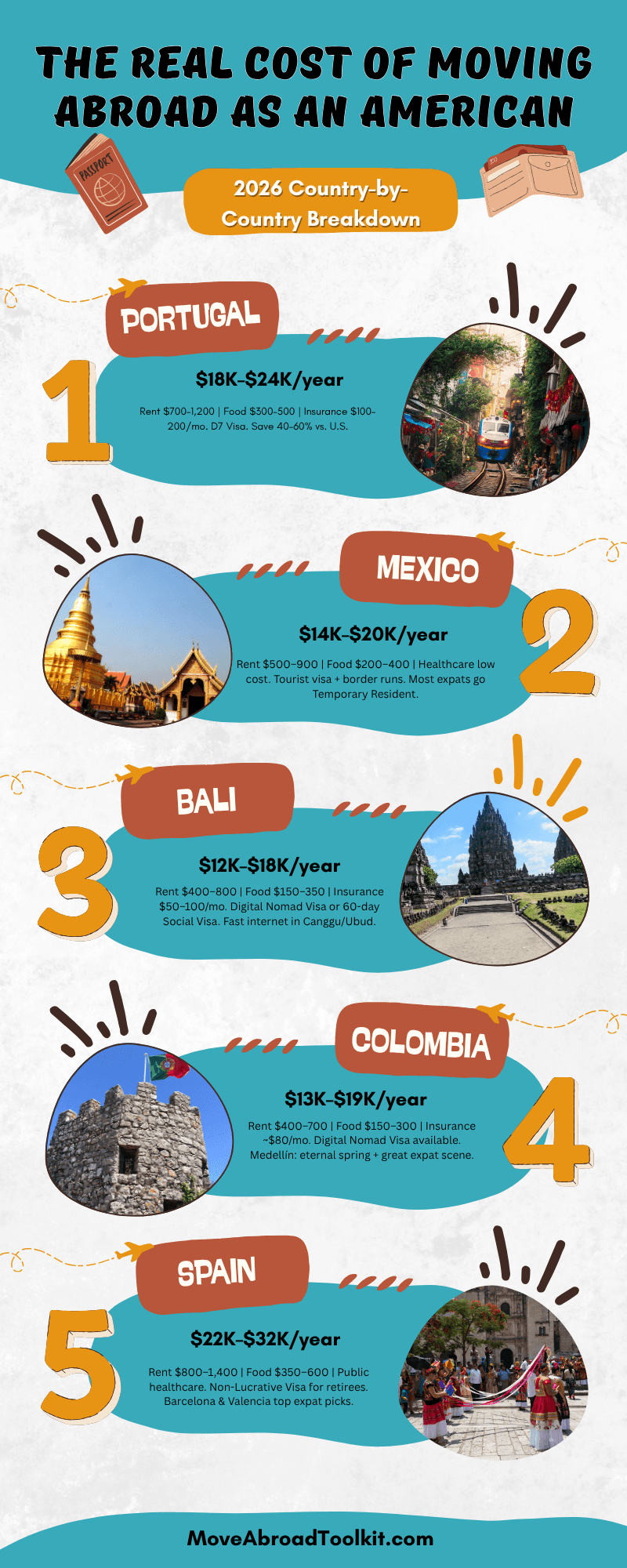
📊 The Real Cost of Moving Abroad as an American

View full infographic by MoveAbroadToolkit.com

Related: Digital Nomad Visas for Americans | How to Budget for Moving Abroad | What to Pack When Moving Abroad

Key TakeawaysAmericans need to secure the correct visa before moving to Bali, with options ranging from tourist visas to long-term permits The cost of living in Bali is significantly lower than in the US, though expenses vary based on lifestyle and location Understanding Balinese culture, finding proper healthcare, and choosing the right area to live are essential for a smooth transitionVisa Requirements and Legal Considerations Americans moving to Bali need the right visa based on their stay length and purpose. Options range from 30-day tourist visas to multi-year permits for remote workers, retirees, and those seeking long-term residency. Visa Options for American Citizens

U.S. citizens can enter Bali with a Visa on Arrival (VOA), which grants 30 days of stay and costs around $35. You can extend this once for another 30 days at an immigration office, giving you a total of 60 days.

KITAS and Other Long-Term Stay Permits

KITAS (Kartu Izin Tinggal Terbatas) is a limited stay permit for those planning to live in Bali long-term. This permit typically lasts one year and can be renewed annually for up to five years.

Second Home and Retirement Visas

Indonesia offers a Second Home Visa for foreigners wanting to make Bali their base. This visa grants a five-year or ten-year stay permit. You must deposit funds in an Indonesian bank and provide proof of financial stability.

Visa Compliance and Extensions

Immigration rules in Bali change frequently, so staying informed matters. Overstaying your visa results in fines of around $30 per day and potential deportation.

Housing and Accommodation Costs

Rent makes up the biggest chunk of your monthly budget in Bali. You can find a basic studio apartment in local neighborhoods for $300 to $500 per month. A one-bedroom villa with a pool in popular expat areas like Canggu or Seminyak runs between $800 and $1,500 monthly.

Daily Expenses and Budgeting

Food costs depend heavily on whether you eat local Indonesian food or stick to Western restaurants. A meal at a warung (local eatery) costs $2 to $4, while Western restaurants charge $10 to $20 per dish.

Currency Exchange and Banking

Indonesia uses the Indonesian Rupiah (IDR). As of 2026, $1 USD equals approximately 17,000 IDR, though rates fluctuate.

Impact of Lifestyle Choices

Your monthly budget can swing wildly based on daily decisions. Living like a local keeps costs around $1,200 to $1,500 monthly. This means eating at warungs, using a scooter, and choosing local neighborhoods.

Thinking about moving abroad? Book a Move Abroad Planning Call for personalized guidance on your relocation.

Similar Posts

Leave a Reply

Your email address will not be published. Required fields are marked *