Moving to Mexico as an American: 9 Surprises & Tips (2026)
Some links on this site are affiliate links, which means the site may earn a commission at no extra cost to you. Services are included because they fit the move abroad process, not because of the commission.
📋 What’s In This Guide
Moving to Mexico as an American is the most practical first move for most Americans.

📌 Save this guide for later! Pin it to your travel or move abroad board so you can find it when you need it.
Click the image above to save directly to Pinterest.
📌 Save this guide for later! Pin it to your travel or move abroad board so you can find it when you need it.
Hover over any image in this post to pin it directly to Pinterest.
Why Americans Choose Mexico
- No culture shock: Mexico has absorbed millions of American expats, you’ll find English-speaking doctors, American grocery items, Netflix, and familiar infrastructure in most expat hubs
- Proximity: Weekend flights home. Emergency flights home. Your family can visit easily.
- Cost of living: $1,200–$2,000/month for a comfortable lifestyle depending on city
- Visa ease: 180-day tourist entry with no pre-approval needed, the easiest entry of any country on this list
- Remote work ready: Mexico City, Playa del Carmen, and Oaxaca all have fast internet and strong coworking infrastructure
Mexico Visa Options for Americans
Tourist Visa, 180 Days, No Application Needed
Americans can stay in Mexico for up to 180 days on a tourist entry (FMM). You receive your length of stay at the port of entry, ask the immigration officer for the full 180 days. This is technically not a work visa, but many Americans work remotely for foreign companies on this status. Mexico doesn’t tax foreign-source income, so this is a legal gray area that most expats navigate without issue.
Temporary Resident Visa
Best for: Americans wanting to stay 6 months to 4 years with legal clarity. Minimum income: ~$1,620/month (approximately $2,595 in current requirements based on UMA). Apply at a Mexican consulate in the US before you travel. Duration: 1 year initially, renewable up to 4 years. Cost: ~$50–$150. Processing: 2–4 weeks. Once you have it, you can work legally for Mexican companies or continue working remotely.
Permanent Resident Visa
After 4 years as a temporary resident (or immediately if you meet higher income/asset thresholds), you can apply for permanent residency. No renewal needed, no income requirement to maintain status.
Best Cities in Mexico for Americans
Mexico City (CDMX)
The capital is a world-class city with incredible food, culture, nightlife, and infrastructure. Neighborhoods like Roma Norte, Condesa, and Polanco are full of American expats. Monthly cost: $1,500–$2,200 for a comfortable lifestyle. Fast internet everywhere. Time zone: Central (CST/CDT), perfect for US East and West Coast remote workers.
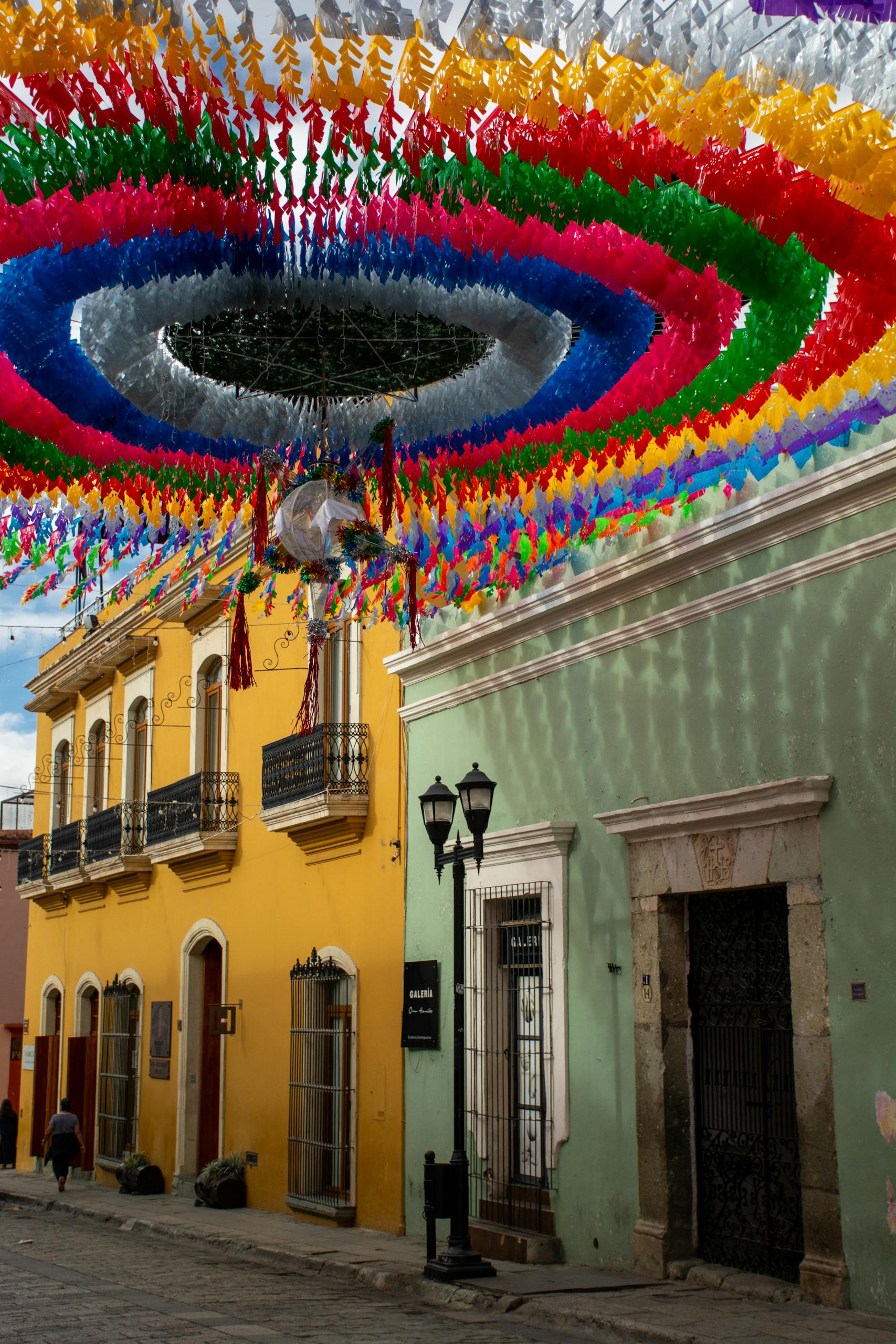
Oaxaca
Slower, more authentic, and increasingly popular with artists, writers, and remote workers. One of Mexico’s best food cities. Monthly cost: $1,000–$1,500. Strong arts and expat community. Lower cost than CDMX with better quality of life for those who don’t need a big city.
Playa del Carmen
The Riviera Maya hub. Beach, turquoise water, cenotes, and a massive international community. Monthly cost: $1,200–$2,000. Strong nomad infrastructure (coworking, fast internet). Cons: very touristy, rising prices, and some areas have safety concerns.
Mérida
The Yucatán capital is one of Mexico’s safest cities and most livable for expats seeking a more local experience. Colonial architecture, lower cost ($1,000–$1,500/month), and a growing expat community. The city is very hot from April–September.
Tulum
Bohemian, wellness-focused, impressive. High cost for a Mexico destination ($1,800–$2,800/month in the trendy zones). Better for a month-long stay than a permanent base. Infrastructure (internet, roads, services) lags behind the lifestyle reputation.
Cost of Living in Mexico: What $1,500/Month Gets You
| Expense | Mexico City | Oaxaca |
|---|---|---|
| 1BR furnished apartment | $700–$1,100 | $400–$700 |
| Groceries | $200–$350 | $150–$250 |
| Eating out (daily) | $10–$25/meal | $5–$15/meal |
| Internet | $20–$40 | $20–$35 |
| Health insurance | $50–$120 | $50–$120 |
| Transport (Uber/Metro) | $50–$100 | $30–$60 |
One underrated perk of living in Mexico: dental care costs a fraction of U.S. prices. Many Americans take advantage of this to get cosmetic work done, the best veneers in Mexico cost $450–$800 per tooth vs. $1,500–$2,500 in the U.S.
Safety in Mexico
Mexico’s safety varies dramatically by location. Mexico City, Oaxaca, Mérida, and San Miguel de Allende are as safe as or safer than many US cities for expats who use basic urban awareness. Areas near the US border and certain resort areas have higher risk profiles. The US State Department issues tiered advisories by state, check the current level for your target location before committing.
Banking and Money in Mexico
When moving to Mexico as an American, you don’t need a Mexican bank account for a tourist-status stay. Use a Schwab debit card (reimburses ATM fees globally). For longer stays, the U.S. Embassy in Mexico has resources for Americans considering residency.
Moving to Mexico as an American: Your 30, 60, and 90-Day Timeline
Mexico is one of the most accessible countries for Americans to move to, no visa required for the first 180 days, a short flight from most US cities, and a cost of living that goes as low as $1,500/month in the right cities. But “accessible” doesn’t mean “no planning required.” Here’s the timeline that makes the move smooth instead of chaotic. Not ready to commit to a full move? You can always test the waters with a month-long stay first to confirm the lifestyle works before making bigger logistical decisions.
90 Days Before Your Move to Mexico
Three months out is when you should be making the big decisions, which city, which visa path, and what you’re doing with your US life. Mexico’s 180-day tourist visa means you technically have zero visa paperwork if you’re going short-term, but if you’re planning to stay longer than that, the Temporary Resident Visa process starts at a Mexican consulate in the US and needs time.
- Do a 2–4 week scouting trip to your target city, Mexico City, Oaxaca, Playa del Carmen, Mérida, and Tulum all have very different vibes, costs, and expat communities. Spend real time before you commit. Rent an apartment on Airbnb or Facebook Marketplace in a residential neighborhood, not a tourist zone.
- Decide your visa path, if staying under 180 days, you enter on a tourist card (FMM) with no application. For 6+ months, apply for a Temporary Resident Visa at a Mexican consulate in the US. You’ll need proof of income (bank statements showing ~$2,600/month or a lump sum of ~$43,000) and your passport.
- Open a no-foreign-fee US account, Charles Schwab investor checking reimburses all ATM fees worldwide. Mexico is still heavily cash-based, especially outside major cities, so ATM access matters more here than almost anywhere else.
- Research health insurance options, SafetyWing Nomad Insurance works well as a starting plan. Once you’re a resident, IMSS (Mexico’s public health system) voluntary enrollment costs around $450/year and covers comprehensive care at IMSS facilities.
- Start learning Spanish, not required, but it dramatically changes the quality of your experience. Mexico City and tourist zones are English-friendly, but interior cities like Oaxaca and Mérida are far less so. Apps like Pimsleur or a tutor on iTalki now means you arrive with a foundation.
60 Days Before Your Move to Mexico
Sixty days out is when you lock down your landing logistics. Mexico moves fast, apartments in popular neighborhoods like Roma Norte (CDMX) or Centro Histórico (Oaxaca) rent within days. If you’re applying for a Temporary Resident Visa, you should be mid-application at this point.
- Book short-term accommodation for your first 1–2 months, search Airbnb for monthly rates (often 30–40% cheaper than nightly), or use Facebook groups like “Mexico City Housing” or “Oaxaca Expat Housing” to find furnished apartments directly. Lock something down now, good places go fast.
- Apply for Temporary Resident Visa if needed, visit your nearest Mexican consulate with your income documentation, passport photos, and completed application form. Processing is typically fast (1–5 business days) but appointment availability varies by city.
- Notify US banks and update your address, set up a US mail forwarding service (Traveling Mailbox, PostScan Mail) and update your address with banks, the IRS, and any subscription services. Confirm your US cards will work in Mexico and set travel notifications.
- Sort your US tax obligations, Americans living abroad must still file US taxes. Mexico does not have a formal tax treaty with the US like Portugal does, so understanding the Foreign Earned Income Exclusion (FEIE) and your Mexican tax residency status matters. Consult a US expat tax accountant.
- Join city-specific expat Facebook groups, Mexico City Expats, Oaxaca Expats, Playa del Carmen Expats. These groups are where you’ll find real apartment listings, safety updates, and recommendations from people on the ground right now.
30 Days Before Your Move to Mexico
Final month, this is execution mode. Your housing should be locked, your visa sorted (or confirmed unnecessary), and your US loose ends getting tied up. Mexico’s proximity to the US is an advantage here: if you forget something, you can get it quickly or cross the border without a transatlantic flight.
- Book your flights, major Mexican airports include MEX (Mexico City), OAX (Oaxaca), CUN (Cancún, closest to Playa del Carmen), and MID (Mérida). Direct flights from most major US cities run $200–$500 roundtrip depending on timing.
- Fund a Wise account in Mexican pesos, Wise offers near-interbank exchange rates for USD to MXN. Load it before you leave so you have pesos immediately on arrival without paying airport exchange booth rates.
- Decide what to ship vs. buy in Mexico, electronics, quality clothing, and specialty items are cheaper in the US. Furniture, household goods, and food are very affordable in Mexico. Shipping costs rarely make sense for anything other than irreplaceable personal items.
- Unlock your US phone, Telcel and AT&T México are the main carriers. A Mexican SIM costs a few dollars and data is cheap. Alternatively, use an eSIM from Airalo for the first week while you settle in.
- Digitize all important documents, passport, visa (if applicable), insurance, lease, bank statements. Store encrypted in Google Drive and a password manager. Carry a printed copy of your lease and insurance on arrival day.
Still comparing countries? Take the free country match quiz to see which countries fit your budget, language comfort and lifestyle, then compare your top options side by side.
After You Arrive: Your First 30 Days in Mexico
Mexico has a real learning curve in the first month, traffic patterns, which neighborhoods are actually walkable, where locals shop vs. tourist markup zones, how tipping culture works. The administrative tasks here are lighter than Portugal or Dubai, but there are still key things to get sorted in week one to set yourself up properly.
- Get a Mexican SIM card, Telcel has the best coverage nationwide, especially if you’ll travel outside the capital. Buy from an official Telcel store, not a street vendor, to avoid scams.
- Exchange a small amount of cash immediately on arrival, use an airport ATM (Schwab will reimburse the fee) rather than an exchange booth. Booths at Mexican airports often offer poor rates. Have at least $100 USD equivalent in pesos for taxis and tips.
- Apply for your RFC (tax ID) if you’re becoming a resident, the RFC (Registro Federal de Contribuyentes) is Mexico’s tax identification number, needed to open a Mexican bank account or sign formal contracts. Apply at a SAT (tax authority) office with your passport and visa.
- Open a Mexican bank account, BBVA México and Santander México are the most expat-friendly. BBVA’s app is excellent. You’ll need your passport, visa, RFC, and proof of address (your lease). Some banks also accept Americans under FATCA but require additional documentation.
- Enroll in IMSS if you plan to stay long-term, voluntary IMSS enrollment (~$450/year) gives you access to Mexico’s public healthcare system, which includes hospitals, specialists, and prescriptions at minimal cost. Quality varies by location but is generally solid for routine care.
- Learn your neighborhood on foot, find your local mercado (fresh produce, meat, and staples at a fraction of supermarket prices), your nearest pharmacy (farmacias in Mexico are excellent and many medications available OTC don’t require a prescription), and your go-to taco spot. You’ll be a local faster than you think.
📊 The Real Cost of Moving Abroad as an American
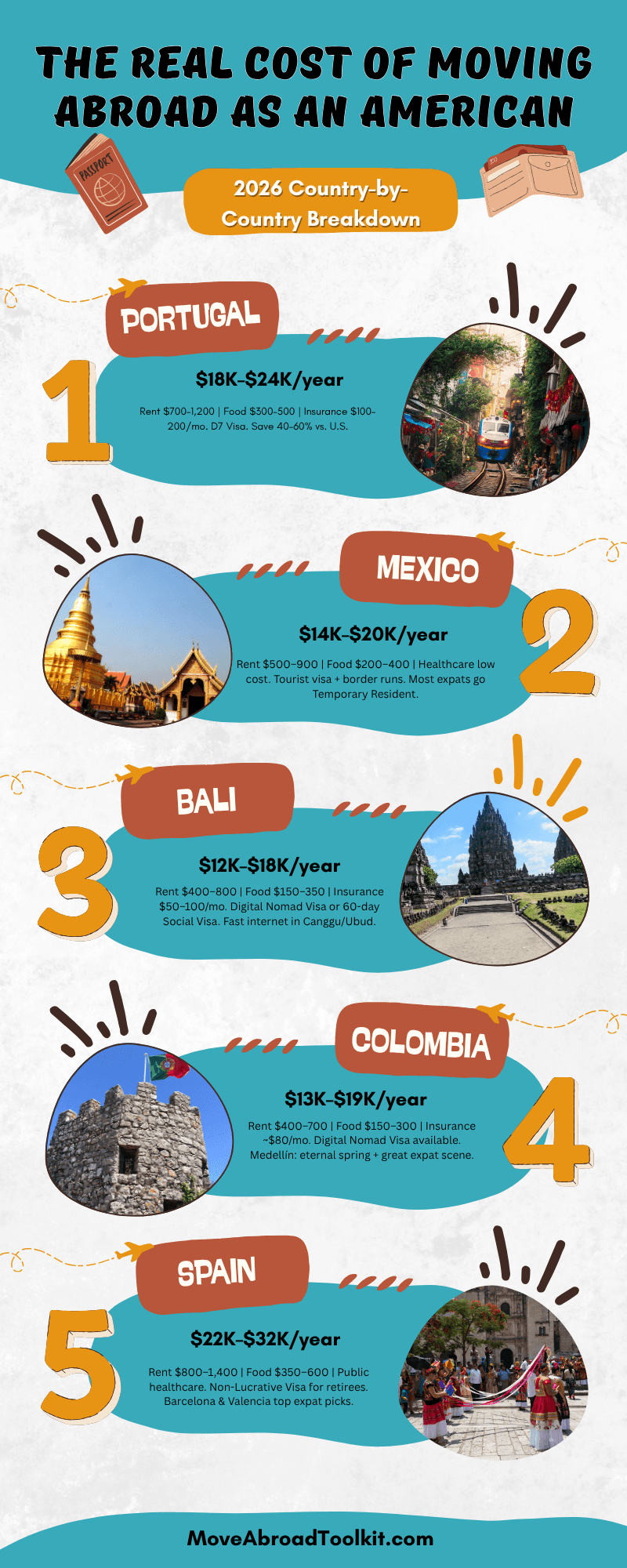
Related: Digital Nomad Visas for Americans | How to Budget for Moving Abroad | What to Pack When Moving Abroad
For a full breakdown of what you’ll spend once you arrive, see our detailed guide to the cost of living in Mexico City, with real rent data by neighborhood, food costs, and what $2,000/month actually buys you.
Tourist Visa, 180 Days, No Application Needed
Americans can stay in Mexico for up to 180 days on a tourist entry (FMM). You receive your length of stay at the port of entry, ask the immigration officer for the full 180 days. This is technically not a work visa, but many Americans work remotely for foreign companies on this status. Mexico doesn’t tax foreign-source income, so this is a legal gray area that most expats navigate without issue.
Temporary Resident Visa
Best for: Americans wanting to stay 6 months to 4 years with legal clarity. Minimum income: ~$1,620/month (approximately $2,595 in current requirements based on UMA). Apply at a Mexican consulate in the US before you travel. Duration: 1 year initially, renewable up to 4 years. Cost: ~$50–$150. Processing: 2–4 weeks. Once you have it, you can work legally for Mexican companies or continue working remotely.
Permanent Resident Visa
After 4 years as a temporary resident (or immediately if you meet higher income/asset thresholds), you can apply for permanent residency. No renewal needed, no income requirement to maintain status.
Mexico City (CDMX)
The capital is a world-class city with incredible food, culture, nightlife, and infrastructure. Neighborhoods like Roma Norte, Condesa, and Polanco are full of American expats. Monthly cost: $1,500–$2,200 for a comfortable lifestyle. Fast internet everywhere. Time zone: Central (CST/CDT), perfect for US East and West Coast remote workers.
Oaxaca
Slower, more authentic, and increasingly popular with artists, writers, and remote workers. One of Mexico’s best food cities. Monthly cost: $1,000–$1,500. Strong arts and expat community. Lower cost than CDMX with better quality of life for those who don’t need a big city.
Playa del Carmen
The Riviera Maya hub. Beach, turquoise water, cenotes, and a massive international community. Monthly cost: $1,200–$2,000. Strong nomad infrastructure (coworking, fast internet). Cons: very touristy, rising prices, and some areas have safety concerns.
Mérida
The Yucatán capital is one of Mexico’s safest cities and most livable for expats seeking a more local experience. Colonial architecture, lower cost ($1,000–$1,500/month), and a growing expat community. The city is very hot from April–September.
Tulum
Bohemian, wellness-focused, impressive. High cost for a Mexico destination ($1,800–$2,800/month in the trendy zones). Better for a month-long stay than a permanent base. Infrastructure (internet, roads, services) lags behind the lifestyle reputation.
I funded my own move abroad by selling my house, my car (to CarMax), and my belongings on Facebook Marketplace and at garage sales. That firsthand experience shapes how I write about moving abroad, I am not just summarizing data, I am telling you what the numbers actually mean for someone making a real move.
Currency exchange fees eat into every international transfer. Use Wise instead of your bank for real exchange rates and low fees. Most expats save $50 to $100 per month on transfers alone.
For health coverage while abroad, SafetyWing Nomad Insurance starts at $45.08 per month for Americans under 40. It covers you in most countries and is built for long-term travelers and expats.
If you need a VPN for US streaming or public wifi security, NordVPN works well from abroad.
US tax filing does not stop when you move abroad. You still owe US taxes on worldwide income. Taxes for Expats specializes in expat tax returns and can save you from expensive mistakes.
If you are serious about the move, grab the Move Abroad Toolkit to plan your budget, timeline, and logistics in one place.
Thinking about moving abroad? Book a Move Abroad Planning Call for personalized guidance on your relocation.
Continue Planning Your Move
Everything you need is in one place.
Free Quiz
Find Your Best Country Match
Answer a few quick questions about your budget, language comfort, lifestyle and visa needs, and see which countries fit you best.