Explore 100+ Digital Nomad Visa Guides for Every Country
Some links on this site are affiliate links, which means the site may earn a commission at no extra cost to you. Services are included because they fit the move abroad process, not because of the commission.
The rise of remote work has transformed the way we live, giving more people the freedom to travel while earning a living. But navigating the legal requirements to live and work abroad can be tricky. Enter the digital nomad visa — a practical solution for remote workers who dream of living in countries like Spain, Portugal, or Thailand without worrying about overstaying tourist visas.
This comprehensive guide organizes 100+ country-specific digital nomad visa guides, making it easy to find the information you need. Whether you’re a freelancer, entrepreneur, or employed remotely, this post is your ultimate resource for planning your next move abroad. Click on any region or country to jump to a detailed guide.
📋 What’s In This Guide

What Is a Digital Nomad Visa?
A digital nomad visa is a type of visa that allows remote workers to legally live in a foreign country while continuing to work for a company or clients located outside of that country. These visas are designed for:
- Freelancers and consultants.
- Entrepreneurs running location-independent businesses.
- Employees working remotely for companies based in another country.
Unlike standard tourist visas, digital nomad visas typically offer longer stays (often 6 months to several years) and may even include tax benefits.
Benefits of a Digital Nomad Visa
- Legal Residency: Avoid visa runs or overstaying tourist visas.
- Tax Advantages: Some countries, like Portugal and Croatia, offer favorable tax policies for digital nomads.
- Longer Stays: Many digital nomad visas allow stays of up to a year or more, with options to renew.
- Access to Local Amenities: In many cases, a digital nomad visa grants access to local healthcare, banking, and housing markets.
- Flexibility: Live and work in destinations that suit your lifestyle without breaking immigration laws.
Explore Digital Nomad Visa Guides by Region
Europe
Popular Countries
- Portugal Digital Nomad Visa
- Income Requirement: €2,820/month (~$3,050 USD).
- Duration: 1 year, renewable.
- Benefits: Tax advantages through the Non-Habitual Residence program.
- Spain Digital Nomad Visa
- Income Requirement: €2,334/month (~$2,520 USD).
- Duration: 1 year, renewable up to 5 years.
- Benefits: Access to vibrant cities and rich cultural experiences.
- Italy Digital Nomad Visa
- Income Requirement: Varies.
- Duration: 1 year, renewable.
- Benefits: Live in one of Europe’s most culturally rich and scenic countries.
- Croatia Digital Nomad Visa
- Income Requirement: €2,250/month (~$2,430 USD).
- Duration: Up to 1 year.
- Benefits: Tax-free income for the first year and a desirable coastal lifestyle.
Other Guides
- Germany Digital Nomad Visa
- France Digital Nomad Visa
- Estonia Digital Nomad Visa
- Hungary Digital Nomad Visa
- Bulgaria DNV for budget-conscious applicants — low income threshold with EU access, one of the most underrated European options available
Asia
Popular Countries
- Thailand Digital Nomad Visa
- Income Requirement: $80,000/year.
- Duration: Up to 10 years.
- Benefits: Affordable living in a tropical paradise.
- Bali Digital Nomad Visa
- Income Requirement: Varies by visa type.
- Duration: 6 months to 5 years.
- Benefits: Flexible options and a thriving expat community.
- Japan Digital Nomad Visa
- Income Requirement: Specific income requirements vary.
- Duration: Typically 6 months to 1 year.
Other Guides
- Malaysia Digital Nomad Visa
- South Korea Digital Nomad Visa
- Vietnam Digital Nomad Visa
- Philippines Digital Nomad Visa
Americas
Popular Countries
- Mexico Digital Nomad Visa
- Income Requirement: $2,500/month or proof of savings.
- Duration: 1 year, renewable.
- Colombia Digital Nomad Visa
- Income Requirement: $684/month (~3x the local minimum wage).
- Duration: Up to 2 years.
- Argentina Digital Nomad Visa
- Income Requirement: Proof of remote work and sufficient income.
- Duration: 1 year, renewable.
Other Guides
- Brazil Digital Nomad Visa
- Costa Rica Digital Nomad Visa
- Panama Digital Nomad Visa
Highlights from High-Demand Destinations
- Greece Digital Nomad Visa
- Income Requirement: €3,500/month (~$3,780 USD).
- Duration: 1 year, renewable.
- Benefits: Access to idyllic islands and ancient history.
- Dubai Digital Nomad Visa
- Income Requirement: $5,000/month.
- Duration: 1 year.
- Benefits: Live in a global business hub with top-tier amenities.
- Malaysia Digital Nomad Visa
- Income Requirement: €2,000/month (~$2,160 USD).
- Duration: 1 year, renewable.
- Benefits: A balance of affordability and modern infrastructure.
How to Apply for a Digital Nomad Visa
Step 1: Research Your Destination
Decide where you want to live based on lifestyle, cost of living, and visa requirements. Check the specific qualifications and application process for your chosen country.
Step 2: Prepare Documentation
Most applications will require:
- Proof of income (bank statements, client contracts, or pay stubs).
- A valid passport.
- Comprehensive health insurance.
- A completed visa application form.
- Proof of accommodation (rental agreements or hotel bookings).
Step 3: Submit Your Application
Many countries allow you to apply online or through their consulates. Some may require you to visit the country first and apply in person.
Step 4: Wait for Approval
Processing times vary from a few weeks to several months, depending on the country. In many cases, you may need to send off your passport during the application process, so plan accordingly as you won’t have access to it during this time.
Step 5: Plan Your Move
Once your visa is approved, arrange housing, transportation, and other logistics to ensure a smooth transition. Take into account that you may need to send off your passport during the visa application process, which means you won’t be able to travel internationally until it is returned. Additionally, consider timing the move to avoid delays due to high travel seasons and ensure that you have sufficient local currency or an international banking setup to manage initial expenses upon arrival.
Digital Nomad Visa FAQs
1. Can I bring my family on a digital nomad visa?
Many countries, like Portugal and Spain, allow dependents to join you on your visa. Additional income requirements may apply.
2. Do I need to pay taxes in the country offering the visa?
Tax policies vary by country. Some, like Croatia, offer tax-free status for digital nomads, while others may require partial tax contributions.
3. Can I switch jobs or clients while on a digital nomad visa?
Yes, as long as your income source remains remote and meets the visa’s minimum requirements.
4. What happens if my visa expires?
You can often renew digital nomad visas, but it’s essential to check renewal policies for each country.
Final Tips for Digital Nomads
- Choose the Right Destination: Consider time zones, language barriers, and internet connectivity when selecting your base.
- Budget Wisely: Account for visa application fees, cost of living, and potential tax obligations.
- Stay Organized: Keep copies of all documents and receipts in case of audits or renewals.
- Leverage Communities: Join digital nomad groups on social media to network and get advice from those already living in your destination.
Not sure which country to plan around yet? Before you work through the details, take the free country match quiz to find the countries that fit your budget, visa needs and lifestyle.
Conclusion
Digital nomad visas have opened up a world of possibilities for remote workers seeking adventure and a change of scenery. With so many options available, it’s easier than ever to find a destination that fits your lifestyle and career goals. Use this guide as your roadmap, and start planning your journey to live and work abroad legally and stress-free.
Ready to take the leap? Explore our in-depth visa guides for specific countries and get started on your digital nomad journey today!
What is a digital nomad visa?
A digital nomad visa is a special residency permit that allows remote workers and self-employed individuals to live legally in a foreign country while earning income from outside that country. They typically require proof of remote income (usually $1,500-3,000+/month), health insurance, and a clean background check. Most visas are valid for 1-2 years and are renewable.
Which country has the easiest digital nomad visa for Americans?
Among the easiest digital nomad visas for Americans are: Portugal (D8 Digital Nomad Visa, straightforward process), Barbados (Welcome Stamp, fast approval), Costa Rica (Rentista Visa, accessible income threshold), and Panama (Friendly Nations program for some nationalities). Ease depends on your income level and how much bureaucracy you can handle.
How much income do I need for a digital nomad visa?
Income requirements vary by country. Portugal requires about 3,480 euros/month, Spain requires 2,646 euros/month, Estonia requires about 3,504 euros/month, and Thailand requires 80,000 THB/month (about $2,200). Many affordable destinations in Latin America and Southeast Asia have lower requirements of $1,000-1,500/month.
Can I work legally in a foreign country on a tourist visa?
Generally, no. Tourist visas do not authorize you to work, even remotely. While many digital nomads have historically worked on tourist visas, it creates legal uncertainty. If your employer is based in your home country and you have no local clients, enforcement risk is lower, but it is always safer and smarter to get the appropriate digital nomad visa or work permit.
Do I still pay US taxes on a digital nomad visa?
Yes. Americans are taxed on worldwide income regardless of where they live. However, the Foreign Earned Income Exclusion (FEIE) lets you exclude up to $126,500 (2024) of foreign-earned income if you meet the Physical Presence or Bona Fide Residence tests. Consult an expat tax specialist before applying for a digital nomad visa.
I funded my own move abroad by selling my house, my car (to CarMax), and my belongings on Facebook Marketplace and at garage sales. That firsthand experience shapes how I write about moving abroad, I am not just summarizing data, I am telling you what the numbers actually mean for someone making a real move.
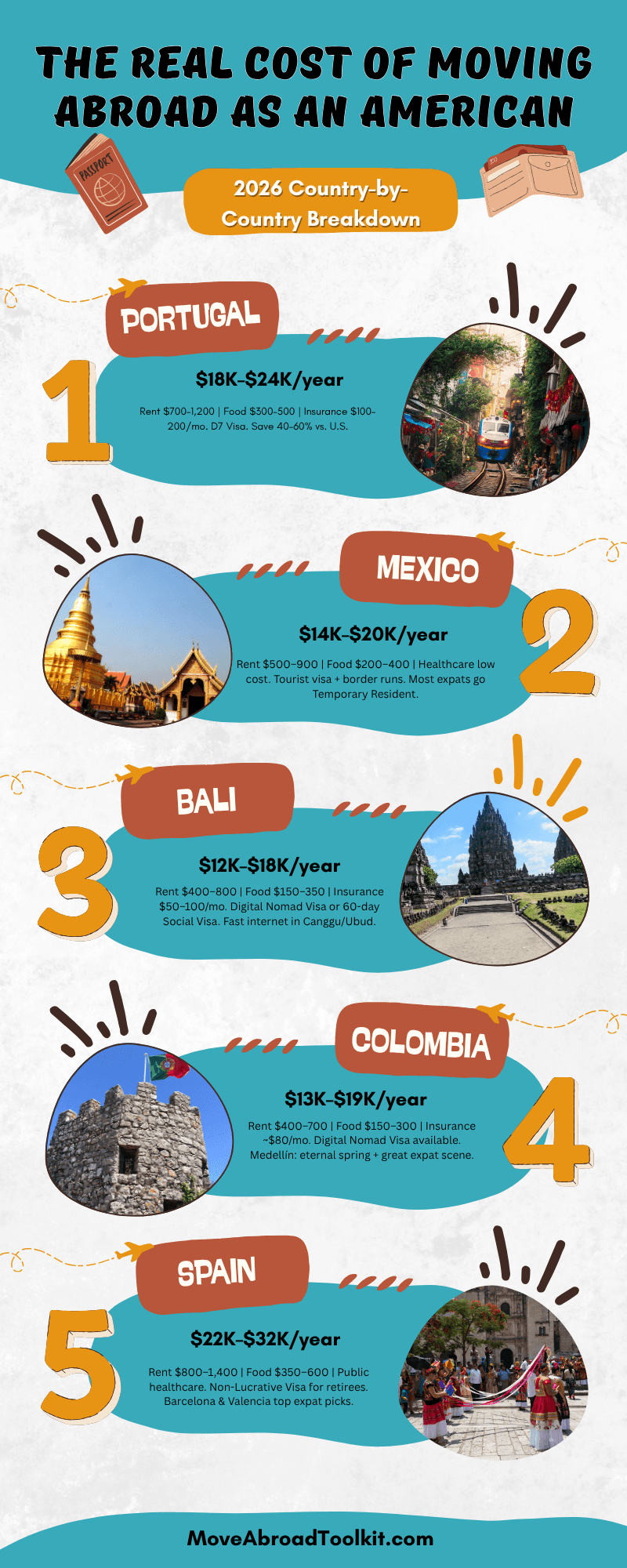
Currency exchange fees eat into every international transfer. Use Wise instead of your bank for real exchange rates and low fees. Most expats save $50 to $100 per month on transfers alone.
For health coverage while abroad, SafetyWing Nomad Insurance starts at $45.08 per month for Americans under 40. It covers you in most countries and is built for long-term travelers and expats.
If you need a VPN for US streaming or public wifi security, NordVPN works well from abroad.
US tax filing does not stop when you move abroad. You still owe US taxes on worldwide income. Taxes for Expats specializes in expat tax returns and can save you from expensive mistakes.
If you are serious about the move, grab the Move Abroad Toolkit to plan your budget, timeline, and logistics in one place.
Thinking about moving abroad? Book a Move Abroad Planning Call for personalized guidance on your relocation.
Continue Planning Your Move
Everything you need is in one place.
Free Quiz
Find Your Best Country Match
Answer a few quick questions about your budget, language comfort, lifestyle and visa needs, and see which countries fit you best.