Cost of Living Roatan Honduras for Americans: 7 Real Numbers (2026)
Some links on this site are affiliate links, which means the site may earn a commission at no extra cost to you. Services are included because they fit the move abroad process, not because of the commission.
When it comes to the cost of living in Roatan Honduras, The cost of living Roatan Honduras offers is one of the most underreported opportunities in the expat world.
Summarizing the cost of living in Roatan Honduras: A single American can live comfortably on $1,200 to $1,800 per month on this Bay Island, with access to the Caribbean’s second-largest barrier reef, English as the dominant language in tourist and expat areas, and a relaxed island culture that draws retirees and remote workers in equal measure. For a country with such a low profile in mainstream expat conversations, the numbers are hard to ignore.
This post contains affiliate links. If you make a purchase through one of these links, I may earn a small commission at no additional cost to you. I only recommend products and services I personally use or thoroughly research.
| Expense Category | Monthly Estimate (USD) |
|---|---|
| Rent (1-bed furnished, West End/West Bay) | $500–$800 |
| Rent (local neighborhoods, Coxen Hole) | $300–$500 |
| Groceries | $200–$350 |
| Dining out (mid-range) | $150–$300 |
| Transportation | $50–$100 |
| Healthcare (private) | $50–$120 |
| Utilities + Internet | $80–$150 |
| Total Estimate | $1,200–$1,800 |
The cost of living in Roatan Honduras shows that I track expat cost data across Caribbean and Central American destinations, and Roatan consistently comes up in the same conversation as Bali and Croatia for Americans seeking maximum value without sacrificing lifestyle quality.
The cost of living in Roatan Honduras comparison: For comparison across different regions, the Cost of Living in Bali and Cost of Living in Valencia, Spain posts show how Roatan stacks up against the leading competition.
Quick Numbers: What You Will Actually Spend
| Item | West End/West Bay | Coxen Hole/Local Areas |
|---|---|---|
| 1-bed furnished apartment | $500–$800 | $300–$500 |
| Monthly groceries (1 person) | $250–$350 | $200–$280 |
| Restaurant meal (mid-range) | $10–$18 | $5–$10 |
| Monthly scooter rental | $150–$250 | N/A |
| Water taxi (cross-island) | $2–$5 | $2–$5 |
| Basic utilities (1-bed) | $60–$120 | $50–$90 |
| Internet (fiber, when available) | $40–$80 | $30–$60 |
Housing and Rent: Cost of Living in Roatan Honduras
Understanding the cost of living in Roatan Honduras: Roatan’s rental market splits cleanly along two lines: tourist-zone pricing in West End and West Bay, and local-zone pricing in Coxen Hole, French Harbour, and the island’s interior.
Budget insight on the cost of living in Roatan Honduras: The West End village is Roatan’s main expat hub, with dive shops, bars, and restaurants clustered around a few compact streets. A furnished one-bedroom in West End or West Bay runs $500 to $800 per month. These apartments typically come with air conditioning, a kitchenette, and wifi, though building standards vary. Properties on or near the beach command a 20 to 40 percent premium above that range.
For Americans researching the cost of living in Roatan Honduras, Moving into Coxen Hole (the island’s commercial center) or local residential areas like Brick Bay and French Harbour drops prices to $300 to $500 for a one-bedroom.
Cost of living in Roatan Honduras note: These areas are less curated for expats but functional for daily life and significantly cheaper. Some long-term expats rent in the interior and commute by scooter or shared van to the West End for social life. Monthly rentals in these neighborhoods often include utilities, making the effective cost even lower than the face-rate suggests.
Data on the cost of living in Roatan Honduras reveals that Long-term (12-month) leases unlock better rates. Many landlords in the tourist zones offer 10 to 20 percent discounts on monthly rates for annual commitments.
Understanding the cost of living in Roatan Honduras: Furnished properties are the norm for expat rentals. Unfurnished apartments below $300 per month exist in local neighborhoods, but they require significant setup investment. Short-term Airbnb rentals in West Bay average $60 to $120 per night, making long-term negotiated rentals significantly more cost-effective.
Food and Groceries: Cost of Living in Roatan Honduras
Breaking down the cost of living in Roatan Honduras: Roatan’s grocery situation is more nuanced than most Caribbean islands.
The real cost of living in Roatan Honduras is: The island has several supermarkets including Eldon’s and the larger chains in Coxen Hole that stock a reasonable selection of imported and local products. Locally grown produce is limited due to the island’s size, so much of what you eat is either imported or sourced from the Honduran mainland. Imported goods from the US or Europe carry a premium, sometimes 30 to 60 percent above US retail prices.
A key aspect of the cost of living in Roatan Honduras is that Shopping smart significantly reduces grocery costs. Rice, beans, plantains, eggs, chicken, and fresh fish are all priced in line with or below US costs.
The cost of living in Roatan Honduras is: A dozen eggs runs $2 to $3. Fresh fish direct from local fishermen on the dock costs $4 to $7 per kilogram. A weekly shop that leans on local staples rather than imported brands keeps monthly grocery costs between $200 and $280. Shopping at the Coxen Hole market rather than the West End mini-marts cuts costs further, typically by 20 to 30 percent. Budget $250 to $350 monthly for groceries if you frequently buy US brands or imported products.
Planning around the cost of living in Roatan Honduras means Dining out in West End runs $10 to $18 per person for a sit-down meal at a mid-range restaurant, with a beer adding $2 to $4.
More on the cost of living in Roatan Honduras: Local Honduran sodas (small family restaurants) serve baleadas (bean, cheese, and egg tortilla wraps) for $2 to $4, making a filling local lunch extremely affordable. Monthly dining costs for someone eating out four to five times per week fall between $150 and $300, depending heavily on whether they choose tourist-zone or local-zone restaurants.
Transportation: Cost of Living in Roatan Honduras
The cost of living in Roatan Honduras comparison shows: Roatan is a small island, roughly 60 kilometers long and between 1 and 5 kilometers wide, which makes transportation straightforward.
Water taxis connect the major sections of the island for $2 to $5 per trip. Shared collectivo vans (colectivos) run fixed routes across the island for $1 to $2 per ride. A personal scooter is the most popular expat transportation solution, costing $1,500 to $3,000 to purchase or $150 to $250 monthly to rent, with fuel adding $30 to $50 per month.
The honest cost of living in Roatan Honduras is: Taxis operate across the island on fixed rates of $3 to $8 for short island trips.
Car rentals start at $35 to $55 per day. Many long-term expats purchase a used car or golf cart for $3,000 to $6,000 as a practical and cost-effective long-term solution. There are no traffic jams, no tolls, and no complex transit systems to navigate. Flights connect Roatan’s Juan Manuel Galvez International Airport to Honduras mainland cities and some US hubs (American Airlines serves Houston; United serves Houston and other cities), with round-trip fares to the US mainland typically ranging $200 to $500 depending on timing and routing.
Healthcare and Cost of Living in Roatan Honduras
Americans studying the cost of living in Roatan Honduras find that Roatan has improved its medical infrastructure considerably over the past decade, though it still requires supplemental planning for serious conditions.
The Roatan International Hospital in Coxen Hole provides general medical services and has English-speaking staff. A basic consultation runs $40 to $70. Dental care is exceptional value: a cleaning costs $20 to $40, and a filling runs $40 to $80. The island also has several dive-specific hyperbaric chambers, which is relevant context for active divers.
The full cost of living in Roatan Honduras picture: For serious medical conditions, most long-term expats plan to travel to San Pedro Sula or Tegucigalpa on the Honduran mainland, or to the United States, which is reachable within a day from Roatan’s airport.
International health insurance is strongly recommended. Plans covering Central America and the US typically run $80 to $150 per month for a single American in good health under 55. Using Wise for transfers between US bank accounts and local banking reduces conversion fees substantially. The US Embassy in Honduras maintains medical resources for Americans at hn.usembassy.gov.
Key facts on the cost of living in Roatan Honduras: Prescription drugs from the Honduran mainland are dramatically cheaper than US prices.
Many expats take short trips to the mainland specifically to stock up on prescription medications. Over-the-counter medications in Roatan pharmacies cost 30 to 60 percent less than equivalent US products. Monthly healthcare costs for a healthy person with insurance run $80 to $150 per month including insurance premiums. Dental work alone can justify a Roatan visit for Americans with uninsured dental needs in the US.
Utilities and Cost of Living in Roatan Honduras
Utility costs on Roatan are higher than on the Honduran mainland due to the island’s reliance on generators and imported fuel for electricity generation.
Electricity runs approximately $0.18 to $0.24 per kilowatt-hour, which is meaningfully more expensive than mainland Honduras or many US states. A one-bedroom apartment using air conditioning moderately (four to six hours daily) costs $60 to $120 per month in electricity. A total utilities budget of $80 to $150 covers electricity, water, and garbage collection for a one-bedroom unit.
Internet quality on Roatan has improved markedly and is now adequate for remote work in most par
ts of the island. Fiber is available in West End, West Bay, and Coxen Hole from providers including Claro and Tigo, with speeds of 20 to 100 Mbps available for $40 to $80 per month. Satellite internet (Starlink) is available and used by many remote workers for more reliable speeds at approximately $120 per month. Mobile data on local SIM cards (Tigo or Claro) provides a reasonable backup option at $15 to $30 per month for adequate data. Power outages are more frequent than in developed countries; a UPS battery backup is a wise investment for remote workers.
Lifestyle and Entertainment
Roatan’s lifestyle equation is fundamentally different from European expat destinations: the island is defined by outdoor activity rather than urban culture.
Scuba diving is the anchor activity, with dive trips running $30 to $50 for a two-tank boat dive at the major dive shops in West End. Open Water certification costs $250 to $350. Snorkeling trips from shore are free or $10 to $20 for guided boat trips to the outer reef. Kayak rentals run $10 to $20 per hour. Fishing charters cost $150 to $300 for a half-day trip.
West End has a compact nightlife with bars, live music, and small restaurants open late. A night out with drinks and dinner in West End typically costs $30 to $60 per person.
There are no cinemas or large shopping malls on the island. Entertainment spending for an active water-sports lifestyle runs $200 to $400 per month. A quieter, beach-focused lifestyle with occasional dining out averages $100 to $200 monthly in entertainment. Many expats supplement with visits to the Honduran mainland (La Ceiba or San Pedro Sula) for city amenities, with round-trip ferry or flight costs of $50 to $120.
How Cost of Living in Roatan Honduras Compares to US Cities
| Category | Roatan, Honduras | Miami, FL | San Diego, CA | Tampa, FL |
|---|---|---|---|---|
| 1-bed rent (expat area) | $500–$800 | $2,000–$2,800 | $2,100–$2,900 | $1,400–$2,000 |
| Monthly groceries | $200–$350 | $400–$550 | $420–$580 | $380–$500 |
| Restaurant meal (mid-range) | $10–$18 | $22–$40 | $24–$42 | $18–$32 |
| Healthcare (private, monthly) | $80–$150 | $300–$600 | $320–$620 | $280–$560 |
| Total monthly (single person) | $1,200–$1,800 | $3,500–$5,000 | $3,700–$5,200 | $3,000–$4,200 |
This comparison illustrates why Roatan draws serious attention among the Caribbean expat community. At 60 to 70 percent below comparable US coastal cities, the savings potential is among the highest of any destination covered in this series, including the Cost of Living in Valencia, Spain and Cost of Living in Portugal for Americans breakdowns. The trade-off is the infrastructure gap: Roatan cannot replicate the convenience of a European or large US city.
Who Should Consider the Cost of Living in Roatan Honduras
Roatan is a strong fit for Americans who prioritize outdoor lifestyle, specifically water sports and marine access, over urban culture and amenities.
Retirees with passive income find the combination of low costs, English-speaking environment, warm year-round climate, and proximity to the US particularly compelling. The island is one of the few places in the world where a $1,500 monthly income supports a genuinely comfortable life with full diving access and social connection to a developed expat community.
Remote workers with stable internet needs should plan carefully. West End and West Bay have adequate internet for most tasks, but outages are more frequent than in North America or Europe.
A professional whose work requires sustained high-bandwidth connectivity may want to test the infrastructure during a short stay before committing. Starlink has significantly improved this picture for many expats.
Roatan is less suitable for Americans who need large-city infrastructure, consistent access to diverse medical specialists, family schooling (international school options are limited), or frequent travel to multiple international destinations.
Honduras as a country carries a complex reputation, though Roatan itself has a significantly different safety profile than the mainland due to its geography and tourism-driven economy. Most long-term expats report feeling safe in the tourist zones with normal awareness.
How to Plan Your Move to Roatan
Start with a two to four week exploratory visit before committing to any long-term arrangement. Roatan’s neighborhoods have significantly different characters, and the difference between West End, West Bay, and Coxen Hole matters for daily quality of life.
Book short-term accommodation in multiple areas if possible. This is the same approach outlined in the Cost of Living in Greece for Americans and Cost of Living in Spain for Americans posts as the standard pre-commitment test.
Visa requirements for Americans in Honduras allow up to 90 days stay under the CA-4 agreement (which covers Honduras, Guatemala, El Salvador, and Nicaragua).
After 90 days, you must leave the CA-4 zone and return. Many expats do monthly or quarterly border runs to Belize or Mexico. Honduras does not yet have a specific digital nomad visa, though the Honduran government has announced programs under development. Check current requirements at the US Embassy Honduras site before traveling.
Calculate your financial runway carefully before moving. The how much money do you need to move abroad framework applies directly here: budget for a $2,500 to $4,000 moving buffer above your first three months of estimated living expenses, covering flights, setup costs, and the deposits typically required on rental properties (one to two months). Roatan real estate data is tracked by local agencies; Numbeo maintains current comparison data for the island as well.
Ready to narrow down where to go? Find your best country match with the free quiz. It asks about your budget, language comfort, lifestyle and visa needs, then points you to the countries worth a closer look.
Frequently Asked Questions
What is the average cost of living in Roatan Hon
duras for a single American?
A single person can live comfortably in Roatan for $1,200 to $1,800 per month, covering furnished rent, groceries, transportation, healthcare insurance, and entertainment. Living in local neighborhoods rather than tourist zones reduces this to $900 to $1,400.
Is Roatan safe for American expats?
Roatan’s safety profile differs significantly from mainland Honduras. The island’s tourist economy and geographic separation create a safer environment than mainlan
d statistics suggest. Most long-term expats report feeling safe in West End and West Bay with standard situational awareness. Valuables should not be left visible in vehicles, and certain mainland areas warrant additional caution during visits.
Can I work remotely from Roatan?
Yes, with planning. West End and West Bay have fiber internet adequate
for most remote work. Starlink is available for higher and more consistent speeds at around $120 per month. Power outages occur and a UPS backup is recommended. The time zone (CST, UTC-6) aligns well with US business hours.
How does Roatan compare to other Caribbean expat destinations on cost?
Roatan is significantly cheaper than comparable Ca
ribbean destinations. It runs 30 to 50 percent below Cayman Islands, Puerto Rico, or Barbados costs, and is broadly comparable to cheaper parts of Mexico’s Caribbean coast, though with a more undeveloped island character and lower tourist prices overall.
What visa do Americans need to live in Roatan long-term?
Americans get 90 days under the CA-4 agreement. After that, a border exit to Belize, Mexico, or another non-CA-4 coun
try resets the clock. Honduras is developing formal residency and digital nomad visa options. The Honduran immigration office (Dirección General de Migración) and the US Embassy Honduras site have the most current requirements.
Is healthcare available in Roatan?
Basic and dental care is available at Roatan International Hospital and private clinics in Cox
en Hole and West End. Consultations average $40 to $70. For complex conditions, most expats travel to the Honduran mainland or the United States. International health insurance ($80 to $150 per month) covering both is strongly recommended.
How does the cost of living in Roatan compare to Bali or Portugal?
Roatan and Bali are broadly comparable in total monthly cost for a comfortable expat lifestyle, both landing in the $1
,200 to $1,800 range. Portugal runs slightly higher at $1,500 to $2,200, particularly on housing costs. See the Cost of Living in Bali and Cost of Living in Portugal for Americans for a direct comparison by category.
Roatan Honduras remains one of the most underrated budget-friendly destinations for Americans considering a life abroad. The Caribbean setting, English-dominant expat culture, genuine diving world-class status, and monthly costs that run 60 to 70 percent below US coastal cities create a compelling combination. The infrastructure gaps are real and require planning. But for the right person, no other Caribbean destination delivers this combination of cost, lifestyle, and accessibility to the US.
Roatan is a popular destination for Americans seeking an affordable Caribbean lifestyle. The island time lifestyle appeals to retirees and remote workers alike, and the community of expats makes it feel welcoming from day one.
For groceries, local grocery stores in West End and West Bay carry fresh produce, local seafood, and imported goods. Basic utilities including water, electricity, and internet are available but can be less reliable than in the US, especially during storm season. Many expats in Coxen Hole shop at the local market for the best food prices.
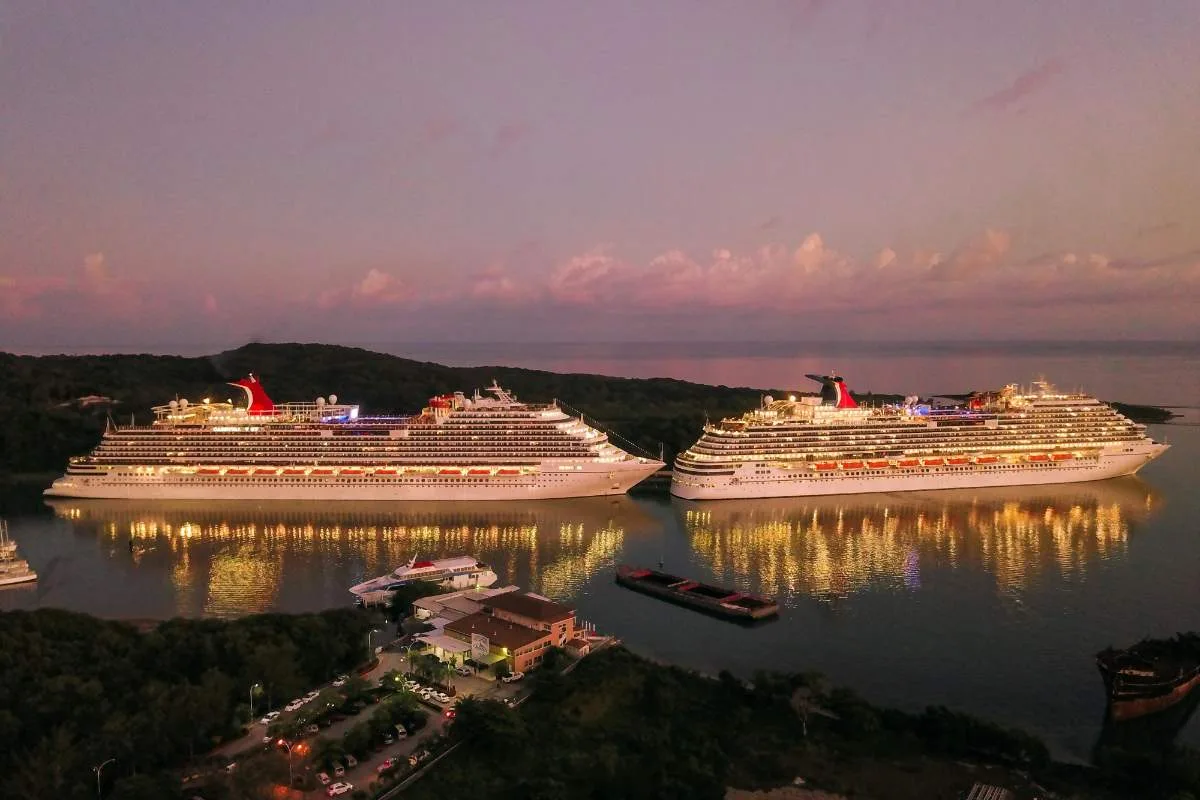
Roatan has local restaurants serving fresh seafood at excellent prices, typically $10-18 per meal. The island’s Caribbean location means cruise ships frequent West Bay Beach, creating a first time visitor experience that many choose to make permanent. Credit cards are accepted at most tourist businesses; cash is preferred in local neighborhoods.
Sandy Bay, a quieter residential neighborhood, offers some of the most affordable housing outside tourist zones. In recent years, the expat community has grown significantly, making Roatan an increasingly perfect place for semi-retirement or remote work. Island time is real—pace your expectations accordingly when dealing with services and utilities.
Roatan is part of Honduras, which keeps costs dramatically lower than most Caribbean destinations. The island life is defined by access to dive centers, snorkeling, and outdoor activities year-round. High season (December-April) brings direct flights from US cities including Miami and Houston, though this period sees some price increases at tourist businesses.
Medical care on the island is available but limited compared to mainland Honduras. More complex procedures require travel to San Pedro Sula or a medical evacuation to the US, which makes private insurance a smart choice. Permanent residency for Honduras under the pensionado program requires as little as $1,500/month in retirement income. Roatan’s main road connects most neighborhoods efficiently, though gravel roads lead to many residential areas and more affordable properties. Local cheese and dairy products from Honduras are excellent and affordable.
Roatan is a good option for Americans seeking island life at affordable costs. Whether you value dive centers, Caribbean seafood, or simply a warm climate with english-speaking communities, Roatan delivers real value compared to similar islands.
Thinking about moving abroad? Book a Move Abroad Planning Call for personalized guidance on your relocation.
Continue Planning Your Move
Everything you need is in one place.
Free Quiz
Find Your Best Country Match
Answer a few quick questions about your budget, language comfort, lifestyle and visa needs, and see which countries fit you best.