Netherlands Digital Nomad Visa Requirements for Americans (2026)
Some links on this site are affiliate links, which means the site may earn a commission at no extra cost to you. Services are included because they fit the move abroad process, not because of the commission.
The Netherlands does not offer a standalone “digital nomad visa” in 2026. Americans who want to live and work remotely in the Netherlands use one of three legal pathways: the Highly Skilled Migrant (HSM) permit (employer-sponsored), the Orientation Year Visa (Zoekjaar) for recent graduates, or — most commonly for independent remote workers — the Freelance/Self-Employed (Zelfstandige) residence permit via the Dutch Immigration Service (IND). Income threshold for self-employed applicants is roughly €4,500–€5,500/month in demonstrable earnings. Processing time: 3–5 months. You must apply from outside the Netherlands through the Dutch embassy in the U.S. before entering.
If you’ve been Googling “Netherlands digital nomad visa 2026” hoping to find a simple, purpose-built remote-work visa — you’re not alone, and you deserve a straight answer: the Netherlands hasn’t launched a dedicated digital nomad visa the way Portugal or Spain have. But that doesn’t mean Amsterdam is off the table.
In fact, the Netherlands is one of the most accessible EU countries for self-employed Americans willing to jump through the right hoops. The existing permit pathways are well-defined, the English-language bureaucracy is surprisingly good, and the country’s startup infrastructure makes it a legitimate long-term base — not just a coffee-shop stopover.
When applying for the netherlands digital nomad visa, this guide walks you through every legal pathway, income requirement, application step, tax reality, and neighborhood consideration you need to plan your move. Whether you’re a freelance designer, a remote software developer, or a location-independent entrepreneur, there’s a route here for you.
Netherlands Digital Nomad Visa Options for Americans in 2026
Let’s cut through the confusion. Here are the four realistic pathways for Americans planning to live and work remotely from the Netherlands in 2026. If you’re comparing options across Europe, see our full DNV cluster guide for Americans and how the Netherlands stacks up against Portugal’s digital nomad visa.
1. Freelance / Self-Employed Residence Permit (Zelfstandige)
For Americans seeking the netherlands digital nomad visa, this is the primary route for independent remote workers and entrepreneurs. You apply to the IND as a self-employed person intending to provide services to clients or run your own business. You don’t need a Dutch employer — your U.S. or international client base qualifies. The key requirement is demonstrating that your business activity benefits the Dutch economy and that you meet the income threshold.
- Who it’s for: Freelancers, consultants, agency owners, remote contractors
- Duration: Initial permit of 2 years, renewable
- Income threshold: Approximately €4,500–€5,500/month (varies by IND assessment year)
- Processing time: 3–5 months
2. Highly Skilled Migrant (HSM) Permit — Kennismigrant
The netherlands digital nomad visa process involves if you have a job offer from a Dutch company that is IND-recognized as a “sponsor” employer, this is the fastest and cleanest pathway. The employer files the application on your behalf and there’s no business plan requirement.
- Who it’s for: Remote workers with Dutch employer or EU-based tech/startup employer
- Salary threshold (2026): Approximately €4,171/month gross (under age 30: ~€3,071/month)
- Processing time: 2–4 weeks (expedited for recognized sponsors)
- Duration: Tied to employment contract, typically 1–3 years
3. Orientation Year Visa (Zoekjaar)
Holders of the netherlands digital nomad visa can if you graduated within the last 3 years from a Dutch university or a top-ranked non-Dutch university (the IND maintains a list of eligible institutions), the Orientation Year Visa gives you 12 months to find a job or start a business in the Netherlands.
- Who it’s for: Recent graduates from qualifying universities
- Duration: 1 year, non-renewable via this route
- Income requirement: Proof of sufficient funds (~€14,500 for the year)
- Note: You can work during this period — many nomads use it as a bridge to the self-employed permit
4. Schengen Tourist / Visa-Waiver (Short-Stay — NOT for working)
Americans can enter the Netherlands visa-free for up to 90 days in any 180-day period under the Schengen Agreement. You cannot work — including remote work for foreign clients — on tourist entry. This is a common misconception. Netherlands immigration authorities take unauthorized work seriously. The 90-day limit is also ETIAS-monitored starting in 2025.
Netherlands Digital Nomad Visa: Eligibility Requirements: Do You Qualify?
Those applying for the netherlands digital nomad visa should for the self-employed residence permit (the most common nomad route), the IND evaluates your application against a points-based framework that weighs three categories:
Personal Requirements
- Valid U.S. passport with at least 6 months remaining
- No criminal record (background check from FBI and all states of residence required)
- Valid health insurance covering Dutch residency period
- Clean immigration history (no prior Dutch/Schengen overstays)
Business / Economic Requirements
The IND uses a points-based assessment scored by the Netherlands Enterprise Agency (RVO). Categories include:
- Personal experience: Your education level and years of relevant professional experience (up to 20 points)
- Business plan: Demonstrating viability, market demand, revenue projections (up to 30 points)
- Added value for the Netherlands: Innovation, job creation potential, sector relevance (up to 30 points)
- Preparedness: Existing contracts, Dutch bank account, registered KvK (Chamber of Commerce) number (up to 20 points)
You need a minimum of 30 points to qualify. Most successful applicants score 45–60 points. A weak business plan is the #1 rejection reason.
Financial Requirements
- Bank statements showing consistent income: minimum €4,500–€5,500/month net over the prior 12 months
- If income is lower or inconsistent: bridge financing/savings of at least €13,000–€18,000 in a dedicated business account
- No outstanding Dutch tax liabilities
The Netherlands threshold is notably higher than most European alternatives. For a DNV income comparison across countries, the full breakdown covers 15 destinations so you can weigh the tradeoffs.
Netherlands Digital Nomad Visa Guide – Step-by-Step Application Process
Here’s exactly how the process works for an American freelancer applying for the self-employed residence permit in 2026:
Step 1: Register Your Business Structure
You’ll need to register a Dutch entity — either as a ZZP (freelancer/sole proprietor) or BV (private limited company) — with the Dutch Chamber of Commerce (Kvk). You can start this process before you arrive in-country. Many applicants register a ZZP first, then upgrade to BV as revenue grows.
Step 2: Prepare Your Business Plan
The netherlands digital nomad visa requires that the RVO business plan is the heart of your application. It must cover: executive summary, description of services, target market analysis, competitive landscape, revenue model, 3-year financial projections, and your personal background. Most successful applicants hire a Dutch immigration lawyer or business plan writer familiar with RVO standards. Budget €500–€1,500 for professional help.
Step 3: Gather Documentation
Core document checklist:
- Valid passport (original + certified copies)
- Completed IND application form (IND Form 7602)
- Apostilled birth certificate
- FBI background check (apostilled) + state-level background checks
- 12 months of bank statements and tax returns (U.S. 1040 + Schedule C or equivalent)
- Proof of Dutch business registration (KvK extract)
- Client contracts or letters of intent (at least 2–3 demonstrating ongoing work)
- Health insurance proof covering the Netherlands
- RVO points assessment letter (obtained separately from the business plan submission)
- Passport-size photos (IND specification)
Step 4: Submit to the Dutch Embassy in Washington D.C. (or Houston/New York consulate)
As an American, your initial permit application is filed at the Dutch Embassy or Consulate in the United States — you cannot apply from inside the Netherlands without prior authorization. The Dutch Embassy in Washington D.C. handles most applications; consulates in New York and Houston can also process them. You’ll submit in person or by appointment and pay the IND application fee.
Step 5: IND Processing
The IND has a statutory decision period of 3 months, but in practice, self-employed applications often take 4–5 months in 2026 due to backlog. You’ll receive a decision by post. If approved, you receive an MVV entry visa (authorization for temporary stay) valid for 90 days to make your move.
Step 6: Arrive and Register at Municipality (Gemeente)
Within 5 days of arrival, you must register at your local Gemeente (municipality) and obtain a BSN (Burger Service Nummer) — the Dutch equivalent of a Social Security Number. You’ll need a BSN to open a bank account, sign a lease, access healthcare, and file taxes. Book this appointment early; many municipalities have 4–6 week waitlists.
Step 7: Collect Your Residence Permit Card
Americans with the netherlands digital nomad visa discover after Gemeente registration, you’ll pick up your physical residence permit card (verblijfsvergunning) from a designated IND location. This card is your legal authorization to live and work in the Netherlands.
Netherlands Digital Nomad Visa: Tax Rules for Americans
Dutch Tax Residency
If you hold a Dutch residence permit and live in the Netherlands for more than 183 days in a calendar year, you are considered a Dutch tax resident subject to Dutch income tax (Inkomstenbelasting). The Dutch tax system uses a box structure:
- Box 1 (Work and income): Progressive rates: 36.97% up to ~€75,500; 49.5% above that (2026 approximate)
- Box 2 (Substantial interest in a company): 24.5–33% on dividends/capital gains from a qualifying BV
- Box 3 (Savings and investments): Deemed return tax on assets above ~€57,000
The 30% Ruling — Your Biggest Tax Break
If you are hired by a Dutch-recognized sponsor employer as a highly skilled migrant, you may qualify for the 30% Ruling (30%-regeling), which allows your employer to pay 30% of your salary as a tax-free allowance for living expenses. This effectively reduces your Dutch income tax rate dramatically. In 2024, the ruling was capped at the “Balkenende Norm” (~€233,000), but it remains highly valuable. Self-employed ZZP/freelancers do not qualify for the 30% ruling.
U.S. Tax Obligations — FBAR, FATCA, and Foreign Tax Credits
Americans abroad still owe U.S. taxes on worldwide income. However, the U.S.–Netherlands Tax Treaty (1992, updated) and the Foreign Tax Credit (FTC) allow you to offset most or all of your Dutch tax liability against your U.S. tax bill — in many cases resulting in zero double taxation. Key obligations:
- Form 1040: Filed annually regardless of where you live
- FBAR (FinCEN 114): Required if Dutch bank accounts exceed $10,000 at any point in the year
- FATCA (Form 8938): Required for higher foreign asset thresholds
- Self-Employment Tax: 15.3% SE tax applies to net self-employment income unless a Totalization Agreement applies — and the U.S.–Netherlands Social Security Totalization Agreement does provide relief for those contributing to Dutch social insurance
Dutch VAT (BTW)
If your Dutch business turnover exceeds €20,000 in a 12-month period, you must register for Dutch VAT (BTW). Standard rate is 21%. Services provided to non-Dutch EU clients trigger EU VAT rules; services to U.S. clients are generally zero-rated for Dutch BTW purposes.
Netherlands Digital Nomad Visa Requirements – Healthcare in the Netherlands
Unlike Spain’s DNV requirements where healthcare enrollment is handled during the visa process, the Netherlands requires you to act independently once registered. The Netherlands has one of the world’s best healthcare systems — and one of its most mandated. Once you have a BSN and a residence permit, you are legally required to take out Dutch basic health insurance (basisverzekering) from a Dutch insurer within 4 months of registering.
After obtaining the netherlands digital nomad visa, basic insurance costs approximately €130–€165/month in 2026 depending on provider and chosen deductible (eigen risico, minimum €385/year). You can supplement with additional coverage (aanvullende verzekering) for dental, physiotherapy, and mental health beyond the basic package.
The netherlands digital nomad visa application process until you’re registered and have obtained Dutch insurance, maintain valid international health insurance from the U.S. (travel insurance or expat health plans like SafetyWing, Cigna Global, or Aetna International are commonly used as bridge coverage).
For Netherlands Digital Nomad Visa Applicants: Banking in the Netherlands for Nomads
Expats on the netherlands digital nomad visa find opening a Dutch bank account is one of the first practical tasks after receiving your BSN. A Dutch account is essential for paying rent, utilities, healthcare premiums, and receiving client payments within SEPA.
Traditional Dutch Banks
- ING: Most foreigner-friendly; English online banking; requires BSN and proof of address
- ABN AMRO: Strong expat support; good English documentation
- Rabobank: Preferred in smaller cities and rural areas
Fintech / Challenger Banks (No Dutch account needed to start)
- Bunq: Netherlands-based, fully English, EU IBAN, excellent for nomads and self-employed; no BSN required to open basic account
- Wise (TransferWise): Excellent for U.S.–Netherlands currency management; not a full bank but IBAN available
- Revolut: Popular bridge option while waiting for traditional account; Lithuanian IBAN
Pro tip: Open a Bunq or Wise account immediately upon arrival to receive client payments and pay deposits. Then open a traditional Dutch bank account once your BSN and lease documentation are in place.
Netherlands Digital Nomad Visa Process: Cost of Living in the Netherlands (2026 Estimates)
The Netherlands is expensive by global standards but manageable compared to major U.S. cities. Amsterdam is the priciest city; smaller cities like Rotterdam, Utrecht, Eindhoven, and The Hague offer significant savings with high quality of life.
Amsterdam (Monthly Budget Estimates)
- Rent (1BR apartment, central): €1,800–€2,600
- Rent (1BR apartment, outer ring): €1,300–€1,800
- Groceries: €300–€500
- Health insurance: €130–€165
- Transport (OV-chipkaart): €60–€100 (Amsterdam’s bike culture keeps this low)
- Utilities: €100–€200 (often included in rent)
- Co-working space (desk): €200–€400/month
- Total comfortable monthly budget: €3,000–€4,500
Rotterdam / Utrecht / Eindhoven (Monthly Budget Estimates)
- Rent (1BR, central): €1,100–€1,700
- Groceries: €280–€450
- Total comfortable monthly budget: €2,300–€3,500
Note: Amsterdam’s rental market is extremely competitive in 2026. Housing waitlists for social housing stretch 10–15 years. New arrivals should budget for private-sector rental at market rates and use expat housing platforms (Pararius, Funda Expat, HousingAnywhere) to find listings.
Netherlands Digital Nomad Visa – Key Facts: Best Neighborhoods for Digital Nomads (Netherlands Digital Nomad Visa Holders)
Amsterdam — De Pijp
Young, international crowd, excellent café culture for working, strong co-working density, easy Metro access. The Albert Cuyp market is a daily social hub. Expensive but worth it for the social ecosystem.
Amsterdam — Jordaan
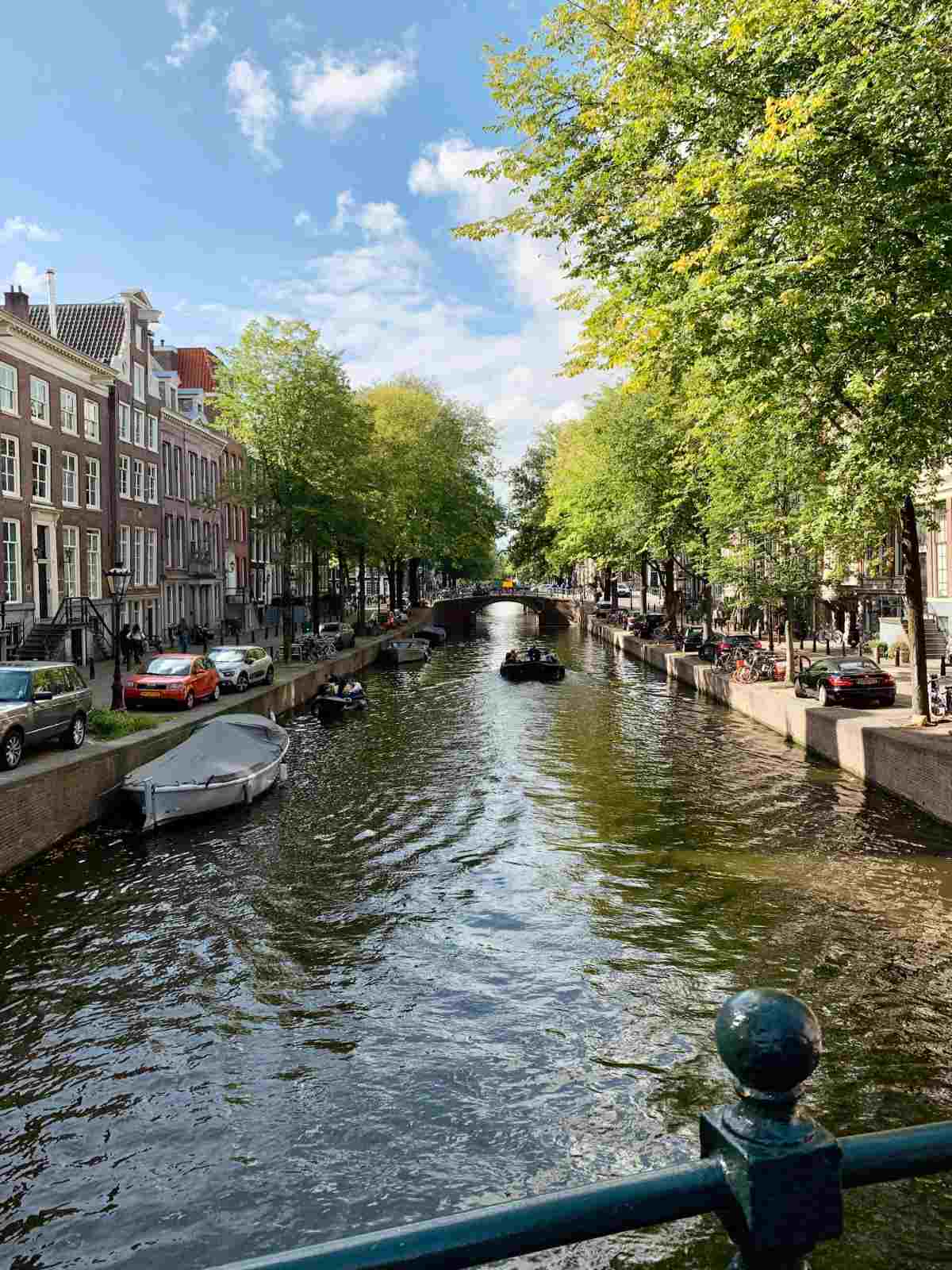
Historic canal district, boutique co-working spaces, strong freelance community. Premium pricing but highly livable. Excellent cycling infrastructure.
Amsterdam — Noord (Amsterdam North)
Rapidly gentrifying, significantly cheaper rents than city center, ferry access across IJ river, creative/startup scene growing fast. Best value in Amsterdam proper.
Rotterdam — Katendrecht / De Rotterdam
Modern, architecturally striking, international feel, 40% cheaper than Amsterdam. Strong tech and design startup scene. Rotterdam is increasingly the preferred choice for younger nomads priced out of Amsterdam.
Utrecht — Binnenstad
Compact, walkable, university town energy, 30 minutes from Amsterdam by train. Great work-life balance, lower rents, strong English-speaking community.
Eindhoven — Strijp-S
The Dutch “Design Capital” — former Philips factory complex turned creative hub. Cheap by Dutch standards, excellent for tech/design nomads, strong startup ecosystem around ASML and TU/e University.
The M.O.V.E. Method™ Applied: Netherlands Edition
MATK’s M.O.V.E. Method™ helps Americans assess relocation readiness across four dimensions. Here’s how the Netherlands scores:
📋 M — Money & Legal
Verdict: Solid but front-loaded. The self-employed permit costs time and money upfront (€1,500–€3,000 all-in with professional help, 3–5 months processing). Once established, the Dutch tax system is well-organized, the treaty with the U.S. prevents double taxation, and the 30% ruling (if HSM route) is exceptional. Income threshold of ~€4,500/month net is achievable for most U.S. remote workers. Bank: EU SEPA infrastructure is world-class. Score: 8/10
🌍 O — Operations & Logistics
Verdict: Excellent. Schiphol Airport is one of the world’s best-connected hubs. Train and tram infrastructure is exceptional. English is spoken by 95%+ of the population — the highest rate in non-English-speaking Europe. Time zone (CET/CEST) overlaps well with U.S. East Coast mornings and West Coast afternoons. Internet: average 300+ Mbps fiber widely available. Score: 9/10
🏡 V — Vibe & Lifestyle
Verdict: Outstanding. The Netherlands offers work-life balance infrastructure that the U.S. simply doesn’t match: cycling everywhere, 4-day work week culture increasingly common, superb restaurant scene, easy access to the rest of Europe for weekend trips. The Dutch are direct (sometimes bluntly so) but deeply fair and internationally-minded. Expat community is massive and well-organized. Score: 9/10
🔐 E — Exit & Flexibility
Verdict: Strong long-term path. After 5 years of continuous legal residence, you can apply for permanent residency. After 5 years of permanent residency (10 total), you can apply for Dutch citizenship and an EU passport — one of the most powerful travel documents in the world. Renewals are straightforward if income requirements are maintained. Note: leaving the Netherlands for 6+ months can interrupt your continuous residence clock. Score: 8/10
Overall M.O.V.E. Score: 8.5/10 — Top-tier European nomad base with a front-loaded visa process that pays long-term dividends.
Frequently Asked Questions
Does the Netherlands have a digital nomad visa in 2026?
No. As of 2026, the Netherlands has not introduced a dedicated digital nomad visa. The closest equivalent for independent remote workers is the self-employed (Zelfstandige) residence permit, which requires a registered Dutch business, a viable business plan assessed by the RVO, and demonstrable income of approximately €4,500–€5,500/month.
Can I work remotely in the Netherlands on a tourist visa?
No. Americans can enter the Netherlands visa-free for up to 90 days under the Schengen Agreement, but this does not authorize any form of work — including remote work for foreign clients. Working without authorization is a violation of Dutch immigration law and can result in deportation and a ban on re-entry.
How much money do I need to qualify for the Netherlands self-employed permit?
The IND’s income assessment typically requires approximately €4,500–€5,500 per month in net business income, supported by 12 months of bank statements and tax returns. If your income is below this threshold, supplementary savings of €13,000–€18,000 may be required. Exact figures change annually — verify at ind.nl.
How long does the Netherlands residence permit application take?
The IND has a statutory 3-month decision period for self-employed permit applications, but processing times in 2026 frequently run 4–5 months. Highly Skilled Migrant applications through recognized sponsor employers can be processed in 2–4 weeks.
Can I bring my family to the Netherlands on this permit?
Yes. Once you hold a valid Dutch residence permit, your spouse/partner and dependent children can apply for a family reunification permit (gezinshereniging). Requirements include proof of relationship, income sufficiency (above the social assistance threshold), and suitable housing. Your family members can work in the Netherlands once their permits are issued.
Do I need to speak Dutch to live in the Netherlands?
For daily life and remote work: no. The Netherlands has the highest English proficiency rate in non-English-speaking Europe (EF EPI rankings). However, for naturalization (Dutch citizenship) you must pass the Dutch civic integration exam (inburgeringsexamen), which includes a language component at A2–B1 level. Learning Dutch significantly improves your quality of life, integration, and long-term prospects.
Will the Netherlands launch a dedicated digital nomad visa? How Does It Compare to the Greece DNV pathway?
There is ongoing discussion within the EU about standardizing nomad-friendly visa pathways, and individual member states like the Netherlands face competitive pressure as Portugal, Spain, Germany, and Greece have launched dedicated schemes. As of May 2026, no official Dutch digital nomad visa has been announced. Monitor the IND website and Dutch government announcements for updates.
What is the 30% ruling and do digital nomads qualify?
The 30% ruling allows qualified highly skilled migrants employed by a Dutch-recognized sponsor employer to receive 30% of their salary as a tax-free expense allowance. Self-employed freelancers and sole proprietors (ZZP) do not qualify. It is available to employees meeting salary thresholds who are hired from abroad. It is one of the most generous expat tax incentives in Europe for those who qualify.
Not sure which country to plan around yet? Before you work through the details, take the free country match quiz to find the countries that fit your budget, visa needs and lifestyle.
Next Steps: Your Netherlands Nomad Checklist
Before diving into applications, use the MATK toolkit to organize your documents and the runway calculator to confirm your finances can handle the 3-5 month processing period.
- Determine your visa pathway (self-employed, HSM, or orientation year) based on your work situation
- Consult a Dutch immigration attorney before investing time in a business plan — a 1-hour consultation (~€200–€300) can save months of wasted effort
- Prepare your RVO business plan targeting 45+ points — professional help is strongly recommended
- Gather apostilled documents early: FBI background check takes 10–14 weeks; state background checks vary
- Book your Dutch Embassy appointment in Washington D.C., New York, or Houston well in advance (4–8 week wait times are common)
- Research neighborhoods and housing on Pararius, HousingAnywhere, and Funda before arrival — Amsterdam’s market moves fast
- Hire a dual U.S./Netherlands tax advisor to map your first-year tax strategy before you leave the U.S.
- Open a Bunq or Wise account for immediate post-arrival banking before your BSN is issued
New to moving abroad? Start here for the full MATK framework before diving into country-specific visas.
Thinking about moving abroad? Book a Move Abroad Planning Call for personalized guidance on your relocation.
Continue Planning Your Move
Everything you need is in one place.
Free Quiz
Find Your Best Country Match
Answer a few quick questions about your budget, language comfort, lifestyle and visa needs, and see which countries fit you best.