9 Honest Truths About the Cost of Living in Lisbon (2026)
This post contains affiliate links. If you click through and make a purchase, I may earn a small commission at no extra cost to you. I only recommend products and services I personally use and trust.
The cost of living in Lisbon for a single American in 2026 runs between $1,800 and $2,800 per month. That depends on your neighborhood and lifestyle choices. It puts Lisbon well below New York, San Francisco, or even Austin.
I funded my own move abroad by selling my house, my car (to CarMax), and my belongings on Facebook Marketplace and at garage sales. That firsthand experience shapes how I evaluate the cost of living in Lisbon — I am not just summarizing data, I am telling you what the numbers actually mean for someone making a real move.
I spent months researching Portugal’s relocation landscape and talking with American expats in Lisbon. The numbers have shifted since 2023. Rent is up. Groceries are stable. The overall value still beats most of Western Europe.
Here are 9 honest truths about what it costs to live in Lisbon as an American in 2026.
How Much Does It Cost to Live in Lisbon for Americans?
Americans living in Lisbon typically spend $1,800 to $2,800 per month in 2026. Rent ranges from $900 to $1,500/month for a one-bedroom apartment. Food, utilities, and transport add another $600 to $900/month. That makes Lisbon 30 to 50 percent cheaper than New York or San Francisco.
📋 WHAT’S IN THIS GUIDE
- Is Lisbon Affordable for Americans in 2026?
- Monthly Rent Costs in Lisbon
- Food and Grocery Costs
- Transportation Costs in Lisbon
- Healthcare Costs for Americans in Lisbon
- Utilities and Internet
- How Much Americans Really Spend per Month in Lisbon (Sample Budgets)
- Hidden Costs Nobody Tells You About
- How Does the Cost of Living in Lisbon Compare to Other European Capitals?
Is Lisbon Affordable for Americans in 2026?
Yes, but with a caveat. Lisbon is no longer the bargain it was in 2019. Rent prices have climbed 30% to 40% since the post-COVID digital nomad wave.
A furnished one bedroom in the city center now runs $1,100 to $1,500 per month. That said, Lisbon is still 35% to 45% cheaper than peer cities in Western Europe. Paris, Amsterdam, and Barcelona all cost more for the same quality of life.
The real question is not whether Lisbon is affordable. It is whether the cost of living in Lisbon fits your specific income. The numbers below will help you decide.
Still weighing whether Portugal is right for you? Our full guide to moving to Portugal as an American covers the complete picture. For a balanced view, read the downsides of moving to Portugal too.
Monthly Rent Costs in Lisbon

City Center vs Outside the Center
A furnished one bedroom in central Lisbon costs $1,200 to $1,500 per month. That covers Baixa, Chiado, and Principe Real on a long term lease. Move to Benfica, Lumiar, or Amadora and you drop to $800 to $1,000 for the same size unit.
Two bedroom apartments in the center run $1,600 to $2,200. Outside the center, expect $1,100 to $1,500. These are 2026 numbers from Idealista and local Facebook expat groups.
Popular Expat Neighborhoods and Price Ranges
Principe Real is the most popular neighborhood among American expats. Expect $1,300 to $1,600 for a furnished one bedroom. Santos and Estrela offer a quieter alternative at $1,000 to $1,300.
Alfama is charming but the steep hills and older buildings bring tradeoffs. Rents sit at $900 to $1,200 with less modern construction. Campo de Ourique is where expats settle for a neighborhood feel. Local markets and family owned restaurants surround you there. Rents run $950 to $1,250.
Short-Term vs Long-Term Rentals
Short term rentals through Airbnb Monthly Stays cost 40% to 60% more than long term leases. A $1,200 per month apartment on a yearly contract lists at $1,800 to $2,000 on Airbnb.
Use Airbnb for your first 30 to 60 days while you scout long term options in person. Then switch to a Portuguese lease through Idealista or local agents. This two phase approach saves you $400 to $800 per month once you lock in a contract.
You will need a Portuguese bank account to sign most leases. Our guide to opening a bank account in Portugal as an American walks you through the 7 steps.
Food and Grocery Costs

Eating Out in Lisbon
A lunch menu (prato do dia) at a local restaurant costs $8 to $12. That includes a main course, drink, and often coffee or dessert. Dinner at a mid range restaurant runs $15 to $25 per person with wine.
Skip the tourist spots in Baixa and Chiado for meals. Walk two blocks in any direction and prices drop 30%. The locals know this. Now you do too.
Grocery Shopping
Monthly grocery spending for one person runs $250 to $350. The main chains are Continente, Pingo Doce, and Lidl. Pingo Doce has the best balance of quality and price. Lidl is cheapest for staples.
Fresh produce at municipal markets costs less than supermarket prices. Quality is noticeably better too. A week of fruits and vegetables runs $15 to $25 at Mercado da Ribeira or Mercado de Arroios.
Coffee, Pastries, and Daily Life
An espresso (called a “bica” in Lisbon) costs $0.80 to $1.20 at a local cafe. A pastel de nata runs $1.10 to $1.50. If you pay $6 for a latte in the US, your coffee budget drops 70% here.
This is one of those small numbers that compounds into real savings. Two coffees and a pastry per day costs about $90 per month in Lisbon. The same habit in New York costs $350 or more.
Tipping culture is different here too. In Portugal, tipping is appreciated but not expected. Rounding up the bill or leaving 5% to 10% is generous. No one expects 20%. That alone changes how eating out feels on your budget.
Transportation Costs in Lisbon

Public Transit Monthly Passes
The Navegante pass covers all public transit in the Lisbon metro area. It costs $45 per month. That includes the metro, buses, trams, and ferries. One pass. Unlimited rides. It is one of the best transit deals in Europe.
Ride-Hailing and Taxis
Bolt and Uber both operate in Lisbon. A typical ride across the city center costs $5 to $8. Airport to city center runs $12 to $18 depending on traffic. Bolt is usually $1 to $2 cheaper than Uber for the same route.
Car Ownership (If You Must)
You do not need a car in Lisbon. The transit system, walkability, and ride hailing apps cover 95% of your needs.
If you insist on a car, budget $300 to $500 per month. That covers insurance, fuel, tolls, and parking. Street parking in the center is a competitive sport you will lose.
Healthcare Costs for Americans in Lisbon
Portugal has a public healthcare system (SNS) that residents can access. Wait times for specialists run long. Most American expats carry private insurance as a supplement.
SafetyWing Nomad Insurance starts at $45.08 per month for Americans under 40. Private Portuguese insurance through Multicare or AdvanceCare costs $80 to $150 per month. Coverage level and age determine the exact price.
A private GP visit costs $50 to $80 out of pocket. A specialist visit runs $80 to $150. Dental cleanings cost $40 to $60. An emergency room visit at CUF (private hospital) runs $100 to $200 before insurance. All of these are a fraction of US prices.
For a deeper look at health coverage options abroad, see our guide to international health insurance for Americans.
Utilities and Internet
Monthly utilities for a one bedroom apartment average $80 to $130. That covers electricity, water, gas, and trash. Electricity is the biggest variable. Summer AC and winter heating both spike the bill.
Internet runs $30 to $40 per month for fiber. NOS, MEO, and Vodafone are the main providers. Speeds of 200 to 500 Mbps are standard. Reliability is solid for remote work.
If you need a VPN for US streaming services or public wifi security, NordVPN works well from Portugal.
Coworking spaces are popular among remote workers in Lisbon. A hot desk runs $120 to $200 per month. A dedicated desk costs $200 to $350. Second Home, Heden, and Outsite are the most popular among American expats.
Many cafes also tolerate laptop workers for the price of a coffee. But if you need reliable video calls or quiet focus time, a coworking membership pays for itself.
How Much Americans Really Spend per Month in Lisbon (Sample Budgets)
Single Person Budget
Rent (1BR, city center): $1,300. Groceries: $300. Eating out (8x per month): $160. Transit pass: $45. Health insurance: $45. Utilities: $100. Internet: $35. Phone: $15. Entertainment and misc: $200. Total: $2,200 per month.
This is a comfortable lifestyle. Not luxury. Not backpacker. You eat well, go out twice a week, and live in a good neighborhood.
Couple Budget
Rent (1BR, city center): $1,400. Groceries: $450. Eating out (10x per month): $300. Transit passes (2): $90. Health insurance (2): $90. Utilities: $120. Internet: $35. Phones (2): $30. Entertainment and misc: $300. Total: $2,815 per month.
Couples save significantly on rent and utilities versus two singles. The per person cost drops to about $1,400 each.
Family of Four Budget
Rent (2BR, slightly outside center): $1,600. Groceries: $650. Eating out (6x per month): $240. Transit passes (2 adult, kids free): $90. Health insurance (family): $250. Utilities: $160. Internet: $35. Phones (2): $30. Kids activities: $200. Entertainment and misc: $350. Total: $3,605 per month.
International schools add $800 to $1,500 per month per child. Portuguese public schools are free. Many expat families use them successfully.
For connectivity before your SIM is sorted, grab a travel eSIM from Airalo — it works in Portugal from the moment you land. Phone plans deserve a mention here. A Portuguese SIM card with 10GB data and unlimited calls costs $12 to $18 per month. NOS and Vodafone are the top choices. Compare that to $60 to $80 for a comparable US plan. Some expats keep their US number through Google Voice and use a local SIM for daily use.
Student and Shared Housing Budget
If you are a student or sharing an apartment with flatmates, Lisbon costs drop significantly. A shared room runs €500 to €800 (~$540 to ~$865) per month. Add groceries at €150 to €200 (~$162 to ~$216), a €40 (~$43) monthly transit pass, and split utilities, and you are realistically looking at €900 to €1,400 (~$970 to ~$1,510) per month total. Student housing near universities can come in at the lower end of that range, especially through university residence programs. This is the most affordable way to live in Lisbon as an American, short of having a local roommate connection.
Lisbon’s $970–$2,200/month range covers your recurring costs, but that is only part of the picture. To calculate your total move-abroad budget including one-time setup costs, visa fees, and financial runway, see the full 5-component cost formula.
Hidden Costs Nobody Tells You About
Currency exchange fees eat 2% to 4% of every transfer through a traditional bank. Use Wise instead. Their real exchange rate and low fees save the average expat $50 to $100 per month. That adds up to $600 to $1,200 per year on rent and bill payments alone.
Beyond the baseline cost of living in Lisbon, NIF registration (your Portuguese tax number) is free but appointments take 2 to 4 weeks. Some agencies charge $100 to $200 to expedite it. You need the NIF before you can sign a lease, open a bank account, or set up utilities.
Furnished apartments cost 15% to 25% more than unfurnished. But buying furniture in a foreign country without a car adds up fast. For stays under 2 years, furnished is the better deal.
US tax filing does not stop when you move abroad. You still owe US taxes on worldwide income. The FEIE helps but you need to file correctly. Taxes for Expats specializes in this situation. They can save you from expensive mistakes.
Portugal also has its own tax considerations for new residents. The NHR regime (now modified in 2024 and 2025) still offers benefits. Our guide to the Portugal NHR tax regime for Americans breaks it down.
How Does the Cost of Living in Lisbon Compare to Other European Capitals?
The cost of living in Lisbon is no longer the cheapest in Western Europe. Athens and Zagreb now claim that title. But Lisbon remains significantly cheaper than its peers.
Paris is 50% more expensive. Amsterdam is 45% more. Madrid runs 15% to 20% higher. Barcelona is 20% to 25% above Lisbon’s costs.
Lower costs, strong infrastructure, widespread English, safety, and quality of life all work in Lisbon’s favor. It remains one of the best value cities in Europe for Americans. The numbers are higher than 2019. They still work for most remote incomes.
One factor often overlooked is walkability. Lisbon’s compact size means you rarely need transport beyond the metro. That alone saves $200 to $400 per month compared to car dependent US cities.

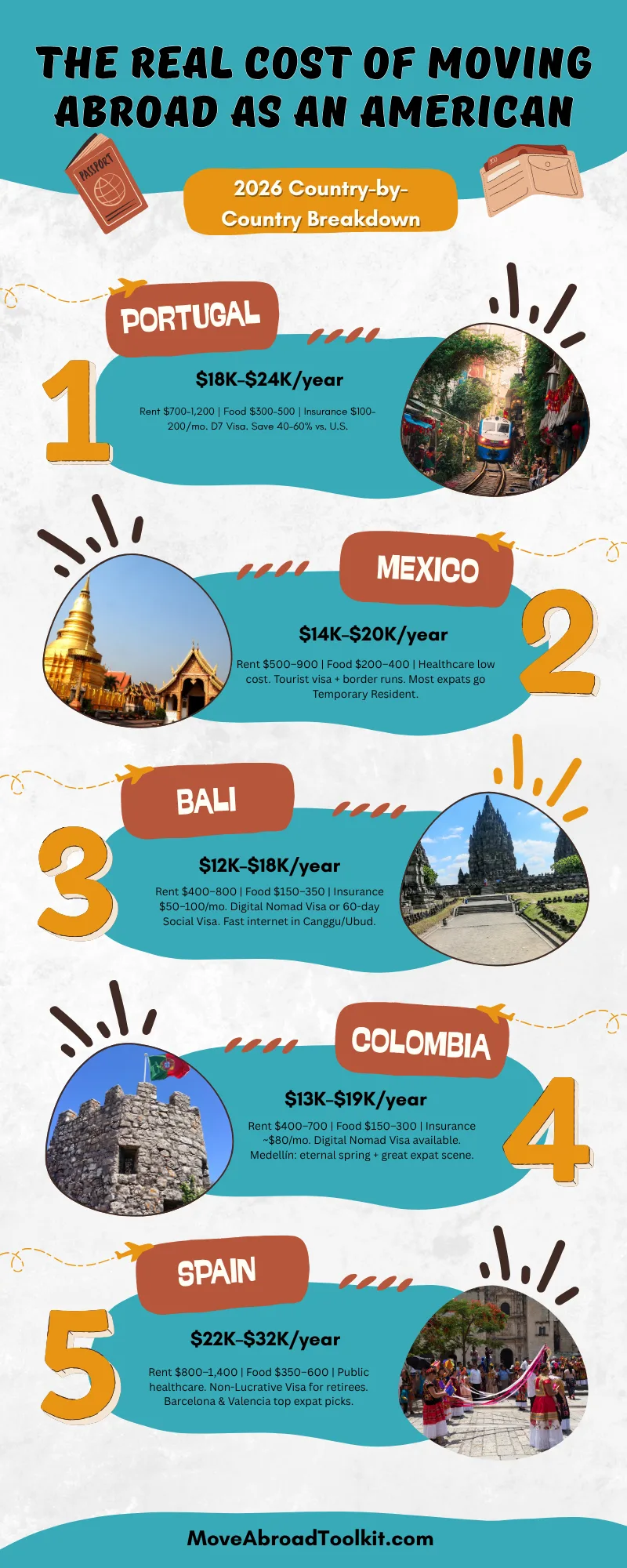
📌 Save this guide for later! Pin it to your travel or move abroad board so you can find it when you need it.
Click the image above to save directly to Pinterest.
📌 Save this guide for later! Pin it to your travel or move abroad board so you can find it when you need it.
Hover over any image in this post to pin it directly to Pinterest.
Frequently Asked Questions
How much money do you need to live comfortably in Lisbon?
A single person needs $2,000 to $2,500 per month for a comfortable lifestyle in Lisbon in 2026. A couple can live well on $2,800 to $3,200 combined.
Is Lisbon cheaper than the US?
Yes. Lisbon is 40% to 55% cheaper than major US cities. Compared to mid tier cities like Nashville or Denver, the savings are 20% to 30%.
Can you live in Lisbon on $1,500 a month?
It is tight but possible. You would rent outside the center ($800 to $900), cook most meals, and limit eating out. There is little room for entertainment or travel on this budget.
What is the cheapest neighborhood in Lisbon for expats?
Benfica, Lumiar, and Amadora offer the lowest rents with good metro access. Expect $800 to $1,000 for a furnished one bedroom.
Do you need a car in Lisbon?
No. The Navegante transit pass ($45/month) plus Bolt and Uber cover everything. A car adds $300 to $500 per month in costs and parking problems.
What visa do you need to live in Lisbon?
Most Americans use the Portugal D7 visa (passive income) or the D8 digital nomad visa (remote employment). Both grant residency for long term living in Lisbon. For the full step-by-step, see our Portugal D8 Visa Application Walkthrough.
Ready to Budget for Your Move to Lisbon?
Lisbon in 2026 is not the rock bottom bargain it once was. It remains one of the best places in Europe for Americans who want quality of life at US-fraction prices. The numbers are real. The infrastructure works. The lifestyle delivers.
Most Americans who move here are surprised by how far their income stretches once they settle in. The first two months feel expensive because of short term rental costs and setup fees. Month three is when the math starts working in your favor.
If you are serious about the move, start with our Start Here guide for a step by step roadmap. Check the full resources list for every tool you need. And grab the Move Abroad Toolkit to plan your budget, timeline, and logistics in one place.
Thinking about moving abroad? Book a Move Abroad Planning Call for personalized guidance on your relocation.
Continue Planning Your Move
Everything you need is in one place.
Free Download
Remote Income Starter Kit
30 curated remote job boards, an application tracker & freelance rate calculator. Fund your move before you leave.