90 Days in Thailand: Complete 2026 Guide for Americans
Some links on this site are affiliate links, which means the site may earn a commission at no extra cost to you. Services are included because they fit the move abroad process, not because of the commission.
90 days in Thailand is the sweet spot for Americans wanting a serious extended stay without committing to full relocation. Three months gives you enough time to settle into a real routine, explore multiple regions, and figure out whether Thailand could be a longer-term home, all at a cost that undercuts US living expenses by 40 to 60%.
The logistics are slightly more complex than a one-month trip, particularly around visa rules for the full 90-day stay. Here’s everything you need to know.
📋 WHAT’S IN THIS GUIDE
- Key Takeaways
- Visa Strategy for 90 Days in Thailand
- How Much Does 90 Days in Thailand Cost?
- Where to Base Yourself
- Banking and Money
- Health Insurance and Medical Care
- Make Sure Your Address Is Reported to Immigration
- What Changes After Month One
- Pros and Cons of 90 Days in Thailand
- Frequently Asked Questions
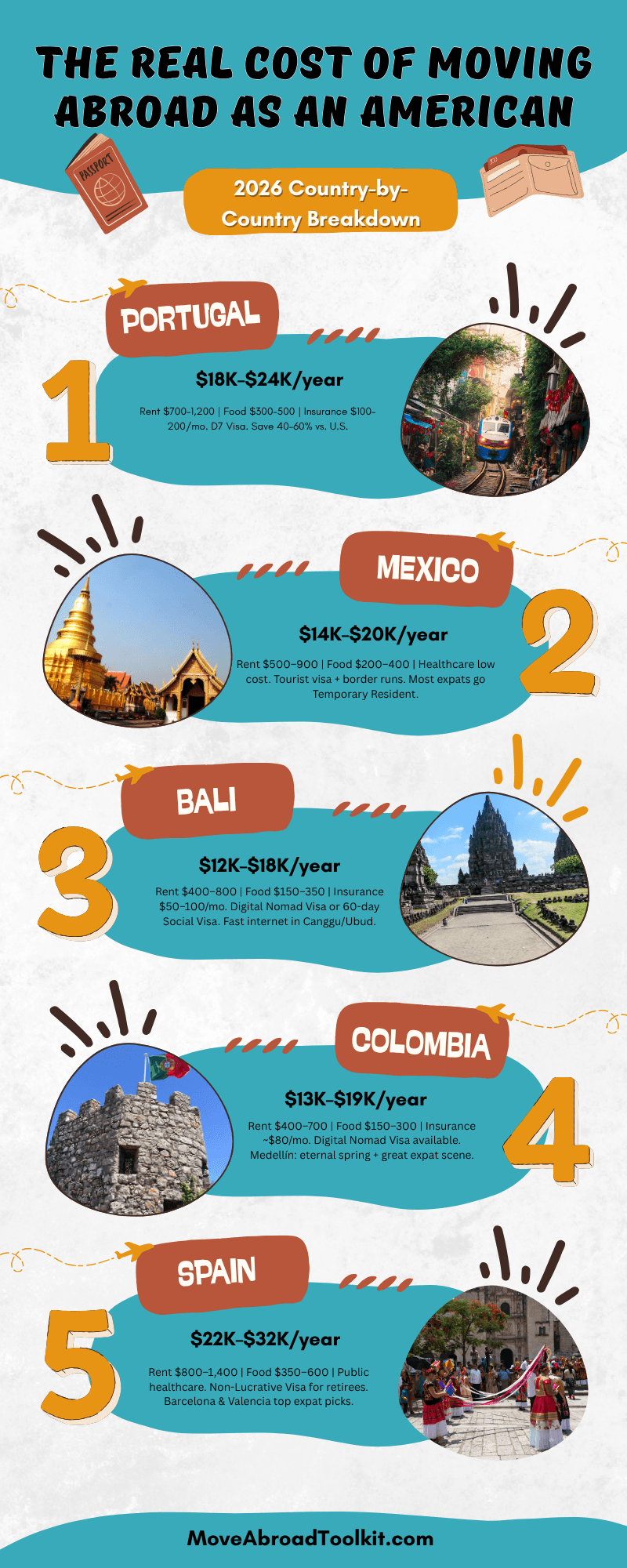
Still comparing countries? Take the free country match quiz to see which countries fit your budget, language comfort and lifestyle, then compare your top options side by side.
Key Takeaways
- A 90-day stay in Thailand costs $3,000 to $6,500 total depending on city and lifestyle
- Staying a full 90 days requires a visa run or the Destination Thailand Visa (DTV), the standard 30-day exemption only covers one month
- Chiang Mai is the best base for value-focused 90-day stays; Bangkok for urban lifestyle
- Three months is enough time to learn basic Thai pleasantries, find a local gym and doctor, and feel genuinely settled
- US tax obligations don’t change for a 90-day trip, you’re still a US tax resident
Visa Strategy for 90 Days in Thailand
Americans can’t stay 90 days on the standard visa exemption alone. Here are the two main approaches:
The exemption itself got shorter in September 2026. From September 15, 2026, Americans entering Thailand without a visa get 30 days instead of the previous 60, according to the Tourism Authority of Thailand. A one-time extension of up to 30 more days is available at a local immigration office for 1,900 THB, subject to officer approval, according to ThaiEmbassy.com. That caps an exemption-only stay at about 60 days, well short of 90.
Whichever route you choose, every foreign visitor must complete the Thailand Digital Arrival Card (TDAC) online within 3 days before arrival, according to the Tourism Authority of Thailand. The official form at tdac.immigration.go.th is free, so avoid look-alike sites that charge a fee for it.
Option 1: Destination Thailand Visa (DTV), Recommended
Launched in 2024, the Destination Thailand Visa was created specifically for remote workers, freelancers, and long-stay travelers. It allows a 180-day stay (with a 180-day extension possible) and is valid for 5 years with multiple entries. Cost: a 10,000 THB application fee, per ThaiEmbassy.com. Requirements: proof of at least 500,000 THB in a bank account, a valid passport, and documentation of your remote work or enrollment in an educational/training program. This is the cleanest legal option for a 90-day stay.
Option 2: Visa Exemption + Extension + Visa Run
Enter on a free 30-day exemption, extend it to 60 days at immigration (~$60), then do a border run to Malaysia, Laos, or another neighboring country to reset for a fresh 30-day exemption. Total cost: $60 + flight or bus to border (~$20 to 150). Widely practiced, but technically you’re using the border run strategy. Thailand has tightened rules on frequent border runners in recent years.
How Much Does 90 Days in Thailand Cost?
Three months in Thailand costs significantly less per month than a single-month stay once you factor in longer-term rental rates and stabilized food spending. A realistic 90-day budget:
| Expense | Budget (Chiang Mai) | Mid-Range (Bangkok) | Comfortable (Bangkok) |
|---|---|---|---|
| Accommodation (3 months) | $750 to 1,200 | $1,500 to 2,500 | $3,000 to 5,000 |
| Food (3 months) | $450 to 700 | $900 to 1,400 | $1,500 to 2,500 |
| Transportation | $150 to 250 | $300 to 500 | $500 to 900 |
| Coworking (3 months) | $180 to 280 | $280 to 420 | $420 to 600 |
| Visa costs | 1,900 THB extension plus a border run | 10,000 THB DTV fee | 10,000 THB DTV fee |
| Health insurance | $120 to 180 | $120 to 180 | $180 to 350 |
| Misc and activities | $300 to 500 | $500 to 900 | $900 to 1,800 |
| 90-Day Total | ~$2,000 to 3,260 | ~$3,650 to 6,050 | ~$6,550 to 11,300 |
The typical American digital nomad in Chiang Mai for 90 days spends around $2,500 to $3,500 total. Bangkok typically runs $3,500 to $5,500.
Where to Base Yourself for 90 Days in Thailand
For a 90-day stay, most Americans split their time or choose a primary base with day trips. The most common pattern: 6 to 8 weeks in Chiang Mai (to settle in, build a routine, and keep costs low), followed by 3 to 4 weeks in Bangkok (urban exploration, day trips, and easier international connections). Beach time, Koh Samui, Koh Lanta, or Pai, gets squeezed into weekends or a 1 to 2 week side trip.

For a true single-city 90-day immersion, Chiang Mai wins on cost, community, and lifestyle. Bangkok wins on convenience, food variety, and infrastructure. Read our Moving to Thailand guide for a full city breakdown.
Banking and Money for Three Months in Thailand
For 90 days, set up a Wise account before departure. Thai ATMs charge a fixed fee per withdrawal (usually 220 THB / ~$6 per transaction), Wise reimburses up to 2 ATM fees per month. Charles Schwab’s High Yield Investor Checking account reimburses all international ATM fees, making it the gold standard for extended stays. Bring backup cards from two different networks (Visa and Mastercard).
Health Insurance and Medical Care for a 90-Day Stay
Thailand has excellent private healthcare, especially in Bangkok and Chiang Mai, at a fraction of US prices. A hospital visit to a top private hospital like Bumrungrad in Bangkok costs $30 to $80 for a consultation. That said, for a 90-day stay, proper health insurance is essential. SafetyWing is the most popular option among long-term travelers ($40 to 60/month, covers emergency medical, evacuation, and trip interruption). For more comprehensive coverage including routine care, see international health insurance options for Americans abroad. For a full guide to Thailand healthcare options for expats, covering hospital networks by city, what to expect at private vs. public facilities, and how costs compare to US prices, that post covers everything you need before your stay.
Make Sure Your Address Is Reported to Immigration
Thailand requires every foreigner’s place of stay to be reported to immigration through a form called the TM30. The responsibility sits with the host, meaning the hotel, the landlord or the serviced apartment, and the report is due within 24 hours of your arrival, according to ThaiEmbassy.com. Late reporting can be fined 800 to 1,600 THB per person.
Hotels file it automatically. Private rentals are where it gets missed, and that matters on a 90-day stay because an extension application includes evidence of your local address on the TM30 form, according to Bangkok law firm Integrity Legal. Ask your landlord to file the TM30 in your first days and keep a copy of the receipt. Practices also differ between local immigration offices, so if you move cities or travel abroad and come back, check whether your office wants a new filing.
What Changes After Month One in Thailand
Month one in Thailand is absorbing and exciting but expensive. You’re eating out constantly, over-touring, and adjusting to the climate. By month two, you’ve found your local grocery market, a regular food stall or two, and a gym or activity you actually do. Month three brings genuine comfort. You know the city, you have a social network, and Thailand starts feeling like a chapter of your life rather than a trip.
The US time zone gap (UTC+7, 11 to 14 hours ahead) remains the main operational challenge for remote workers throughout all 90 days. Most people adapt by shifting US client calls to Thai evenings and protecting Thai mornings for deep work.
Pros and Cons of 90 Days in Thailand
The biggest advantages are strong value for money, especially in Chiang Mai, a food culture that works at every budget, a welcoming culture, and well-developed remote work infrastructure in the main hubs. Three months also gives you time to settle into one neighborhood instead of moving every few days.
The main downsides are the time zone gap with the US, since Thailand runs on UTC+7, heat and humidity in lower-elevation cities, which peak from March to May, and less reliable wifi and infrastructure outside Bangkok and Chiang Mai. The shorter visa exemption also means a 90-day stay now takes more planning than it did before September 2026.

📌 Save this guide for later! Pin it to your travel or move abroad board so you can find it when you need it.
Tap the button below, or on a computer, hover over any image to pin it.
Frequently Asked Questions
How do I stay in Thailand for 90 days legally?
The cleanest route is the Destination Thailand Visa (DTV), designed for remote workers and long-stay travelers, 180-day validity, ~$50 fee. Alternatively: extend your 30-day exemption to 60 days, then do a border run for a fresh 30 days.
How much does 90 days in Thailand cost?
Budget travelers in Chiang Mai: around $2,000 to $3,000 total. Mid-range in Bangkok: $3,500 to $5,500. Comfortable Bangkok lifestyle: $6,000 to $9,000.
Is Chiang Mai or Bangkok better for a 90-day stay?
Chiang Mai wins on cost, community, and a slower pace. Bangkok wins on infrastructure, food variety, and urban lifestyle. Many Americans do 6 weeks in each.
Do I need to pay taxes in Thailand if I stay 90 days?
Ready to start planning? Check our Start Here guide and Resources page. For the full move, see our Moving to Thailand as an American guide.
At 90 days you’re below Thailand’s 180-day tax residency threshold, so Thai income tax obligations don’t apply to you. You remain a US tax resident and must continue filing US taxes on worldwide income as normal.
For official visa information, visit the Thai Immigration Bureau website.
I funded my own move abroad by selling my house, my car (to CarMax), and my belongings on Facebook Marketplace and at garage sales. That firsthand experience shapes how I write about moving abroad. I am not just summarizing data, I am telling you what the numbers actually mean for someone making a real move.
Currency exchange fees eat into every international transfer. Use Wise instead of your bank for real exchange rates and low fees. Most expats save $50 to $100 per month on transfers alone.
For health coverage while abroad, SafetyWing Nomad Insurance starts at $45.08 per month for Americans under 40. It covers you in most countries and is built for long-term travelers and expats.
If you need a VPN for US streaming or public wifi security, NordVPN works well from abroad.
US tax filing does not stop when you move abroad. You still owe US taxes on worldwide income. Taxes for Expats specializes in expat tax returns and can save you from expensive mistakes.
If you are serious about the move, grab the Move Abroad Toolkit to plan your budget, timeline, and logistics in one place.
Thinking about moving abroad? Book a Move Abroad Planning Call for personalized guidance on your relocation.
Continue Planning Your Move
Everything you need is in one place.
Free Quiz
Find Your Best Country Match
Answer a few quick questions about your budget, language comfort, lifestyle and visa needs, and see which countries fit you best.