Living in Romania as an American: 9 Essential Things to Know (2026)
This post contains affiliate links. If you click through and make a purchase, I may earn a small commission at no extra cost to you. I only recommend products and services I personally use and trust.
Updated April 2026
Living in Romania as an American has become one of the most compelling options for people who want EU access without paying Lisbon prices. The math works. The infrastructure works. The visa pathway is real.
This guide covers the real mechanics: visas, true cost of living, neighborhoods, banking, healthcare, housing, and the things nobody tells you until you are already there. By the end, you will know whether Romania belongs on your short list — and exactly what it takes to make the move.
📋 WHAT’S IN THIS GUIDE
- Why Americans Are Moving to Romania in 2026
- Visa Options Are More Accessible Than You Think
- The Cost of Living Is Lower Than You Think
- Finding Housing Is Straightforward
- Banking and Money Transfer Is Easier Than You Think
- Healthcare Is Affordable and Modern
- You Can Work Remotely Without a Work Permit
- Your Romania Moving Timeline: 90, 60, and 30 Days Out
- What Americans Love (and Don’t Love) About Romania
- Frequently Asked Questions
- Ready to Make the Move?
1. Why Americans Are Moving to Romania in 2026
Romania sits inside the European Union. That single fact changes everything for Americans who want legal long-term residency in Europe.
EU membership means Romania offers visa pathways that non-EU countries simply cannot match. Bucharest consistently ranks among the cheapest capitals in Europe for cost of living. Rent for a furnished one-bedroom in a desirable neighborhood runs $500 to $800 per month. Fast fiber internet in most urban apartments costs $8 to $15 per month. A quality restaurant meal runs $8 to $14.
The dollar buys real purchasing power here in a way it does not in Lisbon or Barcelona anymore. Romania has one of the fastest internet infrastructures in Europe — meaningful if remote work is part of your plan. Bucharest, Cluj-Napoca, and Timisoara have established expat communities, coworking scenes, and infrastructure that works. This is not a frontier move.
The 2025 to 2026 period has also seen a measurable uptick in Americans researching Romania specifically. Portugal and Spain have tightened visa requirements and seen costs spike. Romania is where serious movers are looking next.
To put the numbers in context: a comparable lifestyle in Lisbon — the city Americans most often compare Romania to — costs $2,500 to $3,500 per month. In Bucharest, the same quality of life costs $1,200 to $1,800. That difference, compounded over a year, is $15,000 to $24,000. For someone living on a remote salary or investment income, that is not a marginal difference — it is the difference between financial sustainability and financial stress.
Romania also has something Lisbon and Barcelona no longer offer: it is not yet saturated by expats. The wave hit Portugal first. Prices rose. Neighborhoods gentrified. Visa rules tightened. Romania is a few years behind that curve. Early movers get a better deal both in cost and in community.
2. Visa Options Are More Accessible Than You Think
Americans can visit Romania visa-free for up to 90 days within any 180-day period. For longer stays, there are two primary legal pathways.
Romania Digital Nomad Visa (D/AD Visa)
Romania introduced a dedicated digital nomad visa in 2022. It is valid for one year, renewable, and designed specifically for remote workers employed by or contracting with companies registered outside Romania.
The income requirement sits at approximately 3x Romania’s average gross salary — roughly $3,500 to $4,000 per month in documented income. You will need to prove your income through contracts or pay stubs. The application is submitted at the Romanian consulate or embassy in the US covering your state.
Processing times vary by consulate location. Budget six to twelve weeks. Documents typically required include a valid passport, proof of income, a contract or employment letter, proof of health insurance, and a criminal background check. Requirements can shift — always confirm current requirements directly with the consulate before applying.
One clarification that trips people up: Romania is a member of the EU but is not in the Schengen Area. Your Romanian digital nomad visa gives you the right to reside in Romania — it does not give you free movement throughout Schengen countries. You still operate under normal 90-day Schengen limits when you cross into Schengen countries from Romania.
Long-Stay Visa (D-Visa) for Employment or Business
If you have a job offer from a Romanian employer, you can apply for a long-stay D-type work visa. This applies to entrepreneurs setting up a Romanian company as well. The process is more involved and requires employer sponsorship or business registration documentation. For most Americans moving independently, the digital nomad visa is the cleaner entry point.
Once you have held legal residency for five years, you become eligible to apply for permanent residency. After ten years, EU citizenship may be possible — consult a Romanian immigration attorney for current requirements.
3. The Cost of Living Is Lower Than You Think
Living in Romania is not cheap in the way some Southeast Asian countries are. It is cheap in a way that is sustainable — you get a functioning European city with modern infrastructure at a fraction of Western European prices.
Rent
A furnished one-bedroom apartment in a desirable Bucharest neighborhood — Floreasca, Dorobanti, or the center — runs $500 to $800 per month. In Cluj-Napoca, expect $450 to $700. In Timisoara, $350 to $550. Unfurnished apartments exist at lower price points but furnished is the norm for expat renters, and landlords in major cities are accustomed to international tenants.
One thing to check before signing: heating. District heating is common in older Bucharest buildings. Some apartments have individual gas boilers. The difference in your monthly bill can be $50 to $100 between a well-insulated newer build and an older Soviet-era apartment. Always ask before you sign.
Food and Groceries
A quality sit-down restaurant meal runs $8 to $14. Street food and fast-casual options run $3 to $6. Grocery shopping for one person who cooks most meals averages $150 to $250 per month. International supermarkets like Carrefour and Mega Image stock most items an American palate expects. Specialty imports and certain international brands cost more — budget accordingly if you have specific dietary needs.
Romanian produce markets (piete) are excellent. Seasonal vegetables and fruit cost a fraction of supermarket prices and quality is high. Most expats build a hybrid grocery routine — piata for produce, supermarket for packaged goods.
Transportation
Bucharest has a metro system that covers the main corridors but does not blanket the city. Uber operates in all major Romanian cities and is inexpensive — most rides within the city run $3 to $7. Monthly transit passes run $15 to $25 in Bucharest. Most expats in Bucharest use a combination of metro and Uber; many do not own a car.
Intercity travel by train or FlixBus is affordable and reliable for the major routes (Bucharest to Cluj-Napoca is roughly 8 hours by train or 7 hours by bus). Budget for about $15 to $30 one-way between major cities.
A realistic total monthly budget for a single person living comfortably — rent, food, transport, utilities, entertainment, incidentals — runs $1,200 to $1,800 in Bucharest. That is not the floor. That is comfortable. Some people live on less; some spend more. But $1,500 per month buys a genuinely good life in Romania’s capital.
4. Finding Housing Is Straightforward
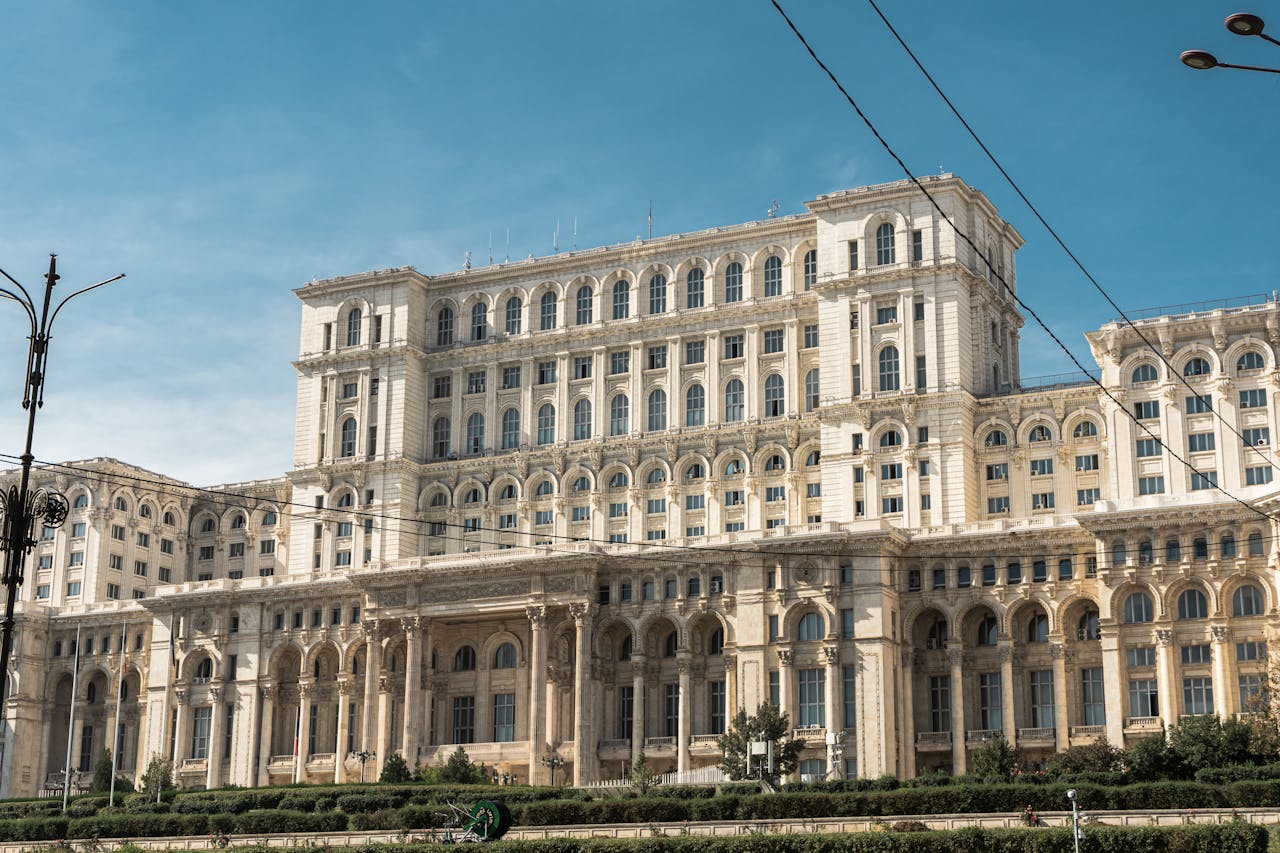
Living in Romania, you’ll find the rental market is active and navigable without knowing Romanian. Most landlords in Bucharest and Cluj-Napoca who rent to expats operate in English or work with agencies that do.
The main platforms to know are Storia.ro and Imobiliare.ro — Romania’s primary real estate listing sites. You can browse and filter in English. Facebook groups are also heavily used: Bucharest Expats and Cluj-Napoca Expats both have active housing sections where landlords post directly and members share recommendations.
For a first move, starting with a month-to-month furnished rental while you get oriented is the standard approach. Platforms like Airbnb work for short initial stays but carry a significant premium. Once you are on the ground, month-to-month furnished flats listed locally are dramatically cheaper and more comfortable than extended Airbnb stays.
Standard lease terms in Romania are typically one year. Month-to-month furnished rentals exist but are priced at a premium. Leases are usually signed in Romanian — have a bilingual contact or attorney review before signing if your Romanian is limited. Rental deposits are standard at one to two months’ rent. Utility contracts may need to be transferred to your name; some landlords keep them in their name and charge you separately.
The three cities most expats choose between: Bucharest (largest, most international, highest cost within Romania, best flight connections), Cluj-Napoca (university city, strong tech scene, younger demographic, growing fast), and Timisoara (western Romania, close to the Hungarian and Serbian borders, more relaxed pace, lower cost).
5. Banking and Money Transfer Is Easier Than You Think
Romania uses the Romanian Leu (RON), not the Euro. The exchange rate as of early 2026 runs approximately 4.5 to 4.7 RON to 1 USD — check current rates before any large transfer. Romania is expected to adopt the Euro eventually but has not done so yet.
Before you arrive, set up a Wise account. [AFFILIATE: Wise] Wise gives you mid-market exchange rates on USD to RON transfers with transparent, low fees. It is substantially better than using a US bank wire or ATM withdrawals for ongoing living expenses. Most expats in Romania use Wise as their primary transfer mechanism — send USD from your US account to Wise, convert to RON at near-market rates, and either spend via the Wise card or withdraw locally.
For a local bank account, Banca Transilvania is the most commonly recommended option among Bucharest expats. It is widely used, has a good mobile app, and the account-opening process for non-residents with a residence permit is manageable. ING Bank Romania is another solid option with English-language support. Opening a Romanian bank account typically requires your residence permit or visa and your passport — timing it after you have your visa documentation in order is the practical approach.
ATMs are widely available in all major cities. Most accept foreign cards. Stick to bank-operated ATMs rather than standalone machines to avoid high fees. Carry some RON cash for markets and smaller vendors; cards are accepted at most urban restaurants and shops.
6. Healthcare Is Affordable and Modern
Romania’s public healthcare system is free for residents but uneven in quality. Most expats in Bucharest use private clinics for routine care. The private healthcare system is genuinely good — modern facilities, English-speaking doctors, and prices that will seem remarkably low to anyone coming from the US.
A routine doctor’s visit at a private clinic runs $25 to $60. Blood work and standard diagnostics are a fraction of US prices. Dental care is particularly affordable — many expats who need significant dental work find that treatment in Romania costs less than the flight home plus US co-pays would have cost.
Before you leave the US, secure international health insurance. SafetyWing [AFFILIATE: SafetyWing] is a widely used option among digital nomads and expats — it covers medical expenses internationally and is designed specifically for people living outside their home country. Many Romanian D/AD visa applications require proof of health insurance anyway, making this a non-negotiable step in the pre-departure process.
Once you have legal residency and contribute to Romania’s social insurance system, you gain access to the public system. But most long-term expats continue to use private clinics for convenience and reliability, even after gaining public system access.
7. You Can Work Remotely Without a Work Permit
Romania’s fiber internet is among the fastest in Europe. Bucharest, Cluj-Napoca, and Timisoara all rank near the top of European cities for internet speed and reliability. Average speeds in urban apartments run 100 to 1,000 Mbps for $8 to $15 per month. This is not the exception — it is standard.
Coworking spaces operate in all three major cities. Bucharest has the widest selection — spaces like Mindspace, WeWork, and locally-operated coworks offer day passes and monthly memberships. Cluj-Napoca has a strong coworking culture driven by the city’s tech industry. If working from home is your preference, the apartment internet is fast enough that you rarely need a cowork backup.
For security while working remotely — particularly on public networks in cafes or coworking spaces — a VPN is standard practice. NordVPN [AFFILIATE: NordVPN] is a reliable option that many expats use regardless of where they land.
The digital nomad visa specifically authorizes this setup: you live in Romania on your visa while working remotely for an employer or clients based outside Romania. You are not employed by a Romanian company. Your income continues to come from your existing work arrangements — Romania provides the legal residency wrapper around that.
One operational note on language: English proficiency is high in Bucharest and Cluj-Napoca among younger residents and in professional environments. You can function day-to-day in English in major cities. In smaller towns and rural areas, Romanian becomes necessary. Download Google Translate with Romanian offline before you arrive — it helps considerably in the early months.
Choosing the right city matters more than people expect. Most resources default to recommending Bucharest because it is the capital. But the right answer depends on what you actually want from daily life.
Bucharest is the right choice if you want the widest selection of international restaurants, the most robust expat community, the largest number of coworking spaces, and direct flights to major European hubs. The city’s population of 2.2 million makes it the second-largest city in the EU by area. Neighborhoods worth researching: Floreasca and Dorobanti for upscale living with good walkability; the Old Town area for nightlife proximity; Titan and Iancului for value. The city’s layout is sprawling and the metro covers main corridors but does not blanket the city — Uber use is high and inexpensive.
Cluj-Napoca is the right choice if you want a smaller city with a strong tech and creative scene. Population around 320,000. It has a younger demographic, a strong university culture, and a coworking scene that punches above its size. The city is more walkable in the center than Bucharest. Costs are slightly lower. The trade-off is fewer international flight options — most routing goes through Bucharest.
Timisoara is the right choice if you want the lowest cost within Romania’s major cities, a more relaxed pace, and proximity to Western Europe. Located in Romania’s west, it borders Hungary and Serbia. It received European Capital of Culture status in 2023, which has driven investment and visibility. Smaller expat community than the other two cities, but growing.
8. Your Romania Moving Timeline: 90, 60, and 30 Days Out
The 90/60/30 framework is how you move without arriving in a panic. Each phase has a defined set of tasks. Do them in order.
90 Days Before Your Move
This phase is all about paperwork and eligibility. Start with the Romanian consulate covering your US state. Confirm current D/AD visa documentation requirements — they update periodically and the consulate is the authoritative source. Begin gathering your income documentation: three to six months of pay stubs or contracts, and a letter from your employer confirming remote work authorization if you are an employee.
Get your FBI background check started now. It takes four to eight weeks and many consulates require it. Schedule your apostille as well — the background check must be apostilled for Romanian authorities to accept it. Research notarization and translation requirements for your specific consulate; some require Romanian-translated documents.
Confirm your income clears the digital nomad visa threshold (approximately $3,500 to $4,000 per month documented). If it does not, research the standard long-stay D-visa pathway and whether it fits your situation.
60 Days Before Your Move
Housing research starts now. Join Bucharest Expats, Cluj-Napoca Expats, or the relevant Facebook group for your target city. Browse Storia.ro and Imobiliare.ro to calibrate real rental prices in the neighborhoods you are targeting. Book your initial accommodation — whether a short-term furnished rental or an extended Airbnb stay — to give yourself a landing pad while you find a long-term place on the ground.
Set up your Wise account [AFFILIATE: Wise] and verify it fully. Secure your international health insurance — SafetyWing [AFFILIATE: SafetyWing] or a comparable policy that meets Romanian visa requirements. Notify your US bank of your move so your cards are not frozen when you make the first foreign transaction.
Begin researching shipping versus buying locally. Romania has strong local options for furniture and household goods (IKEA is in Bucharest and Cluj-Napoca). Most expats ship a suitcase or two and buy everything else locally — it is typically cheaper than international shipping costs.
30 Days Before Your Move
This phase is final prep. Confirm your visa application is submitted or your appointment is booked. Arrange mail forwarding from your US address. If you have a US lease ending, coordinate the handoff. Contact your US bank and investment accounts to ensure they remain accessible from Romania — some online banks restrict access from certain countries.
Download essential apps before departure: Google Translate (Romanian offline), Bolt and Uber (both work in Romanian cities), Google Maps with Romania downloaded offline. Install NordVPN [AFFILIATE: NordVPN] on all devices before you leave. Set up a local SIM plan in your mind — Orange, Vodafone, and Digi all have strong coverage and inexpensive data plans; you can get a SIM at the airport or any phone store on arrival.
Have at least 90 days of living expenses in savings before you arrive. Currency conversion timelines, lease deposits, and setup costs add up in the first month. Financial pressure on arrival makes everything harder. Arrive with runway.
Your First 30 Days on the Ground
Register your address with local authorities — this is legally required within 15 days of arrival for visa holders. Your landlord or local immigration attorney can guide you through this step. Get a local SIM immediately. Open your Romanian bank account once you have your registration documentation.
Explore your target neighborhoods without committing to a long-term rental until you have spent time walking them. The difference between Floreasca and Iancului in Bucharest, or between the center and Marasti in Cluj-Napoca, is meaningful — neighborhoods have distinct characters that you cannot fully assess from listings alone.
9. What Americans Love (and Don’t Love) About Romania
This is not a highlight reel. Here is what expats consistently report — the good and the honest.
What Americans Love
The purchasing power is real. Americans with a US income — even a modest remote salary by US standards — live well in Romania. What feels like a tight budget in San Francisco is a comfortable life in Bucharest.
The internet is genuinely fast. No caveats. Bucharest’s fiber internet is legitimately among the fastest in the world. Remote workers report it as one of the most consistently positive surprises about the country.
Access to Europe is a major draw. Bucharest’s Henri Coanda International Airport connects to most major European hubs. Weekend trips to Vienna, Istanbul, Athens, or Lisbon are cheap and easy from Romania in a way they never would be from the US.
The expat community in Bucharest and Cluj-Napoca is active and welcoming. Facebook groups, meetup events, and coworking spaces create built-in social infrastructure that reduces the isolation risk that derails some moves abroad.
What Is Harder Than Expected
Bureaucracy is slow and sometimes opaque. Government offices and visa processes can involve multiple visits, contradictory information from different officials, and documentation requirements that are not always clearly communicated in English. Build patience and a bilingual contact into your plan.
Road safety is a genuine concern. Romania has among the highest road fatality rates in the EU. If you plan to drive, approach it with real caution. Most expats in major cities use Uber and Bolt rather than owning a car — a practical choice that also sidesteps this issue.
Winter in Bucharest is gray and cold. November through February can be genuinely bleak. If warm weather and sunshine are non-negotiable for your quality of life, factor this seriously into your decision. Cluj-Napoca winters are even harsher. Timisoara is marginally better but still a full continental winter.
The language barrier outside major cities is real. Younger Romanians in Bucharest and Cluj-Napoca typically speak English. Step outside urban centers, or interact with older residents, and Romanian becomes necessary. Romanian is not an easy language to acquire quickly — give yourself a realistic timeline if fluency is a goal.
Frequently Asked Questions About Living in Romania as an American
Can Americans live in Romania permanently?
Yes. After five years of continuous legal residency in Romania, you can apply for permanent residency. After ten years, EU citizenship may be possible — though Romanian citizenship law has specific requirements, and an immigration attorney should be consulted for current rules.
Does Romania have a digital nomad visa?
Yes. Romania introduced the D/AD visa in 2022 for remote workers employed by or contracting with companies outside Romania. It is valid for one year, renewable, and requires documented income of approximately $3,500 to $4,000 per month.
Is English widely spoken in Romania?
English proficiency is high in Bucharest and Cluj-Napoca, particularly among residents under 40 and in professional environments. You can function in daily life in English in major cities. In smaller towns and rural areas, Romanian becomes increasingly necessary.
Is Romania in the Schengen Area?
Romania is an EU member but was not fully in the Schengen Area as of early 2026 (land border Schengen accession was pending). Your Romanian residence visa does not give you unlimited movement through Schengen countries — standard 90/180 rules apply when you cross into Schengen territory. Confirm the current status before planning travel, as this is expected to change.
What are taxes like for Americans living in Romania?
The US taxes citizens on worldwide income regardless of where they live. You will still file a US tax return each year. The Foreign Earned Income Exclusion (FEIE) allows you to exclude up to $126,500 (2024 figure, adjusted annually) of foreign earned income from US tax if you qualify. Romania’s flat income tax rate is 10%. There is a tax treaty between the US and Romania that prevents double taxation on most income categories. Consult a tax professional with expat experience before filing — the rules interact in ways that are easy to misapply.
Is Romania safe for Americans?
Romania’s major cities are generally safe for expats. Standard urban awareness applies — pickpocketing in tourist areas, normal city-level precautions. Road safety is a different matter: Romania has among the highest road fatality rates in the EU, and using Uber and Bolt rather than driving is the practical recommendation for most expats. The US State Department Romania page is a reliable resource for current safety information.
Ready to Make the Move?
Living in Romania makes sense if you want EU access, genuine low cost of living, fast infrastructure, and a country that has not yet been priced out by the expat wave that hit Portugal and Spain. It does not make sense if you need warm weather year-round, dislike bureaucracy, or are not comfortable navigating systems where English is not always available.
If living in Romania is on your list, the next step is not another research spiral. It is action.
The MATK Toolkit walks you through the full process of moving abroad as an American — visa research, financial setup, the pre-departure checklist, and everything in between. If you are serious about making this move, start there.
You can also read our full guide to Digital Nomad Visas for Americans and our Best Countries for Americans to Move Abroad to see how Romania fits into your broader options. If you are weighing Europe specifically, our Moving to Portugal as an American guide is a useful comparison.
And if you are at the very beginning — not sure where to start — begin with our start here page. It maps the whole process from “thinking about it” to “on the plane.”
Thinking about moving abroad? Book a Move Abroad Planning Call for personalized guidance on your relocation.
Continue Planning Your Move
Everything you need is in one place.