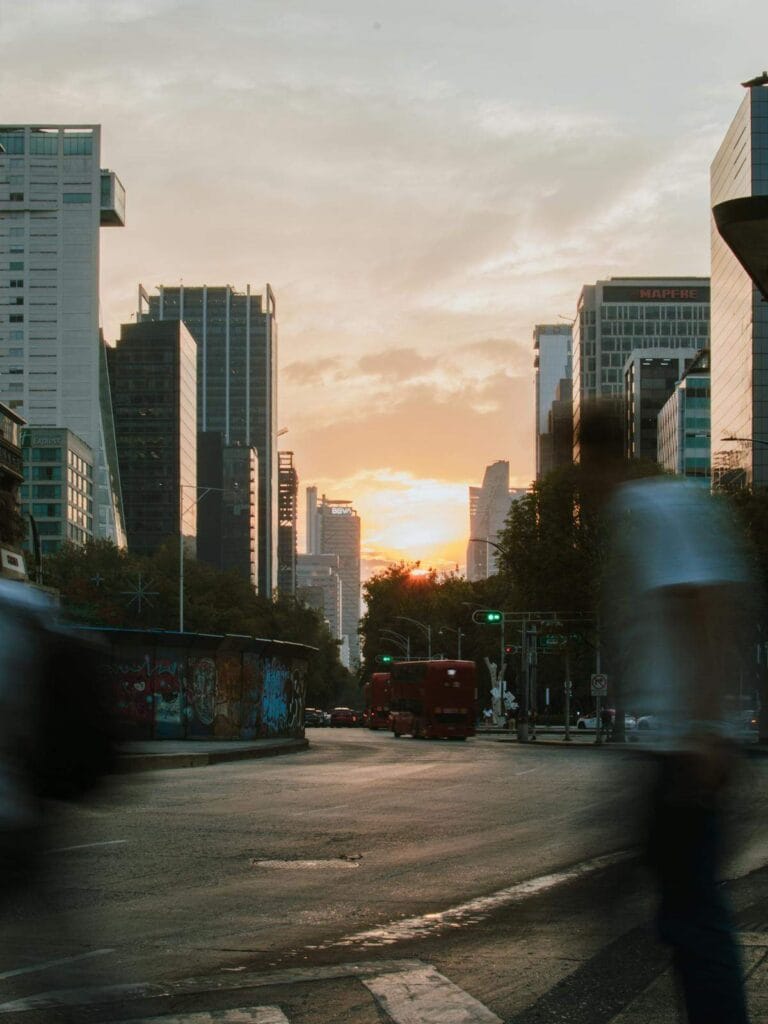
Moving to Colombia as an American: 7 Expat Must-Knows (2026)
Some links on this site are affiliate links, which means the site may earn a commission at no extra cost to you. Services are included because they fit the move abroad process, not because of the commission.
📋 What’s In This Guide
Moving to Colombia as an American is one of the most popular expat decisions in 2026. Colombia has transformed into one of the top destinations for American expats and digital nomads. Medellín, once infamous, is now celebrated as one of the most innovative, vibrant cities in Latin America. The country offers a spring-like climate in the Andes, low cost of living, fast internet, a growing expat scene, and visa options that make long-term stays very achievable for Americans.
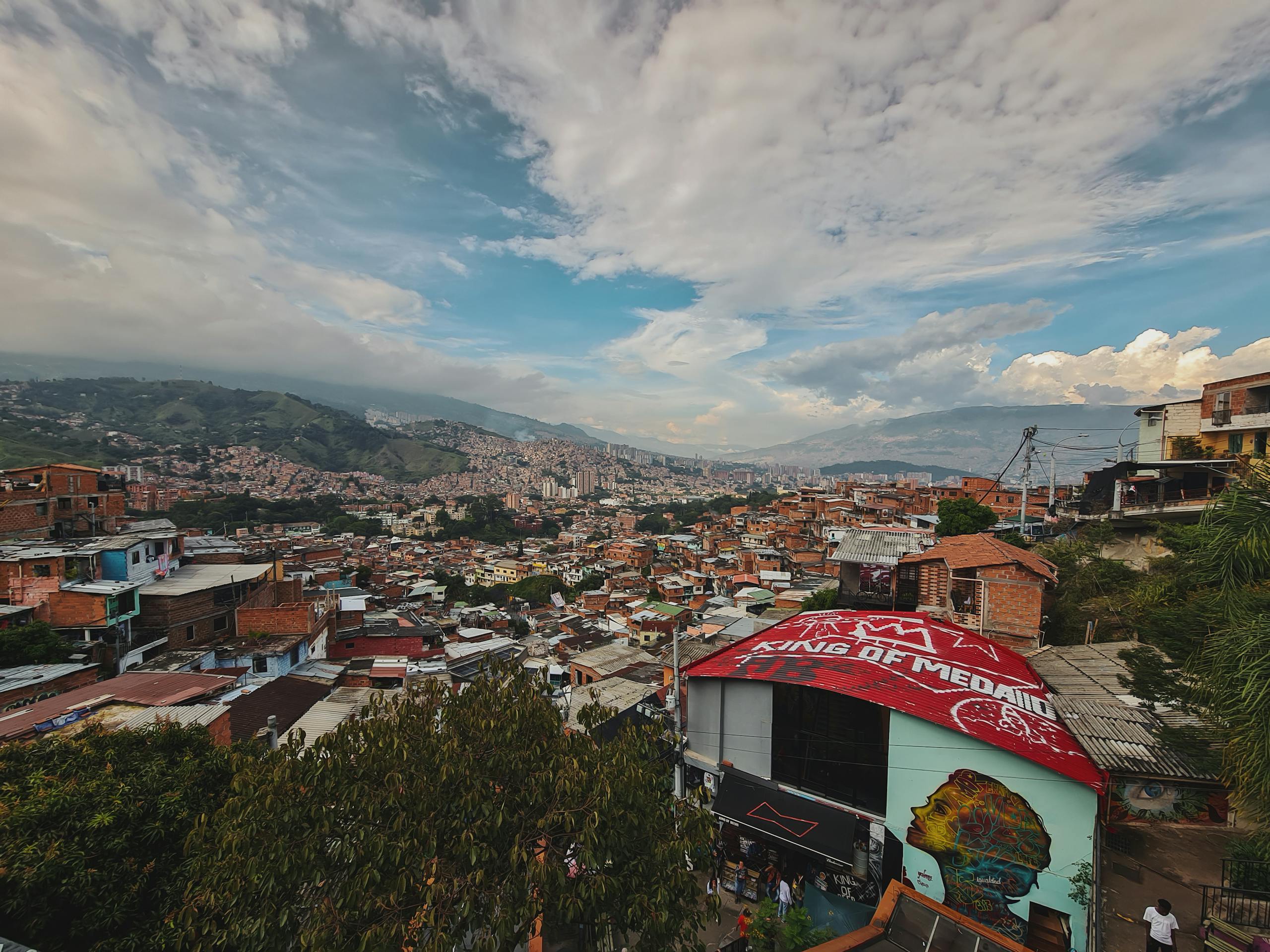

📌 Save this guide for later! Pin it to your travel or move abroad board so you can find it when you need it.
Click the image above to save directly to Pinterest.
📌 Save this guide for later! Pin it to your travel or move abroad board so you can find it when you need it.
Hover over any image in this post to pin it directly to Pinterest.
This guide covers everything Americans need to know about moving to Colombia in 2026: visas, cost of living, best cities, safety realities, and a step-by-step relocation checklist.
Why Americans Choose Colombia
- Year-round spring climate: Medellín averages 72°F every day of the year; Bogotá is cool and crisp at 8,600 ft elevation
- Low cost of living: comfortable life from $1,500 to $2,500/month; extremely affordable by US standards
- Digital nomad visa available: Colombia’s digital nomad visa is one of the easiest to obtain in Latin America
- US time zones: Colombia is in EST/CST range, making remote work with US clients seamless
- Growing expat community: Medellín especially has a large, established American expat community
- Strong Spanish learning opportunity: Colombian Spanish is considered the clearest and most accent-neutral in Latin America
- Food and culture: incredible food scene, vibrant nightlife, rich cultural heritage
Visa Options for Americans Moving to Colombia
Americans get 90 days visa-free in Colombia per calendar year (can be extended to 180 days at immigration). For longer stays, here are your main options. See our full Digital Nomad Visas for Americans guide for the complete comparison.
Colombia Digital Nomad Visa (Nómada Digital)
- Cost: ~$52 USD application fee + ~$230 visa sticker
- Duration: 2 years, non-renewable (must leave and reapply after expiry)
- Requirements: Proof of remote work (contract or employer letter), minimum income of 3x Colombian minimum wage (~$800 USD/month), valid health insurance, clean criminal record
- Work rights: Can work remotely for foreign employers; cannot work for Colombian companies
- Processing time: 15 to 30 business days online via Cancillería website
- Best for: Remote workers, freelancers, online business owners
Colombia Migrant Visa (Rentista / Pensionado)
- Cost: ~$52 application + visa sticker fee
- Duration: Up to 3 years; leads to residency eligibility after 5 consecutive years
- Requirements (Rentista): Proof of passive income (investments, rental income) of at least 3x minimum wage (~$800/month)
- Requirements (Pensionado): Proof of pension/retirement income of ~$750+/month
- Work rights: No local work rights; for passive income earners and retirees
- Best for: Retirees, investors, passive income earners who want a path to residency
Colombia Investor Visa
- Cost: Application fee + minimum investment
- Duration: 3 years, renewable; leads to residency after 5 years
- Requirements: Investment of at least 650 SMLMV (~$225,000 USD) in Colombian real estate, business, or financial instruments
- Work rights: Can operate/manage your investment business
- Best for: Those buying Colombian property or investing in a business
Cost of Living in Colombia
Colombia is one of the most affordable countries for Americans in Latin America. Medellín offers exceptional quality of life at dramatically lower cost than US cities. Use our How to Budget for Moving Abroad guide to plan your financial runway.
| Expense | Medellín (COP/mo) | Bogotá (COP/mo) | USD Approx (Medellín) |
|---|---|---|---|
| 1BR apartment (nice neighborhood) | 1,500,000 to 3,000,000 | 2,000,000 to 4,500,000 | $375 to $750 |
| Groceries | 600,000 to 1,200,000 | 700,000 to 1,400,000 | $150 to $300 |
| Eating out (mix local + mid-range) | 500,000 to 1,500,000 | 600,000 to 1,800,000 | $125 to $375 |
| Transport (Uber + metro) | 200,000 to 500,000 | 300,000 to 600,000 | $50 to $125 |
| Co-working space | 400,000 to 800,000 | 500,000 to 1,000,000 | $100 to $200 |
| Health insurance | 300,000 to 700,000 | 300,000 to 700,000 | $75 to $175 |
| Utilities + internet | 300,000 to 600,000 | 350,000 to 700,000 | $75 to $150 |
| Entertainment | 400,000 to 1,200,000 | 500,000 to 1,500,000 | $100 to $300 |
| Total (budget) | 4,200,000 COP | 5,250,000 COP | ~$1,050/mo |
| Total (comfortable) | 9,500,000 COP | 12,200,000 COP | ~$2,375/mo |
Best Cities in Colombia for American Expats
Medellín: The Expat Capital
The undisputed favorite for American expats in Colombia. El Poblado and Laureles are the most popular expat neighborhoods: walkable, safe, full of cafes, co-working spaces, and restaurants. The metro system is excellent. The famous “Medellín Spring” climate (72°F year-round) is real. The downside: El Poblado can feel like an expat bubble and has gotten noticeably more expensive in recent years. Laureles offers better value and more authentic local feel while still being safe.
Bogotá: The Capital
Colombia’s capital is a massive, sophisticated city at 8,600 feet elevation (think permanently cool and occasionally rainy). La Candelaria, Chapinero, and Usaquén are the main expat areas. Bogotá has the best international flights, strongest business scene, and best universities. More expensive than Medellín, more hectic, and colder. Best for those working in Colombia’s business/startup ecosystem.
Cartagena: Beach City
A impressive colonial walled city on the Caribbean coast. Hot and humid year-round. Very touristy but with a growing expat scene in Getsemaní and the walled city. Higher cost than Medellín, less digital nomad infrastructure. Best for those who want Caribbean beach life with Colombian culture.
Santa Marta / Palomino: Budget Beach
Cheaper Caribbean coast options with access to Tayrona National Park. Less developed expat infrastructure but growing surf and yoga communities. Best for budget-conscious nomads who want beach life.
Safety in Colombia: The Real Picture
Colombia’s reputation has improved dramatically, but caution is still warranted. Medellín’s El Poblado and Laureles are genuinely safe for expats exercising normal city precautions. Bogotá’s expat neighborhoods (Chapinero, Usaquén, Zona Rosa) are safe during the day; use Uber/InDriver at night. Avoid: displaying expensive items, walking while on phone, going out alone late at night in unfamiliar areas. Don’t use street taxis. Always use Uber or InDriver (the local app). The US State Department has Colombia at Level 2 (Exercise Increased Caution).
US Taxes When Living in Colombia
When moving to Colombia as an American, you still owe US taxes. The Foreign Earned Income Exclusion (FEIE) lets you exclude foreign earned income. Check the IRS guidelines on FEIE for the latest thresholds. Colombia also has no tax treaty with the US, so strategic tax planning matters.
Moving to Colombia as an American: Your 30, 60, and 90-Day Timeline
Colombia has transformed dramatically in the past decade: Medellín went from infamously dangerous to one of Latin America’s most celebrated expat cities, and Bogotá and Cartagena both have thriving international communities. For Americans with remote income, Colombia combines an affordable cost of living ($1,200 to $2,000/month lives well), a Digital Nomad Visa that’s one of the easiest to obtain in the world, and a culture that rewards those who make the effort to integrate. Here’s the timeline that works.
90 Days Before Your Move to Colombia
Three months out is when you decide your visa path and test your city choice. Colombia gives Americans 90-day tourist entry with no application required, which means a scouting trip is easy and many expats start with a tourist stay to confirm their decision before applying for residency. If you’re going long-term, the Digital Nomad Visa is your fastest path to legal residency.
- Do a scouting trip to your target city: Medellín’s El Poblado and Laureles neighborhoods, Bogotá’s Chapinero and Usaquén, and Cartagena’s Getsemaní all have distinct expat communities and vastly different daily life feels. Medellín is perennially the most popular for digital nomads: spring-like weather year-round, a walkable cafe culture, and a $1,500/month lifestyle that’s genuinely comfortable.
- Choose your visa path: the Digital Nomad Visa (Visa Nómada Digital) requires proof of remote employment or business income of at least $684/month (3x Colombia’s minimum wage), plus international health insurance and a valid passport. It’s applied for online through Colombia’s Cancillería website and is renewable. Retirees and those with passive income should look at the Pensionado Visa instead.
- Get international health insurance: required for all Colombian visa applications. SafetyWing, Cigna Global, and Allianz International all satisfy the requirements. Keep the certificate accessible: you’ll submit it with your visa application.
- Start learning Spanish seriously: Colombia is significantly less English-friendly than Mexico City or Lisbon. English is spoken in some expat-heavy neighborhoods and tourist areas, but daily life in Medellín or Bogotá is conducted almost entirely in Spanish. Invest in iTalki lessons or Pimsleur before you go.
- Open a Schwab or Wise account: you’ll be withdrawing Colombian pesos at ATMs and making USD transfers frequently. Schwab reimburses all ATM fees globally; Wise gives near-interbank exchange rates for ongoing transfers.
60 Days Before Your Move to Colombia
Sixty days out is the preparation phase: visa application assembled, housing for month one secured, and your US loose ends getting tied up. Colombia’s Digital Nomad Visa has a relatively fast processing time (2 to 4 weeks), but you want to apply with time to spare rather than rushing.
- Submit your Digital Nomad Visa application: apply through Colombia’s Cancillería e-visa portal. Required documents: valid passport (6+ months), passport photo, proof of remote employment (employment contract or business registration), last 3 months of income proof, international health insurance certificate, and the application fee (~$52 USD). Processing typically takes 2 to 4 weeks.
- Book your first month of furnished accommodation: use Airbnb for monthly rates (30 to 40% cheaper than nightly), or Facebook groups like “Foreigners in Medellín” or “Expats in Bogotá” for direct rentals. Month-one furnished apartments in El Poblado or Laureles run $600 to $1,200/month. After month one, unfurnished long-term rentals are around 50% cheaper.
- Update US addresses and sort mail forwarding: IRS, Social Security (if applicable), banks, and subscriptions. A US mail forwarding service like Traveling Mailbox handles ongoing US mail.
- Understand Colombian safety realities: Colombia’s safety situation has improved dramatically but varies enormously by neighborhood and city. El Poblado in Medellín is very safe for expats with basic precautions; other areas are not.Join local expat Facebook groups and ask for current neighborhood-specific safety intel: it changes and no guide stays current.
- Sort US taxes: Americans in Colombia still owe US taxes. The Foreign Earned Income Exclusion (FEIE) can significantly reduce your liability if you qualify as a bona fide resident of Colombia. Colombia also has a tax treaty with the US that affects how certain income is treated. Consult a US expat tax accountant before you move.
30 Days Before Your Move to Colombia
Final month: your visa should be in hand or close to it. Colombia is a short flight from most US cities (3 to 5 hours from Miami, 5 to 7 hours from the East Coast), which makes the logistics manageable and means you can come back easily if you forget something. Medellín’s José María Córdova International Airport (MDE) and Bogotá’s El Dorado International (BOG) both have direct US routes.
- Book your flights: Avianca, American, Delta, and United all fly direct from Miami (MIA), Fort Lauderdale (FLL), and other major hubs. Miami to Medellín is under 3 hours. Book refundable if your visa is still pending.
- Set up InDriver and Uber accounts before you arrive: both operate in Colombia’s major cities and are significantly safer than hailing street taxis. Download and fund them before you land so you’re not fumbling at the airport.
- Get a Colombian SIM sorted: Claro and Movistar are the main carriers with good coverage in major cities. Both sell SIMs at the airport. An Airalo eSIM works for the first day or two. Data is cheap: prepaid plans run $15 to $25/month.
- Fund a Wise account in Colombian pesos: Wise’s COP rates are significantly better than airport exchange booths. Have at least $150 USD equivalent in pesos for taxis, tips, and first-day expenses before you leave for the airport.
- Digitize all documents: passport, visa, insurance certificate, lease, bank documents. Store in Google Drive and a secure password manager. Carry physical copies on arrival day.
Still comparing countries? Take the free country match quiz to see which countries fit your budget, language comfort and lifestyle, then compare your top options side by side.
After You Arrive: Your First 30 Days in Colombia
The first month in Colombia is about getting your cédula de extranjería (foreigners ID card), opening a bank account, and most importantly, integrating into your neighborhood faster than you would anywhere in Europe. Colombians are famously warm and social; making local connections happens quickly if you’re open to it. Medellín in particular has a way of converting people who planned to stay 3 months into people who stay 3 years.
- Register your visa and get your cédula de extranjería: within 15 days of arrival, you must register your visa with Migración Colombia and apply for your cédula (foreigners ID card). Do this immediately: the cédula is required for opening a bank account, signing leases, and most formal transactions. Apply at a Migración Colombia office or through their website.
- Open a Colombian bank account: Bancolombia is the most expat-friendly traditional bank. Nequi (Bancolombia’s digital wallet app) is faster to open and excellent for daily spending. You’ll need your cédula de extranjería and passport. Having a local account makes rent payments, utilities, and everyday purchases significantly easier.
- Get a local SIM with a Colombian number: a Colombian number is needed for app registration (banking OTPs, food delivery, ride-hailing). Buy a Claro or Movistar SIM at any store with your passport and cédula once it’s issued.
- Find your long-term apartment: after month one in a furnished place, search for an unfurnished long-term rental which will be significantly cheaper. Use Metrocuadrado or Fincaraiz (Colombia’s main property sites) or ask in expat Facebook groups for direct landlord referrals.
- Explore your neighborhood on foot and by Metro in Medellín: Medellín’s metro system is clean, safe, and cheap ($0.70/ride). The MetroCable connects hillside neighborhoods. Bogotá’s TransMilenio BRT covers the city comprehensively. Getting oriented quickly makes everything else easier.
- Take Spanish lessons if you haven’t already: EAFIT University in Medellín and the Centro Cultural Colombo Americano offer structured Spanish courses. Private tutors via iTalki run $10 to $20/hour. Your quality of life in Colombia scales directly with your Spanish ability.
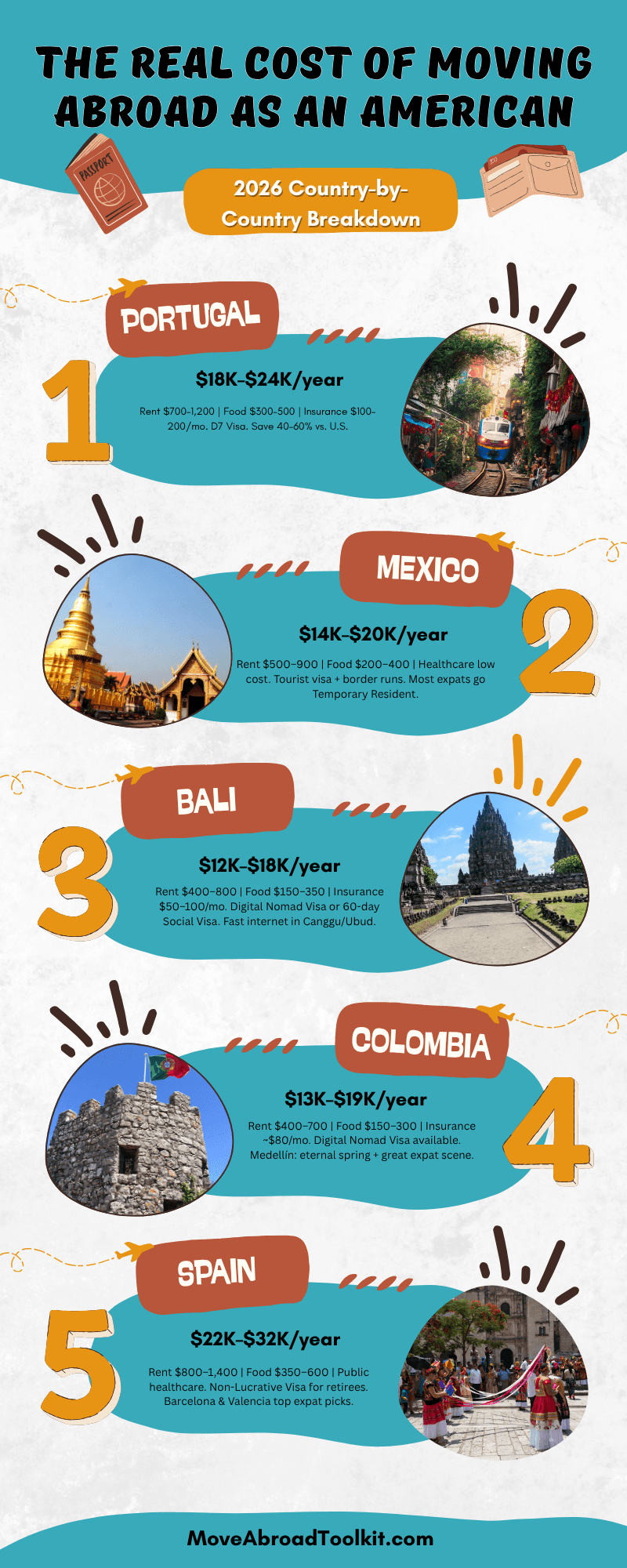
📊 The Real Cost of Moving Abroad as an American
Related: Digital Nomad Visas for Americans | How to Budget for Moving Abroad | What to Pack When Moving Abroad
Colombia Digital Nomad Visa (Nómada Digital)Cost: ~$52 USD application fee + ~$230 visa sticker Duration: 2 years, non-renewable (must leave and reapply after expiry) Requirements: Proof of remote work (contract or employer letter), minimum income of 3x Colombian minimum wage (~$800 USD/month), valid health insurance, clean criminal record Work rights: Can work remotely for foreign employers; cannot work for Colombian companies Processing time: 15 to 30 business days online via Cancillería website Best for: Remote workers, freelancers, online business ownersColombia Migrant Visa (Rentista / Pensionado)Cost: ~$52 application + visa sticker fee Duration: Up to 3 years; leads to residency eligibility after 5 consecutive years Requirements (Rentista): Proof of passive income (investments, rental income) of at least 3x minimum wage (~$800/month) Requirements (Pensionado): Proof of pension/retirement income of ~$750+/month Work rights: No local work rights; for passive income earners and retirees Best for: Retirees, investors, passive income earners who want a path to residencyColombia Investor VisaCost: Application fee + minimum investment Duration: 3 years, renewable; leads to residency after 5 years Requirements: Investment of at least 650 SMLMV (~$225,000 USD) in Colombian real estate, business, or financial instruments Work rights: Can operate/manage your investment business Best for: Those buying Colombian property or investing in a businessCost of Living in Colombia Colombia is one of the most affordable countries for Americans in Latin America. Medellín offers exceptional quality of life at dramatically lower cost than US cities. Use our How to Budget for Moving Abroad guide to plan your financial runway.Expense Medellín (COP/mo) Bogotá (COP/mo) USD Approx (Medellín)1BR apartment (nice neighborhood) 1,500,000 to 3,000,000 2,000,000 to 4,500,000 $375 to $750Groceries 600,000 to 1,200,000 700,000 to 1,400,000 $150 to $300Eating out (mix local + mid-range) 500,000 to 1,500,000 600,000 to 1,800,000 $125 to $375Transport (Uber + metro) 200,000 to 500,000 300,000 to 600,000 $50 to $125Co-working space 400,000 to 800,000 500,000 to 1,000,000 $100 to $200Health insurance 300,000 to 700,000 300,000 to 700,000 $75 to $175Utilities + internet 300,000 to 600,000 350,000 to 700,000 $75 to $150Entertainment 400,000 to 1,200,000 500,000 to 1,500,000 $100 to $300Total (budget) 4,200,000 COP 5,250,000 COP ~$1,050/moTotal (comfortable) 9,500,000 COP 12,200,000 COP ~$2,375/moBest Cities in Colombia for American Expats Medellín: The Expat Capital
The undisputed favorite for American expats in Colombia. El Poblado and Laureles are the most popular expat neighborhoods: walkable, safe, full of cafes, co-working spaces, and restaurants. The metro system is excellent. The famous “Medellín Spring” climate (72°F year-round) is real. The downside: El Poblado can feel like an expat bubble and has gotten noticeably more expensive in recent years. Laureles offers better value and more authentic local feel while still being safe.
Bogotá: The Capital
Colombia’s capital is a massive, sophisticated city at 8,600 feet elevation (think permanently cool and occasionally rainy). La Candelaria, Chapinero, and Usaquén are the main expat areas. Bogotá has the best international flights, strongest business scene, and best universities. More expensive than Medellín, more hectic, and colder. Best for those working in Colombia’s business/startup ecosystem.
Cartagena: Beach City
A impressive colonial walled city on the Caribbean coast. Hot and humid year-round. Very touristy but with a growing expat scene in Getsemaní and the walled city. Higher cost than Medellín, less digital nomad infrastructure. Best for those who want Caribbean beach life with Colombian culture.
Santa Marta / Palomino: Budget Beach
Cheaper Caribbean coast options with access to Tayrona National Park. Less developed expat infrastructure but growing surf and yoga communities. Best for budget-conscious nomads who want beach life.
I funded my own move abroad by selling my house, my car (to CarMax), and my belongings on Facebook Marketplace and at garage sales. That firsthand experience shapes how I write about moving abroad. I am not just summarizing data, I am telling you what the numbers actually mean for someone making a real move.
Some links below are affiliate links. We may earn a small commission if you purchase through them at no extra cost to you. All product recommendations are based on personal research and would be made regardless of compensation.
Currency exchange fees eat into every international transfer. Use Wise instead of your bank for real exchange rates and low fees. Most expats save $50 to $100 per month on transfers alone.
For health coverage while abroad, SafetyWing Nomad Insurance starts at $45.08 per month for Americans under 40. It covers you in most countries and is built for long-term travelers and expats.
If you need a VPN for US streaming or public wifi security, NordVPN works well from abroad.
US tax filing does not stop when you move abroad. You still owe US taxes on worldwide income. Taxes for Expats specializes in expat tax returns and can save you from expensive mistakes.
If you are serious about the move, grab the Move Abroad Toolkit to plan your budget, timeline, and logistics in one place.
Thinking about moving abroad? Book a Move Abroad Planning Call for personalized guidance on your relocation.
Continue Planning Your Move
Everything you need is in one place.
Free Quiz
Find Your Best Country Match
Answer a few quick questions about your budget, language comfort, lifestyle and visa needs, and see which countries fit you best.